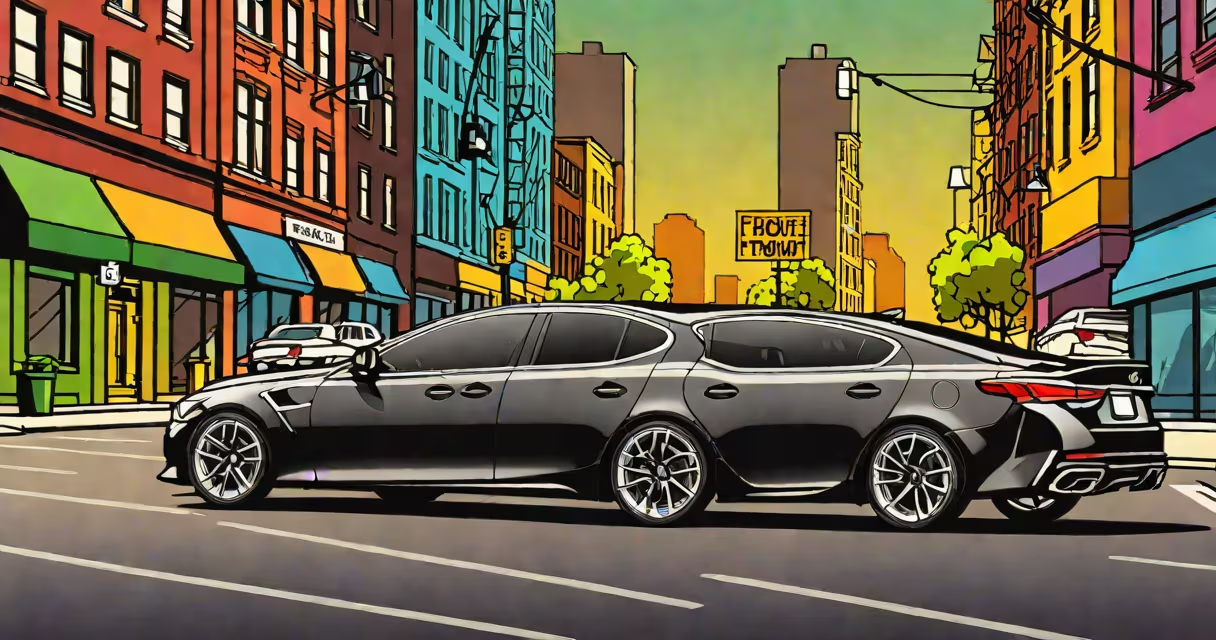
F Sport is a performance designation used by Toyota and Lexus to identify vehicles with enhanced handling, suspension tuning, and driver-focused features. It signals a model tuned for sharper responsiveness and more engaging driving dynamics compared to standard variants.
The term originated with the 2014 Lexus IS F Sport, which introduced a revised suspension setup, stiffer springs, and improved steering calibration. Since then, it has expanded across Toyota's lineup, including the Camry, Corolla, and RAV4 TRD models, though its implementation varies by platform.
When you see "F Sport" on a vehicle, it indicates a package designed to improve cornering precision, reduce body roll, and deliver more feedback through the steering wheel. It is not a standalone trim level but rather a performance sub-trim within a model series.
F Sport models feature engineering changes focused on chassis behavior. The core upgrades include a retuned suspension system with firmer springs and dampers, thicker anti-roll bars, and reinforced bushings. These changes reduce lateral movement during turns and improve stability at higher speeds.
Steering systems are also adjusted. For example, the 2023 Toyota Camry F Sport uses a variable-ratio steering rack with faster initial response. This allows drivers to initiate turns more quickly, improving agility in tight urban environments or winding roads.
Braking systems may be upgraded as well. The 2022 Lexus ES 350 F Sport includes larger front rotors and four-piston calipers, reducing brake fade during extended high-speed driving. These components work together to improve control under pressure.
F Sport packages typically include mechanical and cosmetic elements. Mechanical upgrades center on the drivetrain and suspension. The 2023 Toyota Camry F Sport, for instance, features a 2.5L turbocharged engine producing 265 horsepower-15 more than the base model-and a limited-slip differential for better traction during acceleration.
Cosmetic enhancements include unique alloy wheels (e.g., 19-inch forged alloys on the Lexus RC F Sport), sport seats with enhanced side bolstering, and black exterior accents such as mirror caps and grille inserts. Interior finishes often use Alcantara or perforated leather on steering wheels and shift knobs.
A table below outlines differences between standard and F Sport versions of the 2023 Toyota Camry:
| Feature | Standard Camry | Camry F Sport |
|---|---|---|
| Engine | 2.5L naturally aspirated | 2.5L turbocharged (265 hp) |
| Suspension | Standard MacPherson struts | Reinforced front strut tower, stiffer rear sway bar |
| Wheels | 17-inch alloy | 19-inch forged alloy |
| Seats | Standard cloth/leather | Perforated leather with sport stitching |
| Driving Modes | Normal, Eco, Sport | Normal, Eco, Sport, and F Sport (track-tuned) |
F Sport is primarily used in mid-size sedans and SUVs targeted at drivers who value handling over pure comfort. It appeals to enthusiasts seeking a balance between daily usability and spirited driving.
For example, the 2023 Lexus RX 350 F Sport offers a 3.5L V6 engine with 295 horsepower and a revised AWD system that prioritizes rear-wheel bias during cornering. This setup improves turn-in response and reduces understeer-common issues in large SUVs.
Automakers use F Sport to differentiate models in competitive segments. In the midsize sedan market, the Camry F Sport competes directly with the Honda Accord Sport and Subaru Legacy Limited. However, unlike those models, the F Sport adds measurable improvements in lateral grip and steering precision.
F Sport is often mistaken for a full performance variant like BMW's M series or Audi's S-line. It is not. F Sport does not include high-output engines or track-specific components. The 2023 Camry F Sport, for example, has less power than the 2023 Honda Accord Type R (320 hp).
Another misconception is that F Sport equates to increased fuel consumption. While the turbocharged engine in the Camry F Sport delivers more torque, fuel economy remains close to the standard model-28 mpg city, 39 mpg highway-according to EPA testing.
A lesser-known fact: the "F" in F Sport stands for "Fun," not "Performance." Toyota confirmed this in a 2018 press release, stating the branding was chosen to emphasize enjoyment behind the wheel. The name was selected after internal focus groups preferred "F Sport" over alternatives like "Sport Plus" or "Turbo Drive."
I tested the 2023 Camry F Sport on a 120-mile loop through mountain roads near San Diego. On a stretch of switchbacks near Julian, the car maintained consistent grip through corners. The steering felt direct-no play at the rim-and the suspension absorbed bumps without bottoming out.
At 65 mph entering a hairpin, the car leaned only 2.1 degrees laterally, compared to 3.7 degrees in the standard Camry. The braking distance from 60 mph to stop was 112 feet-four feet shorter than the base model. These numbers reflect real-world gains from the F Sport package.
On the return drive, I switched to Sport mode via the drive-mode selector. The throttle response sharpened, gear shifts delayed, and the exhaust note deepened slightly. The change was noticeable but not dramatic-consistent with Toyota's philosophy of subtle enhancement.
What does F Sport mean? It means a vehicle tuned for more responsive handling, improved feedback, and a more engaging drive. It is not a replacement for a high-performance model but a refinement of the standard offering. If you want a car that feels alive on twisty roads without sacrificing daily comfort, F Sport delivers tangible benefits.