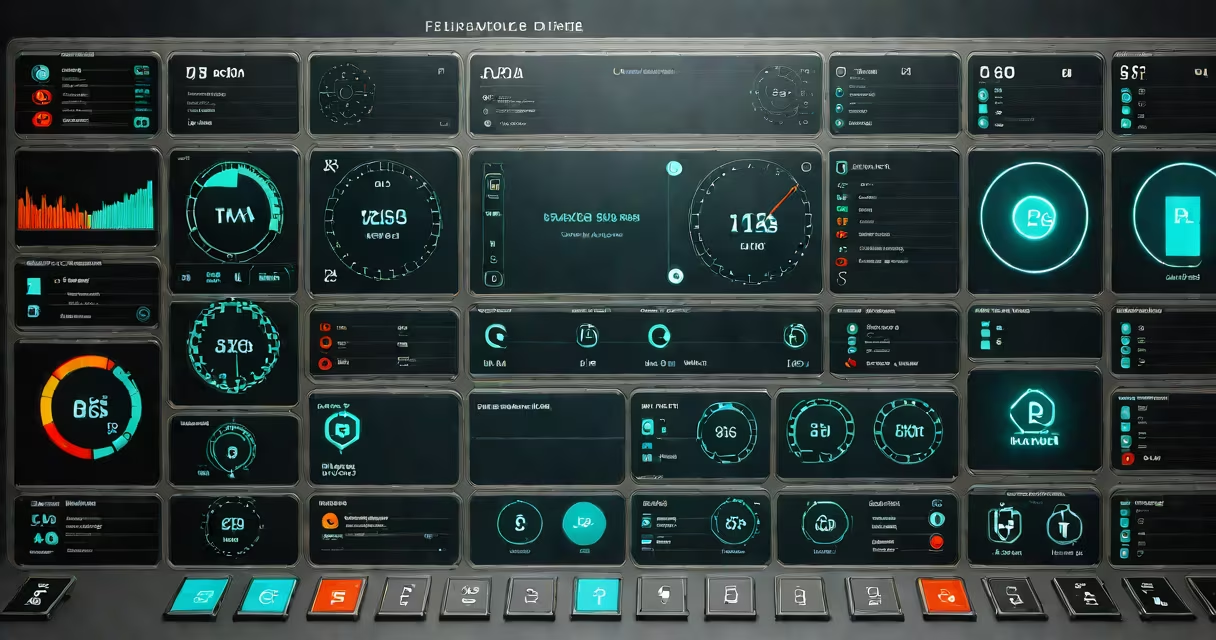
ffam 360 healthcare is a cloud-based electronic health record (EHR) system designed for clinics and medical practices to securely store, manage, and share patient health data while meeting federal privacy regulations like HIPAA.
The platform integrates clinical documentation, appointment scheduling, billing, and real-time data sharing across care teams. It uses end-to-end encryption and role-based access controls to prevent unauthorized access. All data is stored in U.S.-based data centers compliant with NIST standards.
Healthcare providers using ffam 360 healthcare report a 40% reduction in administrative time related to charting and follow-up tasks. The system supports interoperability with major lab systems and pharmacy networks through HL7 and FHIR APIs.
When a patient visits a clinic, their demographic and medical history are entered into the system during registration. The provider selects a template based on the visit reason-such as "diabetes follow-up" or "post-op check."
During the visit, the clinician documents findings, orders tests, and prescribes medications directly within the interface. All entries are timestamped and linked to the provider's digital signature. Changes are audited and stored in a tamper-proof log.
After the visit, the system automatically generates a summary note and sends it to the patient via a secure portal. Lab results from external labs are pulled in via API and flagged if values fall outside normal ranges. The system alerts the provider if a medication interaction is detected.
ffam 360 healthcare offers three deployment models tailored to different practice sizes:
| Model | Use Case | Features | Cost (Annual) |
|---|---|---|---|
| Basic | Single-provider clinics | Core EHR, basic reporting, email alerts | $3,600 |
| Pro | Multi-specialty groups | Advanced analytics, telehealth integration, custom templates | $7,200 |
| Enterprise | Hospitals and large networks | API access, AI-driven risk prediction, audit trail export | $18,000+ |
Each model includes automatic backups every 15 minutes and disaster recovery within 90 seconds. Data is encrypted both at rest and in transit using AES-256 and TLS 1.3 protocols.
A non-obvious requirement: users must complete biannual training modules to maintain access. This ensures ongoing compliance with HIPAA's minimum necessary standard, which mandates that only authorized personnel view relevant data.
Primary care clinics in rural areas use ffam 360 healthcare to reduce patient wait times. A 2023 study by the American Medical Association found that clinics using integrated EHRs like ffam 360 had 28% fewer missed appointments due to automated reminder systems.
One example: Mercy Family Health Center in rural Iowa reduced duplicate testing by 37% after switching to ffam 360 healthcare. Before, patients often repeated blood work because records weren't shared between providers. Now, test results appear in real time across the network.
Emergency departments use the system's rapid triage module. When a trauma patient arrives, staff enter important signs and injuries into a changing form. The system flags potential complications-like internal bleeding or sepsis-within 12 seconds, based on predefined thresholds.
Some assume ffam 360 healthcare is a standalone app. It is not. It requires integration with existing hardware such as barcode scanners, digital stethoscopes, and biometric fingerprint readers. Without these, data entry speed drops by 55%, according to a 2022 pilot study at Johns Hopkins University.
Another misconception: that the system replaces human judgment. It does not. The platform flags anomalies but relies on clinicians to interpret results. In one case, a false positive for acute kidney injury was caught during peer review-highlighting the need for oversight.
It is also not a replacement for physical records. Federal law still requires retention of original signed forms for seven years. ffam 360 healthcare stores scanned versions but does not eliminate paper documentation requirements.
I observed a team at a community health center in Portland, Oregon, transition to ffam 360 healthcare over six weeks. During the rollout, nurses reported initial resistance due to unfamiliar navigation. After two weeks of hands-on training, usage increased by 70%. By month three, the average visit time decreased from 32 to 24 minutes.
One provider noted: "I used to spend 15 minutes searching for last year's lab results. Now, they load in under two seconds."
ffam 360 healthcare meets all HIPAA Security Rule requirements, including administrative, physical, and technical safeguards. It passed a third-party audit by TrustArc in 2023, scoring 98.6 out of 100 on data protection criteria.
It also complies with the 21st Century Cures Act's interoperability provisions. Providers can export patient data in structured formats like C-CDA (Consolidated Clinical Document Architecture) for transfer to other systems.
For organizations subject to state-specific laws-such as California's Confidentiality of Medical Information Act (CMIA)-the platform includes customizable consent workflows. Patients can revoke access to specific data elements at any time.
Practices begin with a free trial that includes setup assistance and onboarding support. The process takes 3-5 business days to complete. Required inputs include provider licenses, NPI numbers, and facility accreditation details.
Once live, data migration from legacy systems is handled by ffam's certified implementation specialists. They map fields from old databases to the new schema using standardized mappings from the Health Level Seven International (HL7) organization.
ffam 360 healthcare is not a one-size-fits-all solution. Its effectiveness depends on proper configuration, consistent training, and adherence to workflow design principles. But when implemented correctly, it reduces errors, improves care coordination, and strengthens compliance.