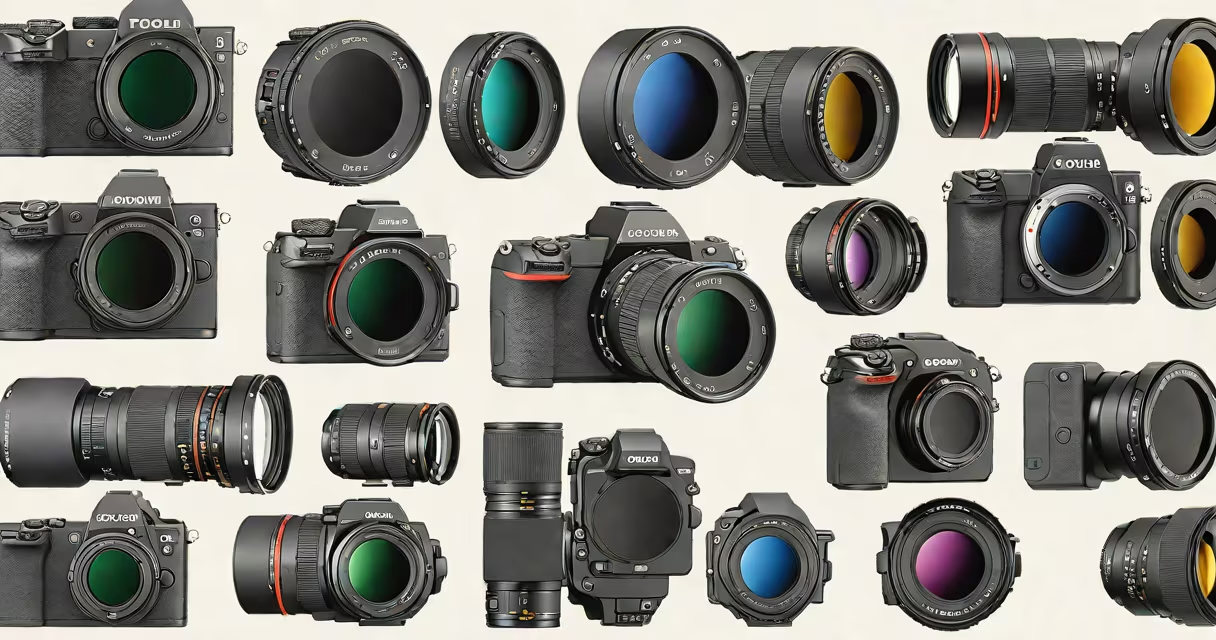
Focal length in photography is the distance, measured in millimeters, from the optical center of a lens to the camera's sensor when the subject is in sharp focus. It directly controls the angle of view and magnification of the image captured. A shorter focal length captures a wider scene; a longer one magnifies distant subjects.
Think of focal length as the lens's "zoom power" and "field of view." A 24mm lens shows more of the scene-ideal for landscapes. A 200mm lens pulls distant objects closer-perfect for wildlife. The measurement is fixed on prime lenses and variable on zoom lenses.
For example, a 50mm lens on a full-frame camera produces a field of view similar to human vision. A 16mm lens captures nearly 120 degrees of scene-wide enough for interior shots. A 300mm lens isolates a bird in a tree from 100 meters away. These differences aren't just technical-they define how viewers perceive space and scale.
The focal length determines how much of the scene fits into the frame. It's derived from the lens's optical design and the curvature of its elements. Light rays converge at a single point-the focal point-on the sensor plane. The distance between that point and the lens's center is the focal length.
When you change the focal length, you alter the relationship between the subject and the background. A wide-angle lens (e.g., 18mm) exaggerates depth, making nearby objects appear larger relative to distant ones. A telephoto lens (e.g., 135mm) compresses space, blurring background details and flattening perspective.
For instance, shooting a person at 24mm makes their nose look disproportionately large compared to their ears. At 85mm, facial features appear more balanced. This effect is critical in portrait work-where 85mm to 105mm is standard-to avoid distortion and achieve natural proportions.
Lenses are grouped by focal length ranges. These categories define typical uses and visual outcomes:
| Focal Length Range | Common Name | Use Cases | Visual Effect |
|---|---|---|---|
| 10-24mm | Ultra-wide-angle | Architecture, interiors, dramatic landscapes | Distorts perspective; exaggerates foreground |
| 24-35mm | Wide-angle | Street photography, environmental portraits | Shows context; slightly distorted edges |
| 50-85mm | Normal to short telephoto | Portraits, everyday snapshots | Most natural-looking perspective |
| 85-135mm | Medium telephoto | Studio and outdoor portraits | Flattens background; soft bokeh |
| 135mm+ | Telephoto | Wildlife, sports, distant subjects | Compresses space; isolates subject |
These ranges apply to full-frame sensors. On crop-sensor cameras, effective focal lengths increase due to the 1.5x or 1.6x crop factor. A 50mm lens on a crop sensor behaves like a 75mm lens on full frame.
Prime lenses have a fixed focal length-like a 35mm f/1.8. Zoom lenses allow adjustment-such as a 70-200mm f/2.8. Zooms offer flexibility; primes often deliver sharper images and wider apertures.
Many assume "zoom" and "focal length" are interchangeable. They're not. Zoom refers to the ability to change focal length during capture. A lens with a variable focal length-like 24-70mm-is called a zoom lens. But zoom doesn't define the actual focal length-it only enables changing it.
For example, a 70-200mm lens offers a zoom range, but its maximum magnification depends on the 200mm setting. You can't zoom beyond that. The focal length sets the limit. A 200mm lens cannot capture a wider scene than a 24mm lens-even if both are zoom lenses.
A common mistake is thinking a 100mm lens on a crop sensor gives the same reach as a 100mm on full frame. It doesn't. The crop sensor reduces the field of view, effectively increasing the focal length. A 100mm lens on a camera with a 1.5x crop factor acts like a 150mm lens on full frame.
Suppose you're photographing a soccer game from the stands. Using a 70-200mm zoom lens, you set it to 200mm to isolate players near the goal. The 200mm focal length compresses the field, making defenders appear closer together and the goalpost seem larger. Background noise fades into blur.
Now switch to a 24mm lens. The entire field fills the frame. Players near the camera appear oversized; those in the distance seem tiny. The sense of depth is exaggerated. You can't see the whole action unless you step back.
This difference isn't just about framing-it changes how viewers interpret the moment. The 200mm version feels intense, focused. The 24mm version feels immersive, chaotic. The choice of focal length shapes narrative and emotion.
I once shot a wedding ceremony using a 35mm lens. The guest list was tight. I stood at the back, capturing the couple from a distance. The lens showed the entire room-guests, decorations, the altar-all in one frame. Later, when editing, I realized the 35mm had preserved spatial relationships better than any zoom could. That moment taught me: focal length isn't just about size-it's about storytelling.
One overlooked fact: focal length doesn't affect depth of field directly. Aperture does. But because longer focal lengths often pair with wider apertures (e.g., 85mm f/1.2), they create shallower depth of field. This confuses people into thinking focal length controls blur.
Another correction: focal length doesn't change perspective. Perspective is determined by camera position. Move closer to a subject with a 50mm lens, and you get distortion. Move farther away with a 100mm lens, and the subject appears flat-but the lens didn't cause it. The distance did.
Understanding this separates myth from mechanics. A 24mm lens doesn't "widen" reality-it captures a wider angle of view. A 200mm lens doesn't "stretch" distance-it magnifies what's already far. The lens doesn't alter space. It reveals it differently.
Mastering focal length means knowing not just what a lens can do-but what it can't. It's the foundation of composition, framing, and emotional impact. a child's smile, the focal length defines the story.