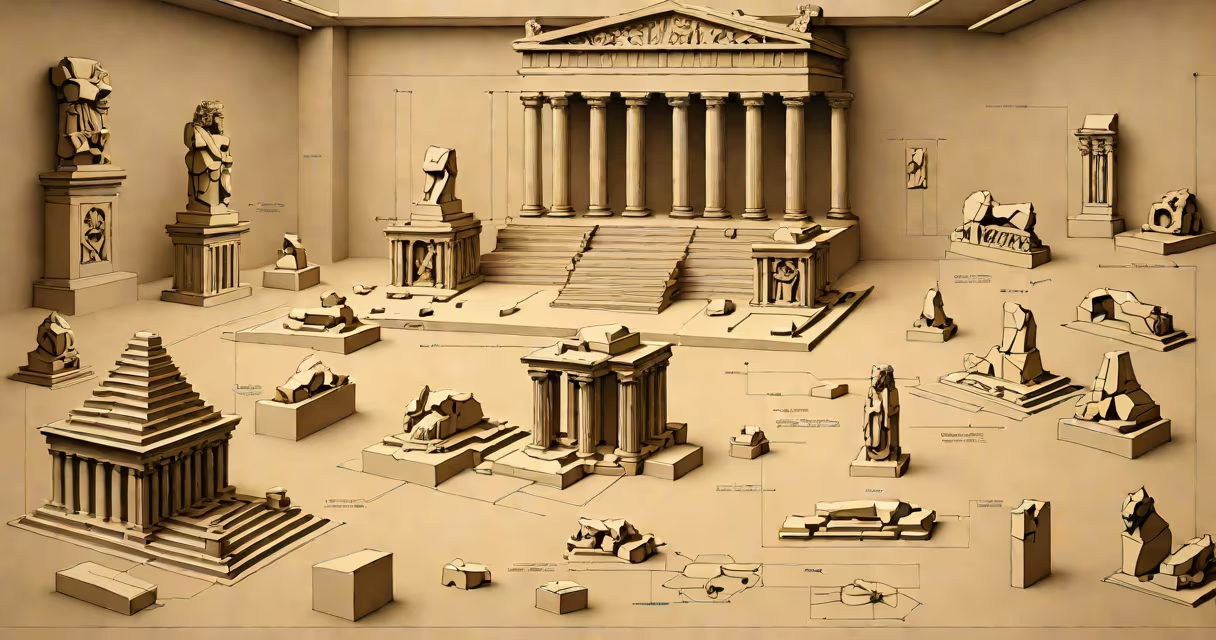
History means the systematic study of past human events, societies, and experiences using written records, artifacts, and oral traditions. It is not just a list of dates and battles-it is an interpretation of how people lived, thought, and changed over time.
Historians analyze documents, monuments, tools, and stories to reconstruct what happened and why. They don't just report facts-they explain causes, consequences, and patterns. For example, the fall of the Western Roman Empire wasn't just a date (476 CE); it involved economic decline, military overextension, and shifting cultural values.
According to the American Historical Association, history "is the study of change over time." This definition emphasizes process, not just static events. The field includes political, social, economic, scientific, and cultural dimensions. A historian studying the Industrial Revolution examines factory labor, urban growth, pollution, and worker protests-not just machinery or inventions.
History relies on evidence. That evidence can be letters, diaries, government records, photographs, archaeological digs, or even songs and artworks. Not all evidence is equally reliable. A soldier's diary from World War II gives personal insight into combat, but it reflects one perspective. A government report may be official but biased toward national pride.
Historians use critical thinking to assess credibility. They ask: Who created this? Why? When? For whom? A 19th-century British colonial officer's journal describing India as "backward" reveals more about British attitudes than accurate descriptions of Indian society. Modern historians cross-check such sources with local accounts, maps, and demographic data.
For example, the 1776 U.S. Declaration of Independence was written by Thomas Jefferson. Its language-"all men are created equal"-was revolutionary. But historians now know that Jefferson owned enslaved people. This contradiction forces deeper analysis: Was equality meant only for white male property owners? This tension shows that history isn't a single story-it's layered, complex, and often contradictory.
History is divided into categories based on subject, time period, and method. These types help organize research and teaching.
| Type | Focus | Example |
|---|---|---|
| Political History | Governments, wars, treaties | The Treaty of Versailles (1919) and its role in triggering WWII |
| Social History | Everyday life, class, gender, race | Migration patterns of Irish immigrants to New York in the 1850s |
| Environmental History | Nature-human interactions, climate, resource use | Deforestation in the Amazon during Brazil's 20th-century development |
| Cultural History | Art, religion, music, beliefs | How jazz music reflected African American identity in 1920s Harlem |
Each type uses different sources. Political history leans on state archives. Social history draws from census data, personal letters, and oral interviews. Environmental history combines climate science with land-use records. Cultural history analyzes symbols, rituals, and media.
A common mistake is treating history as a single narrative. In reality, multiple histories exist. The American Civil War is taught differently in Southern schools versus Northern ones. One version focuses on states' rights and secession; another emphasizes slavery as the central cause. Both are valid interpretations based on evidence-but they reflect different values and priorities.
History is not memory. Personal memories fade, distort, or change over time. History is public, documented, and peer-reviewed. A person might remember their childhood home as warm and safe-but a historian investigating the same house in 1940 would find records of overcrowding, poor sanitation, and high infant mortality rates.
History is not destiny. Just because something happened doesn't mean it had to happen. The rise of fascism in Germany wasn't inevitable. Historians have shown that democratic institutions failed due to specific choices-like the 1933 Enabling Act, which gave Hitler emergency powers. Those choices were made by real people under pressure, not predetermined by fate.
Another misconception: history is only about the past. It shapes the present. Understanding the roots of systemic racism helps explain current disparities in housing, education, and policing. The 1964 Civil Rights Act didn't appear out of nowhere-it grew from decades of protest, legal challenges, and grassroots organizing. Knowing this context changes how we view today's movements.
In 1918, the Spanish flu killed an estimated 50 million people worldwide. At the time, governments suppressed news to maintain morale during World War I. As a result, many communities didn't prepare. Cities like Philadelphia held a parade despite early cases-leading to 11,000 deaths in four weeks.
Today, historians use death records, hospital logs, newspaper reports, and survivor testimonies to understand the pandemic's impact. They compare responses: St. Louis closed schools and banned gatherings early and saw lower death rates. Philadelphia delayed action and suffered more.
This comparison shows how decisions shaped outcomes. It also reveals gaps in data-many rural areas had no records. Historians fill those gaps using church registers, family letters, and epidemiological models. The lesson? History isn't just about what happened-it's about understanding how choices, communication, and timing affect results.
When you see a headline about a new disease outbreak, asking "What does history mean?" helps you look beyond fear. You can compare it to past pandemics, evaluate policy responses, and recognize patterns. That's the power of historical thinking.
Understanding what does history mean allows you to engage with the world critically. It helps you spot false claims, question assumptions, and avoid repeating mistakes. As the historian Barbara Tuchman wrote, "The past is not dead. It is not even past."
For instance, the term "asf" in online forums stands for "as fuck." While not academic, it illustrates how language changes. A historian studying internet culture would trace this slang to early 2000s chat rooms and gaming communities. The evolution of "asf" shows how informal speech becomes embedded in digital identity-a modern form of historical record.
What does history mean? It's the ongoing effort to understand ourselves through the lens of the past. It's not a fixed set of facts. It's a conversation across time, grounded in evidence, shaped by questions, and driven by curiosity.