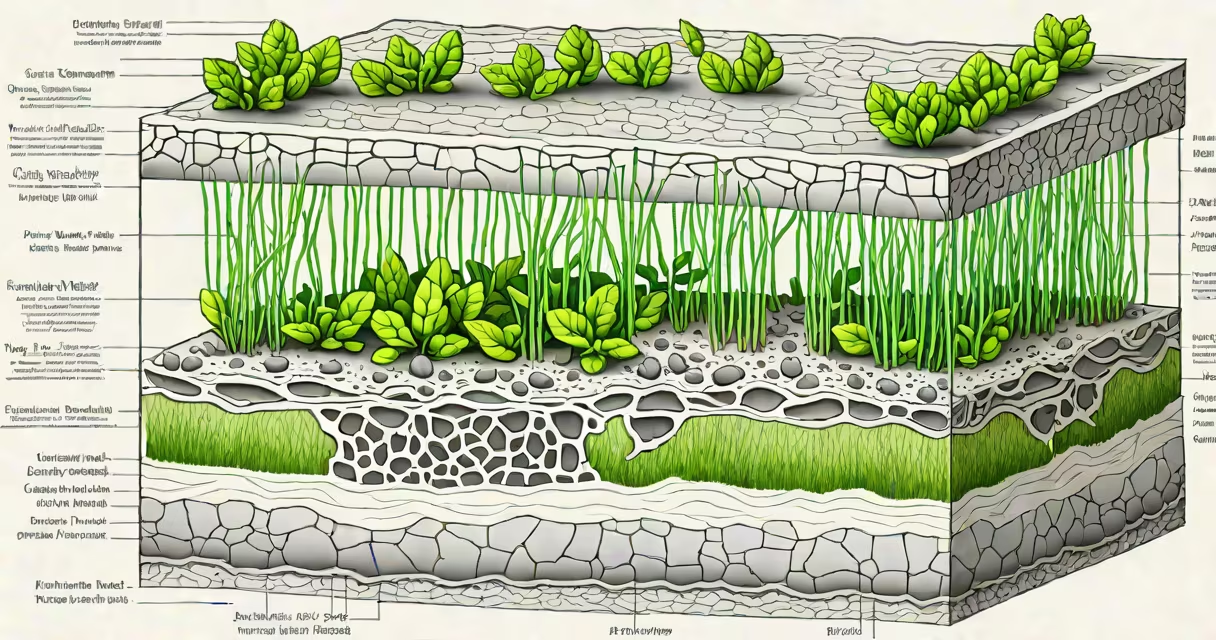
A cell wall is a rigid layer surrounding certain cells, primarily made of structural polysaccharides such as cellulose in plants, chitin in fungi, and peptidoglycan in bacteria. This outer barrier maintains cell shape, prevents bursting under osmotic pressure, and provides mechanical strength.
Cell walls form during cell division and are essential for survival in environments with variable water concentrations. They are absent in animal cells but present in nearly all plant, fungal, and prokaryotic cells. The specific chemical makeup varies by organism type, reflecting evolutionary adaptation to environmental challenges.
Understanding the composition of a cell wall explains why antibiotics like penicillin target bacterial cell walls-they disrupt peptidoglycan synthesis, leading to cell lysis. In contrast, plant cell walls resist degradation due to high cellulose content and lignin reinforcement, making them resistant to many common enzymes.
Cell walls differ between kingdoms. The primary structural elements are polysaccharides, often cross-linked with proteins or other polymers. These materials create a matrix that resists physical stress and controls molecular passage.
Plants rely heavily on cellulose-a polymer of glucose units linked by β-1,4-glycosidic bonds. Cellulose microfibrils form a network that gives the wall tensile strength. Lignin, a complex aromatic polymer, reinforces the wall in woody tissues, contributing to durability and resistance to decay. According to the National Center for Biotechnology Information (NCBI), lignin accounts for up to 30% of dry mass in hardwoods.
Bacteria use peptidoglycan, a mesh-like polymer composed of repeating disaccharide units (N-acetylglucosamine and N-acetylmuramic acid) cross-linked by short peptide chains. Gram-positive bacteria have thick layers of peptidoglycan, while Gram-negative species have thinner layers surrounded by an outer membrane. This difference determines antibiotic susceptibility and is central to bacterial classification.
Fungi build their walls primarily from chitin, a nitrogen-containing polysaccharide similar to the material in insect exoskeletons. Chitin forms long chains of N-acetylglucosamine residues, creating a tough, flexible barrier. Unlike cellulose, chitin resists enzymatic breakdown by most plant-based enzymes, which is why fungal infections in crops are hard to control.
| Organism Group | Main Structural Polysaccharide | Additional Key Components | Function |
|---|---|---|---|
| Plants | Cellulose | Lignin, pectin, hemicellulose | Structural support, water transport, defense |
| Bacteria | Peptidoglycan | Teichoic acids (Gram-positive), lipopolysaccharides (Gram-negative) | Shape maintenance, osmotic protection, immune evasion |
| Fungi | Chitin | Glucans, glycoproteins | Barrier against pathogens, nutrient absorption |
The material makeup directly influences how a cell wall performs. For example, cellulose's crystalline structure allows it to withstand high tension forces, important for tall trees that must transport water vertically. In contrast, peptidoglycan's cross-linking enables rapid repair and flexibility in changing environments.
Cell walls also regulate permeability. Small molecules like water and ions pass through pores or channels, but large macromolecules are blocked. This selective filtration protects internal cellular processes. In root cells, the middle lamella-a pectin-rich layer-acts as a glue between adjacent cells, enabling tissue cohesion.
A non-obvious fact: some protists, like diatoms, have silica-based cell walls. These structures are not organic polymers but mineral deposits formed intracellularly and extruded to create a glass-like shell. Silica walls provide extreme hardness and resistance to predation, allowing diatoms to dominate marine plankton communities.
Many assume all cell walls are made of cellulose because plants are the most familiar. But this is incorrect-bacteria and fungi use entirely different materials. Confusing peptidoglycan with cellulose leads to misunderstandings about antibiotic mechanisms.
Another misconception is that cell walls are static. In reality, they are changing structures. During growth, plant cells secrete new cellulose and pectin into the wall, expanding it gradually. Enzymes like expansins loosen the cellulose network, allowing expansion without rupture. This process is tightly regulated by hormones such as auxin.
I once observed a tomato seedling growing through a thin plastic barrier. The cell walls in the root tip were visibly deforming and reforming as the cells pushed forward. The outer layer of cells had thickened and hardened, forming a protective sheath around the emerging root tip-proof that cell walls adapt in real time to mechanical stress.
Knowing what a cell wall is made of informs biotechnology and medicine. For example, biofuel production relies on breaking down plant cell walls to access fermentable sugars. The enzyme cocktail used in industrial biofuel processing includes cellulases, xylanases, and pectinases-each targeting a specific component of the wall.
Similarly, in medicine, drugs that inhibit peptidoglycan synthesis-like penicillin and vancomycin-are effective only against bacteria with cell walls. Human cells lack this structure, so these antibiotics do not harm host tissues. This selectivity makes them safe for treating bacterial infections.
Final clarification: not all cells with walls are alive. Dead cells in wood, for instance, retain their cell walls but lose metabolic activity. The wall persists as a structural remnant, contributing to the durability of tree trunks and wooden beams.
Understanding what a cell wall is made of reveals how life adapts to physical constraints. From the towering redwood to the invisible bacterium in your gut, the wall defines survival in a world of osmotic pressure, predators, and environmental change.