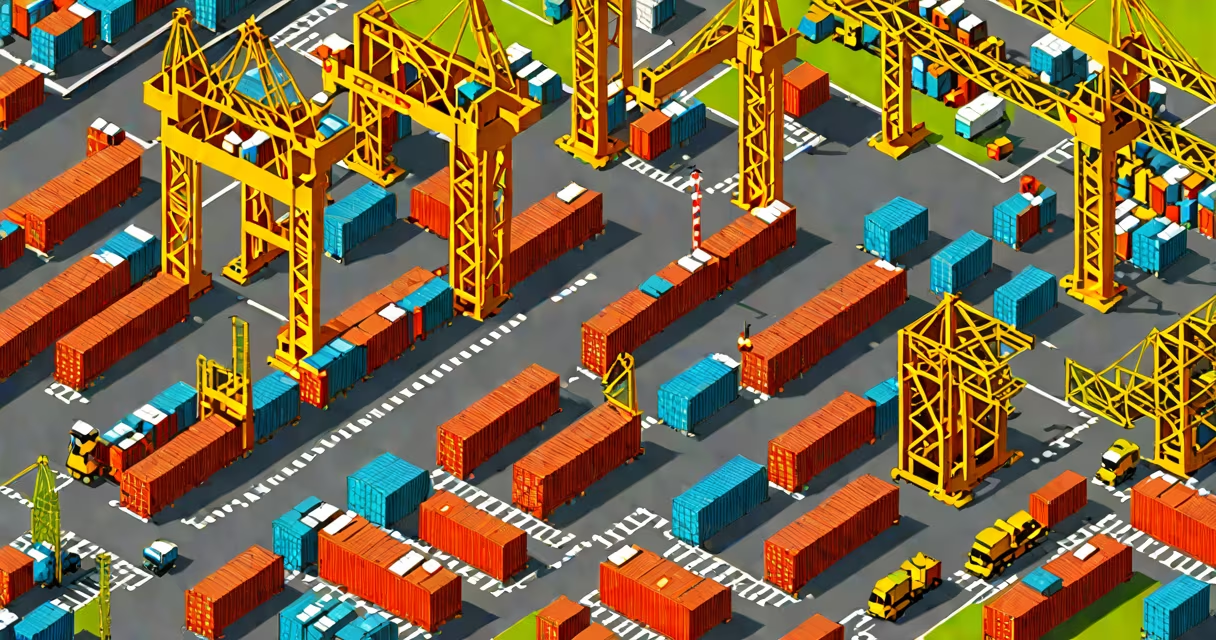
A freight company transports large volumes of goods using trucks, trains, ships, or airplanes. These businesses handle everything from raw materials to finished products across local, national, and international routes. They are essential to global trade and supply chains.
Freight companies differ from courier services by focusing on bulk shipments rather than individual packages. While a courier delivers a single box overnight, a freight company moves thousands of pounds of cargo between cities, ports, or countries. This distinction matters for cost, speed, and logistics planning.
The U.S. Bureau of Transportation Statistics reports that freight transport accounts for over 80% of all goods moved within the United States by weight. That includes everything from steel beams to electronics, shipped daily through dedicated networks.
Freight companies manage complex logistics. They plan routes, schedule pickups and deliveries, track shipments in real time, and coordinate with customs, warehouses, and carriers. Most use software platforms to monitor vehicle locations, fuel usage, and delivery windows.
For example, a freight company moving machinery from Detroit to Rotterdam uses a combination of rail and ocean freight. The shipment leaves a warehouse in Michigan via rail car, arrives at the Port of New York, then transfers to a container ship bound for Europe. Each leg is tracked through GPS and automated systems.
These operations rely on standardized containers. The International Organization for Standardization (ISO) defines container sizes, with 20-foot and 40-foot units being most common. A single 40-foot container can hold up to 26,000 kilograms of cargo, reducing handling time and damage risk.
Freight companies specialize in different modes of transport and service levels. The main categories include:
| Service Type | Transport Mode | Typical Use Case | Speed & Cost |
|---|---|---|---|
| Less-than-Truckload (LTL) | Truck | Small batches from multiple shippers | Medium speed, lower cost per unit |
| Full Truckload (FTL) | Truck | Single consignment, high volume | Faster, higher cost |
| Intermodal | Rail + Truck + Ship | Long-distance cross-country or international | Slower, most cost-efficient |
| Air Freight | Aircraft | Time-sensitive goods, medical supplies | Fastest, highest cost |
Not all freight companies offer every mode. Some focus solely on domestic trucking, while others run global networks. For instance, FedEx Freight specializes in LTL and FTL within North America, while Maersk operates container ships across 120 countries.
One non-obvious fact: many freight companies don't own the vehicles they use. Instead, they contract with independent owner-operators or regional fleets. This model reduces capital costs and increases flexibility during peak seasons.
People often confuse freight companies with freight forwarders. A freight forwarder arranges and manages the movement of goods but doesn't typically own transport assets. They act as intermediaries between shippers and carriers.
For example, a small manufacturer in Ohio may hire a freight forwarder to move a shipment to Vietnam. The forwarder books space on a container ship, handles export documentation, and tracks the cargo. But the actual transport is done by a shipping line like MSC or CMA CGM.
Another misconception is that freight companies only serve big corporations. In reality, small businesses frequently use freight services. A craft brewery in Colorado shipped 500 cases of beer to retailers in California using a regional freight carrier. The cost was $1,200 for a 2-day delivery, which included insurance and tracking.
I once visited the B Fuller Company's warehouse in Indianapolis. They specialize in intermodal freight between the Midwest and West Coast. Their fleet includes 120 trailers and partnerships with Union Pacific and BNSF rail lines.
During my visit, a trailer loaded with agricultural equipment left the yard at 6 a.m. It traveled 1,200 miles via rail, arriving in Portland by Friday morning. The entire trip was monitored through a cloud-based system that sent updates to the customer every 30 minutes.
B Fuller Company charges based on weight, distance, and service level. A 20-foot container from Chicago to Seattle cost $2,450 in 2023, including customs clearance and delivery to the buyer's dock.
Without freight companies, global commerce would stall. They enable just-in-time manufacturing, seasonal retail restocking, and emergency supply deliveries. During the 2020 pandemic, freight networks kept hospitals supplied with ventilators and PPE despite border closures and labor shortages.
The American Trucking Associations estimates that over 3 million jobs in the U.S. depend on freight movement. These include drivers, dispatchers, warehouse staff, and maintenance workers. The industry contributes over $700 billion annually to the national economy.
When choosing a freight company, consider transit times, reliability, insurance coverage, and customer support. A reputable provider offers clear pricing, real-time tracking, and documented proof of delivery.
Understanding what is a freight company helps clarify how goods travel from factory to store. Whether moving furniture across state lines or electronics across oceans, these businesses form the core of modern trade.