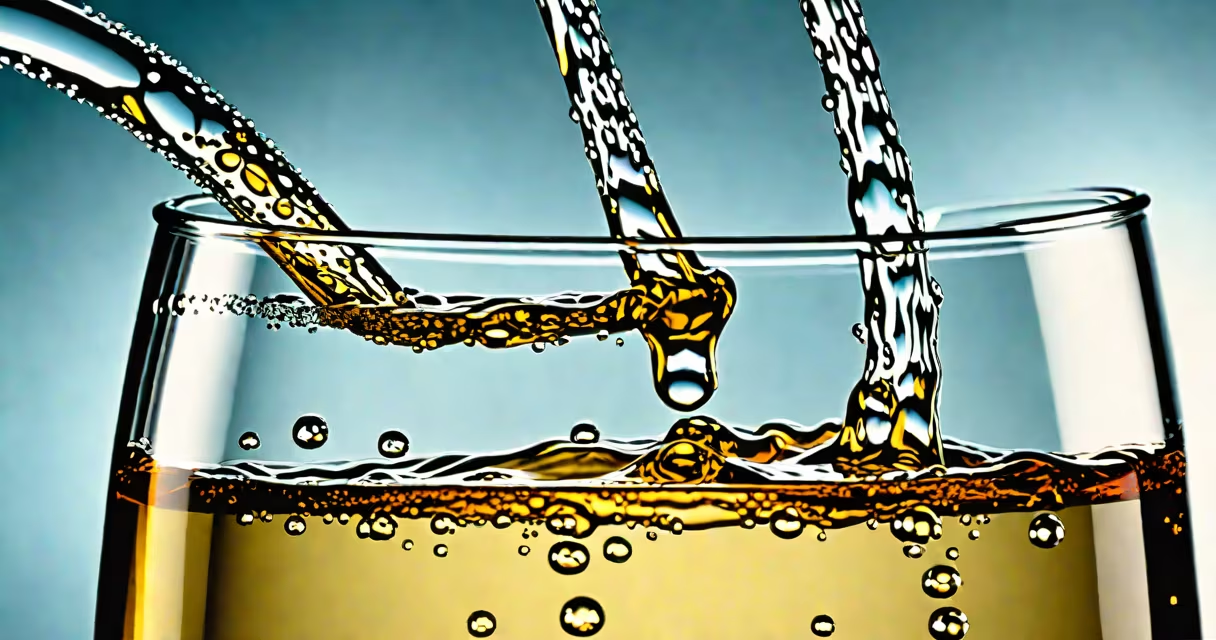
A solvent in science is a substance that dissolves another substance-called a solute-to form a homogeneous mixture known as a solution. Solvents are typically liquids, though they can also be gases or solids under specific conditions. Water, ethanol, and acetone are common examples used in laboratories and industrial processes.
Solvents work by surrounding solute particles through intermolecular interactions such as hydrogen bonding, dipole-dipole forces, or London dispersion forces. These interactions overcome the forces holding the solute together, allowing it to disperse evenly throughout the solvent. The ability of a solvent to dissolve a particular solute depends on the principle "like dissolves like"-polar solvents dissolve polar solutes, and nonpolar solvents dissolve nonpolar solutes.
For example, when salt (NaCl) is added to water, the negatively charged oxygen atoms in water molecules attract sodium ions, while the positively charged hydrogen atoms attract chloride ions. This hydration process pulls individual ions apart and stabilizes them in solution. Without water acting as a solvent, many biological and chemical reactions essential to life would not occur.
At the molecular level, solvation-the process of solvent molecules surrounding solute particles-is driven by energy balance. When a solute dissolves, energy is absorbed to break solute-solute and solvent-solvent interactions. Energy is released when new solvent-solute interactions form. If the energy released exceeds the energy required, dissolution occurs spontaneously.
The strength of intermolecular forces determines whether a solvent can effectively dissolve a given compound. For instance, water's high dielectric constant reduces electrostatic attraction between ions, making it effective at dissolving ionic compounds. In contrast, hexane-a nonpolar solvent-cannot dissolve salts because it lacks the charge separation needed to stabilize ions.
One non-obvious fact often missed: not all solvents are inert. Some solvents react chemically with solutes during dissolution. Acetic acid, for example, can participate in esterification reactions when dissolving alcohols. This reactivity limits its use in certain analytical procedures where pure dissolution is required.
Solvents fall into categories based on polarity and chemical structure. The most widely used classification separates them into polar protic, polar aprotic, and nonpolar solvents.
| Type | Polarity | Examples | Typical Uses |
|---|---|---|---|
| Polar protic | High | Water, ethanol, methanol | Biological systems, organic synthesis, extraction |
| Polar aprotic | High | DMSO, acetone, acetonitrile | Nucleophilic substitutions, chromatography, lab cleaning |
| Nonpolar | Low | Hexane, benzene, carbon tetrachloride | Extraction of oils, cleaning greasy residues, nonpolar reactions |
Each type serves distinct roles. Water, the most abundant solvent on Earth, supports nearly all biochemical reactions due to its polarity and hydrogen bonding capacity. Ethanol is used in pharmaceuticals and disinfectants because it dissolves both polar and nonpolar substances, enabling broad-spectrum antimicrobial action.
Acetone, a polar aprotic solvent, is frequently used in labs to clean glassware and extract organic compounds. Its low boiling point (56°C) allows easy removal after use. However, it is flammable and must be handled with care near open flames.
Many assume that any liquid capable of dissolving something qualifies as a solvent. But in scientific terms, a solvent must be the majority component in a solution. If you mix 1 mL of oil into 100 mL of water, water is the solvent-even if the oil is the one being dispersed.
Another misconception is that solvents are always safe. Many commonly used solvents are toxic or carcinogenic. Benzene, once widely used in industrial chemistry, is now restricted due to its link to leukemia. Modern safety standards require handling volatile organic solvents in fume hoods and using personal protective equipment.
Even the term "universal solvent" is misleading. While water dissolves more substances than any other liquid, it cannot dissolve nonpolar materials like fats or waxes. Oil and water do not mix because their intermolecular forces differ too greatly.
Consider paint: a complex mixture where pigments (solute) are suspended in a liquid medium (solvent). A typical acrylic paint uses water as the primary solvent. As the paint dries, water evaporates, leaving behind pigment particles bound by a polymer resin.
If the solvent were replaced with a faster-evaporating one like acetone, the paint would dry too quickly, leading to uneven film formation and cracking. Conversely, using a slow-evaporating solvent like ethylene glycol could prevent drying altogether. Formulators carefully select solvents based on evaporation rate, viscosity, and compatibility with binders.
I once observed a lab technician accidentally use acetone instead of ethanol to clean a reaction flask. The residue left behind altered the pH of the next batch, causing a side reaction. The error was traced to solvent choice-not concentration or temperature. That moment reinforced how critical solvent selection is in reproducible science.
Solvents enable controlled environments for chemical reactions. They allow precise mixing, heat transfer, and product isolation. In drug development, solvents influence reaction yield, purity, and scalability. The U.S. Food and Drug Administration (FDA) requires detailed documentation of solvent use in pharmaceutical manufacturing due to toxicity concerns.
Environmental regulations also govern solvent use. The EPA classifies volatile organic compounds (VOCs) like toluene and xylene as air pollutants. Industries must capture and treat solvent vapors to meet emissions standards. Green chemistry initiatives promote safer alternatives, such as supercritical CO₂ or ionic liquids, which reduce environmental impact.
A solvent in science is not just a carrier-it's an active participant in chemical change. Its properties dictate reaction pathways, stability, and efficiency. Choosing the right solvent is as important as choosing the right catalyst.