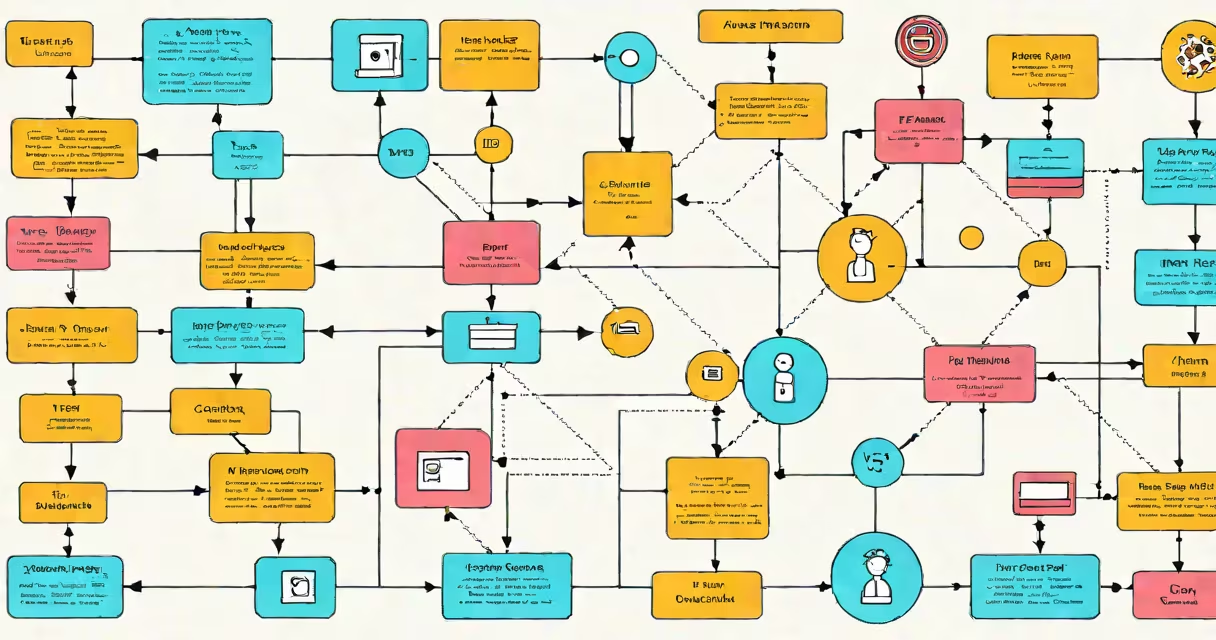
An algorithm definition is a finite, unambiguous sequence of well-defined steps that solves a particular problem or performs a specific task. It takes inputs, processes them through logical operations, and produces a desired output. Algorithms are the foundation of all computer programs and many real-world procedures.
Algorithms operate on data using rules that guarantee a result within a predictable number of steps. They do not require creativity or intuition-only strict adherence to instructions. A valid algorithm must terminate after a finite number of steps, produce correct results for all valid inputs, and be executable by a machine or human following the steps precisely.
For example, the Euclidean algorithm computes the greatest common divisor (GCD) of two integers. Given 48 and 18, it repeatedly subtracts the smaller from the larger until both numbers are equal. After four steps-48−18=30, 30−18=12, 18−12=6, 12−6=6-the GCD is 6. This process is deterministic and always yields the correct answer.
Every algorithm follows a structured workflow: input, processing, and output. Inputs are data provided to the algorithm-numbers, text, images, or sensor readings. Processing applies a series of operations based on predefined logic. Output is the result-such as a sorted list, a recommendation, or a calculated value.
Processing relies on control structures: sequences (steps in order), decisions (if/else branches), and loops (repeating actions). These form the building blocks of algorithmic behavior. For instance, a search algorithm scans a database row by row until it finds a match, then stops. The loop continues only while the condition (not found) remains true.
Algorithms are not limited to computers. A recipe for baking bread is an algorithm: it specifies ingredients (input), mixing and rising steps (processing), and a finished loaf (output). The difference lies in precision-computational algorithms must be exact enough to be implemented by machines.
Algorithms vary by purpose and structure. Common categories include sorting, searching, optimization, and machine learning algorithms. Each type addresses a distinct class of problems.
| Type | Use Case | Example | Efficiency |
|---|---|---|---|
| Sorting | Arranging data in order | QuickSort for large datasets | O(n log n) |
| Searching | Finding an item in a collection | Binary search in sorted arrays | O(log n) |
| Graph traversal | Going through networks | Dijkstra's algorithm for shortest path | O((V + E) log V) |
| Machine learning | Pattern recognition | Neural network training via gradient descent | Variable, depends on data size |
Sorting algorithms like MergeSort divide data into halves, sort each recursively, then merge them. This approach ensures consistent performance even with large inputs. In contrast, Bubble Sort compares adjacent elements repeatedly-it works for small lists but becomes impractical beyond 100 items due to its O(n²) time complexity.
Search algorithms differ based on data structure. Linear search checks every element in sequence-efficient only for small or unsorted data. Binary search requires sorted input and cuts the search space in half each step. With 1 million entries, binary search finds a value in at most 20 comparisons, compared to up to 1 million for linear search.
People often confuse algorithms with software, code, or artificial intelligence. An algorithm is a concept-an abstract plan. Code is its implementation. Software is a collection of algorithms working together. AI systems may use complex algorithms, but not all algorithms are intelligent.
A key distinction is between algorithms and heuristics. Heuristics provide approximate solutions quickly-ideal for problems where perfect answers are too slow to compute. For example, route-finding apps use heuristic-based algorithms like A* to estimate distances and prioritize likely paths. These don't guarantee the optimal route but deliver usable results in milliseconds.
Another misconception is that algorithms are inherently objective. While algorithms follow rules, their design reflects human choices. Bias in facial recognition software stems from training data skewed toward certain demographics-not from faulty logic. The algorithm processes data correctly, but the input shapes the outcome.
I once tested a sorting algorithm on a dataset of 50,000 student grades. The initial version used nested loops and took 12 seconds to complete. Switching to a merge-sort implementation reduced runtime to under 0.5 seconds. The logic was unchanged-only the algorithmic approach improved efficiency.
Understanding algorithm definition enables better decision-making in tech development, data analysis, and system design. It clarifies what can be automated and what requires human oversight. Recognizing the limits of algorithms prevents over-reliance on systems that appear intelligent but lack context.
When evaluating a solution, ask: Is it an algorithm? Does it have clear inputs, defined steps, and a guaranteed output? If yes, it can be verified, tested, and optimized. If not, it may rely on intuition, guesswork, or incomplete logic.