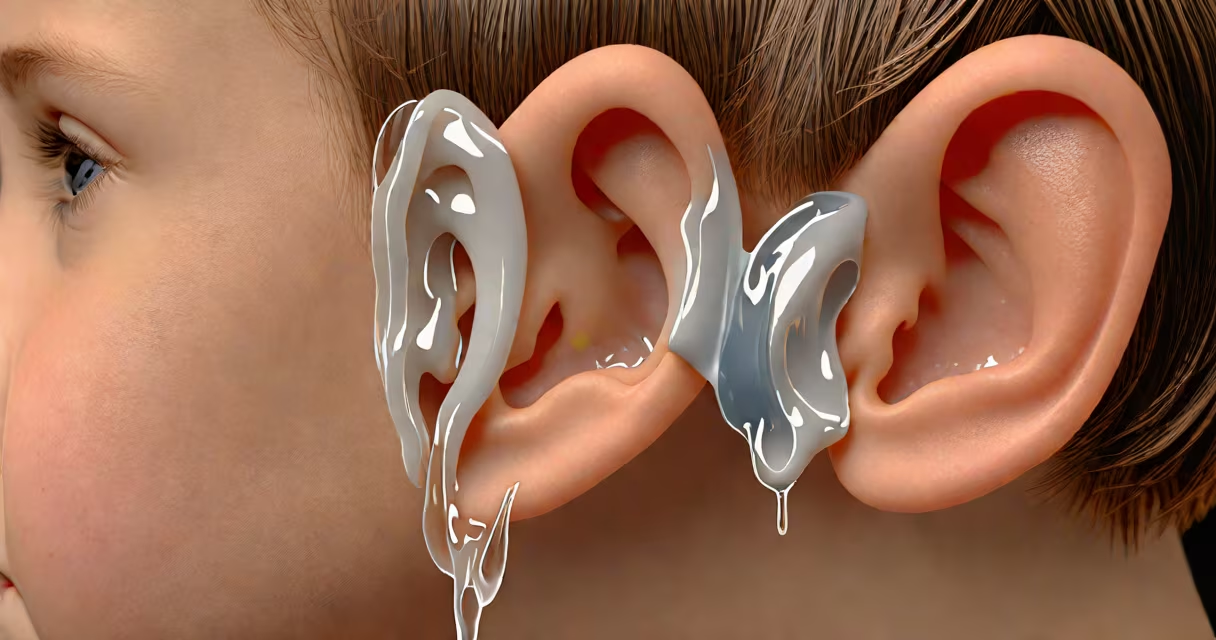
An ear effusion is the accumulation of fluid in the middle ear space behind the eardrum, typically without signs of active infection. It commonly occurs after a viral upper respiratory infection and may persist for weeks, especially in young children whose Eustachian tubes are shorter and more horizontal.
Fluid buildup disrupts sound transmission, leading to conductive hearing loss. This condition is often asymptomatic initially but can cause muffled hearing, delayed speech development, or balance issues in toddlers. It is distinct from acute otitis media, which involves infection and pain.
Ear effusions affect approximately 1 in 3 children by age 3, according to the American Academy of Pediatrics. Most resolve within 3 months without treatment. Persistent cases may require monitoring or intervention such as tympanostomy tube insertion.
The middle ear is a small air-filled cavity connected to the back of the nose via the Eustachian tube. Normally, this tube opens during swallowing or yawning to equalize pressure and drain fluids. When inflamed due to a cold or allergies, the tube fails to open properly, trapping fluid.
This fluid is usually serous-clear or slightly cloudy-originating from plasma leakage caused by inflammation. It does not contain pus or bacteria, distinguishing it from infected ear infections. Over time, the fluid may thicken into a glue-like substance, known as glue ear, which further impairs hearing.
Children are more vulnerable because their Eustachian tubes are narrower and lie flatter than adults', making drainage harder. In adults, ear effusion is less common and often linked to sinus issues, nasal tumors, or recent ear surgery.
Ear effusions fall into two categories based on duration and composition:
| Type | Duration | Fluid Type | Common Cause |
|---|---|---|---|
| Acute effusion | Less than 3 weeks | Serous or clear | Viral upper respiratory infection |
| Chronic effusion | More than 3 months | Thickened, mucoid | Persistent Eustachian tube dysfunction |
Acute effusions follow colds, flu, or seasonal allergies. Chronic cases are associated with recurrent infections, enlarged adenoids, or structural abnormalities in the Eustachian tube. Risk factors include bottle-feeding while lying down, exposure to secondhand smoke, and attending daycare.
A non-obvious distinction: ear effusion is not the same as fluid in the outer ear. Outer ear fluid (like swimmer's ear) results from water trapped in the ear canal and causes pain and discharge. Middle ear effusion affects hearing but rarely causes pain.
Doctors diagnose ear effusion using pneumatic otoscopy-a tool that blows gentle air into the ear canal. A normal eardrum moves with the air puff. In effusion, the drum appears immobile and bulges or retracts due to pressure imbalance.
Some parents mistake ear effusion for an ear infection because both can cause fussiness or ear rubbing. However, infection includes fever, ear pain, and redness. An effusion may have no symptoms at all. According to the National Institute on Deafness and Other Communication Disorders (NIDCD), up to 60% of children with chronic effusion report no discomfort.
Another misconception: effusion always requires antibiotics. It does not. Antibiotics treat bacterial infections, not fluid buildup. Using them unnecessarily increases resistance risk and offers no benefit unless infection develops.
A 2-year-old boy presented with delayed speech and frequent ear scratching. His pediatrician noted a dull, immobile eardrum during routine check-up. Pneumatic otoscopy confirmed reduced mobility. No fever or pain was reported.
After 6 weeks, the fluid remained. The doctor referred him to an ENT specialist. Audiometry showed mild conductive hearing loss. The child received tympanostomy tubes (small plastic tubes placed through the eardrum) to drain fluid and restore pressure balance.
Three months later, his speech improved. Follow-up audiograms returned to normal. This case illustrates that persistent effusion can impact development even without obvious symptoms.
Monitor for signs such as hearing difficulty, delayed language, or frequent ear infections. If fluid persists beyond 3 months, consult an ENT. Treatment depends on severity and impact on daily function.
Options include watchful waiting (common for mild cases), hearing aids (for children with significant hearing loss), or surgical placement of ventilation tubes. These tubes typically stay in place 6-12 months before falling out naturally.
An ear effusion is fluid in the middle ear without infection. It often resolves on its own but can affect hearing and development in children. Early detection and monitoring prevent long-term complications. Not all ear-related symptoms require medication-knowing the difference matters.