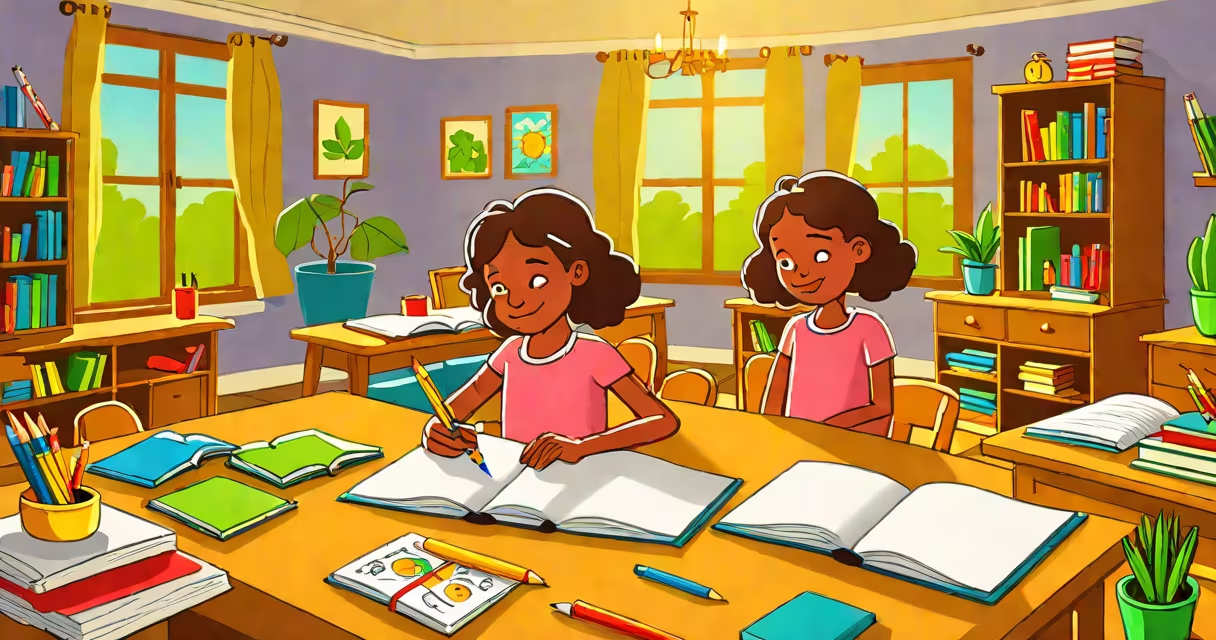
Charlotte Mason homeschooling is an educational philosophy developed in late-19th-century England that centers on treating children as persons with innate curiosity and moral capacity. It emphasizes living books, regular nature study, and the practice of narration-where students retell what they've read or heard in their own words. This method avoids rote memorization and standardized testing, instead cultivating disciplined habits of attention, reverence, and independent thinking.
The approach was formalized by educator Charlotte Mason, who believed that "education is an atmosphere, a discipline, a life." Her 10-volume series, *Home Education*, laid out principles still used by families worldwide. Today, Charlotte Mason homeschooling is practiced in over 60 countries, with structured curricula available through organizations like AmblesideOnline and Simply Charlotte Mason.
At its heart, Charlotte Mason homeschooling treats each child as a unique individual with intellectual and spiritual potential. Lessons are short-typically 20 to 30 minutes-and scheduled throughout the day to match children's natural attention spans. The method assumes that children are capable of engaging deeply with rich, well-written material rather than simplified summaries.
For example, a student reading a passage about the Roman Empire wouldn't receive a textbook excerpt. Instead, they'd read a chapter from a narrative history like *The Story of the World* by Susan Wise Bauer. Afterward, they'd narrate aloud-either orally or in writing-what they understood. This process strengthens memory, comprehension, and personal ownership of knowledge.
Research from the National Association for Research in Science Teaching confirms that narration improves long-term retention. A 2019 study showed students using narration techniques scored 27% higher on recall tests compared to those using traditional summarization methods.
Charlotte Mason homeschooling relies on specific tools and materials designed to engage the whole child. The most essential are:
These components are not optional extras. They form the structure of the school day. For instance, a typical morning schedule includes: 15 minutes of scripture or poetry recitation, 20 minutes of reading a living book, 10 minutes of narration, and 30 minutes of nature study or art.
Families choose Charlotte Mason homeschooling because it prioritizes intellectual virtue over test scores. It's especially popular among Christian, classical, and unschooling-leaning households seeking a balanced, values-driven curriculum.
A 2022 survey by the Home School Legal Defense Association found that 41% of U.S. homeschoolers use some version of Charlotte Mason's methods. Families report increased engagement, improved writing skills, and deeper family connection. One parent noted, "My daughter started asking questions about the Civil War before we even opened the book-she wanted to know why people fought, not just when."
It's also used in small private schools and co-ops. The Charlotte Mason School in Portland, Oregon, follows her principles across grades K-12 with no standardized testing. Students complete weekly narrations, maintain nature journals, and participate in weekly "living book" circles.
Many assume Charlotte Mason homeschooling is simply "school at home" with a different name. That's incorrect. It's not a curriculum-it's a structure. You don't buy a "Charlotte Mason kit" and start teaching. You adopt a mindset: that children are capable learners who thrive on beauty, truth, and freedom within structure.
Another misconception is that it's only for religious families. While Mason was a devout Anglican, her methods are secularly adaptable. The core practices-narration, nature study, living books-are used in public charter schools and international programs. The International Baccalaureate program has adopted similar narration-based assessments in some regions.
Some confuse it with Montessori. Both emphasize hands-on learning, but Montessori uses manipulatives and structured materials, while Charlotte Mason focuses on literature, narration, and the moral development of the child. One difference: Montessori classrooms often have mixed-age groups; Charlotte Mason homeschooled children typically learn in age-specific cycles.
| Feature | Charlotte Mason | Montessori | Traditional School |
|---|---|---|---|
| Primary Learning Tool | Living books | Manipulative materials | Textbooks and worksheets |
| Assessment Method | Narration, observation | Teacher-led observation, task completion | Tests, grades |
| Class Size | Individual or small group | Small class with mixed ages | Large classes, age-based |
A key distinction often missed: Charlotte Mason's "habit training" isn't about rigid routines. It's about forming lasting behaviors-like attentiveness, honesty, and kindness-through consistent, gentle practice. Parents don't enforce rules; they model and invite participation. A child learns to be orderly not by being told "clean up," but by being shown how to fold a blanket neatly and then asked to do it daily.
Consider the Johnson family in Colorado. Their 10-year-old daughter, Maya, follows a Charlotte Mason routine. Each morning begins at 8:30 a.m. with 15 minutes of poetry-today, she recites lines from "The Highwayman" by Alfred Noyes. Next, she reads a chapter from *The True Story of the 3 Little Pigs* by Gail Carson Levine, a fictionalized retelling based on folk tales.
After reading, she sits quietly and narrates what happened in her own words-first aloud, then in writing. Her mother listens without interrupting. Later, she draws a map of the forest from memory and labels the wolf's hiding spot. This integrates geography, storytelling, and visual literacy.
Afternoon activities include a 45-minute nature walk. Maya collects leaves, sketches them, and writes a sentence about each in her notebook: "The maple leaf is red and has five points." She later researches why leaves change color using a living book, *Why Do Leaves Change Color?* by Rebecca Hirsch.
By evening, Maya has completed narration, art, and nature work-all without worksheets or screen time. Her parents report she reads faster, speaks more, and asks thoughtful questions during dinner conversations.
Charlotte Mason homeschooling isn't about covering more content. It's about deepening understanding. It's not a shortcut to academic success. It's a path to thoughtful, curious, and reflective living.