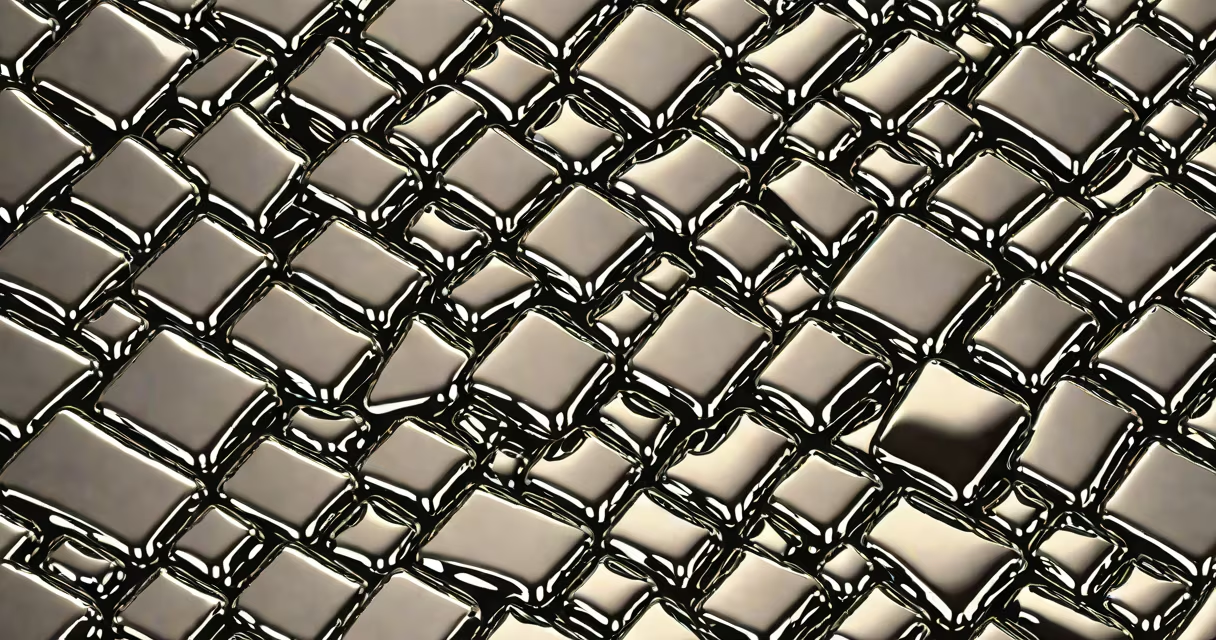
Inconel metal is a family of nickel-chromium-based superalloys engineered for strong strength, oxidation resistance, and stability at high temperatures. These alloys maintain structural integrity above 1000°C (1832°F), making them essential in aerospace, energy, and chemical processing industries.
Inconel metals derive their performance from a solid solution strengthening mechanism. Nickel forms the base matrix, while chromium provides oxidation resistance. Additional elements like molybdenum, niobium, and iron tailor properties for specific applications. The most common variants include Inconel 600, 625, and 718, each optimized for different thermal and mechanical demands.
According to the ASM Handbook, Volume 1, "Superalloys are designed to operate under severe conditions where conventional materials fail." Inconel alloys meet this standard through controlled microstructures and precise heat treatment protocols. Their ability to resist creep deformation under sustained stress distinguishes them from standard stainless steels or titanium alloys.
Inconel's performance stems from its atomic structure and phase stability. The face-centered cubic (FCC) lattice of nickel allows dislocations to move slowly under load, resisting plastic deformation. Chromium forms a protective oxide layer (Cr₂O₃) on the surface, preventing further oxidation even in oxygen-rich environments above 800°C.
When heated, Inconel 718 undergoes precipitation hardening. During controlled cooling after solution annealing, gamma prime (γ') precipitates form within the matrix. These coherent particles impede dislocation motion, increasing yield strength by up to 1200 MPa at 650°C. This process is critical in turbine blades, where fatigue resistance determines service life.
A real-world example: NASA's Space Shuttle Main Engine (SSME) used Inconel 718 for fuel injector components. These parts operated at 3000 psi and endured combustion temperatures exceeding 3000°C. Despite this, no failure occurred during 135 missions, demonstrating long-term reliability under extreme conditions.
Several Inconel grades serve distinct engineering needs. The following table outlines key variants based on composition and primary use:
| Grade | Nickel (%) | Chromium (%) | Molybdenum (%) | Primary Application |
|---|---|---|---|---|
| Inconel 600 | 72 | 15 | 0 | Heat exchangers, nuclear reactors |
| Inconel 625 | 58 | 22 | 9 | Chemical processing, marine hardware |
| Inconel 718 | 50 | 19 | 3 | Aircraft engines, rocket nozzles |
Each grade balances strength, ductility, and environmental resistance. For instance, Inconel 625 contains molybdenum to improve resistance to chloride stress corrosion cracking-critical in offshore oil platforms exposed to seawater.
Contrary to popular belief, Inconel is not inherently more expensive than titanium or stainless steel. While raw material costs are higher, lifecycle value often exceeds alternatives. A 2021 study by the American Society for Metals found that Inconel 625 components in offshore pipelines lasted 2.5 times longer than 316L stainless steel under identical saltwater exposure, reducing maintenance frequency and downtime.
Inconel metal dominates sectors requiring resilience under thermal cycling, corrosive media, or mechanical stress. Jet engines use Inconel 718 for turbine discs and shafts because it retains 90% of room-temperature strength at 700°C. The GE9X engine, powering the Boeing 777X, incorporates over 150 Inconel 718 parts, contributing to a 10% improvement in fuel efficiency.
Industrial applications include chemical reactors handling sulfuric acid at 200°C. Standard stainless steels degrade rapidly in such environments, but Inconel 600 maintains passivity due to its stable Cr₂O₃ layer. A refinery in Texas reported zero failures in Inconel-lined reactor vessels over 12 years of continuous operation.
Another non-obvious fact: Inconel is used in medical implants. Inconel 625 is FDA-approved for spinal fixation devices and orthopedic screws. Its biocompatibility arises from low nickel ion release rates-measured at less than 0.5 μg/cm²/year in simulated body fluid tests (ISO 10993-5).
Many assume Inconel is synonymous with "high-end" or "luxury" metal, like gold or platinum. This is incorrect. Inconel is a functional engineering material, not a decorative one. Its value lies in performance, not aesthetics. Polished Inconel surfaces may look shiny, but they're not used for jewelry or watches due to cost and machining difficulty.
Another misconception is that Inconel can withstand any temperature. While it performs well up to 1100°C, prolonged exposure beyond 1050°C leads to sigma phase formation-a brittle intermetallic compound that reduces toughness. Engineers must limit operating temperatures below this threshold unless properly heat-treated.
I once observed a failed gas turbine component during a field inspection. The blade was made of Inconel 718 but had been exposed to transient temperatures above 1150°C during startup. Microscopic analysis revealed sigma phase along grain boundaries, leading to crack initiation. The root cause wasn't material selection-it was improper thermal cycling control.
What is inconel metal? It is a class of nickel-chromium superalloys designed for extreme environments where failure is not an option. From spacecraft thrusters to deep-sea valves, Inconel delivers consistent performance under conditions that degrade conventional metals. Its success rests not on marketing, but on metallurgical precision and real-world validation.