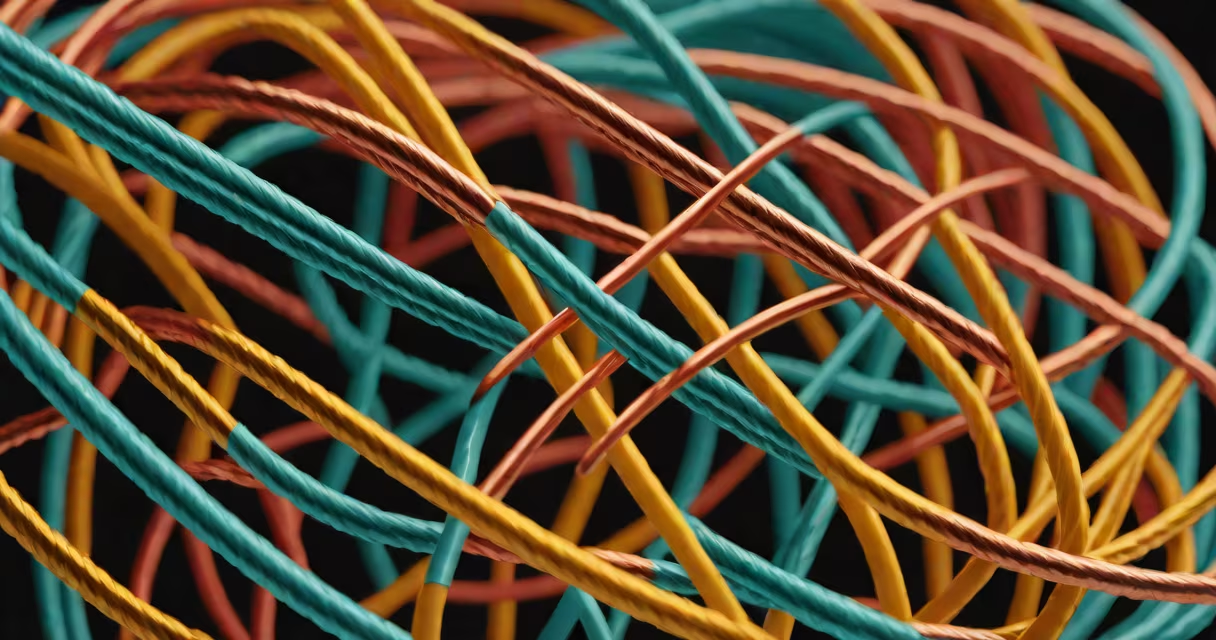
Insulated wire is a conductive metal core, typically copper or aluminum, wrapped in a non-conductive layer such as PVC, rubber, or Teflon to prevent electrical current from leaking or causing short circuits.
The insulation acts as a barrier between the live conductor and external surfaces, reducing the risk of electric shock, fire, and interference. Without insulation, exposed wires would pose serious safety hazards in homes, vehicles, and industrial equipment.
Every time you plug in a lamp, connect a charger, or turn on a wall switch, you're relying on insulated wire to carry power safely. It's the foundation of modern electrical systems.
When electricity flows through a wire, electrons move along a conductive path. If that path touches another conductor or grounded surface, current can divert unintentionally-causing sparks, overheating, or failure.
Insulation blocks this unintended flow. The material must resist heat, moisture, abrasion, and chemicals while maintaining high dielectric strength-the ability to withstand voltage without breaking down.
A 12-gauge insulated wire rated for 600 volts can safely carry household current in a wall outlet. If the insulation were missing, touching the wire could result in a lethal shock or ignite nearby flammable materials.
Insulated wire uses different materials based on environment, temperature, and application. The most common types include:
| Type | Insulation Material | Use Case | Max Temp (°C) |
|---|---|---|---|
| PVC | Polyvinyl chloride | House wiring, low-voltage cables | 70 |
| Rubber (EPDM) | Ethylene propylene diene monomer | Appliance cords, outdoor use | 90 |
| Teflon (PTFE) | Polytetrafluoroethylene | High-temp environments, aerospace | 260 |
| XLPE | Cross-linked polyethylene | Power transmission, underground cables | 90 |
PVC is the most widely used due to cost and flexibility. Rubber offers better resistance to vibration and cold. Teflon handles extreme temperatures but costs more. XLPE is preferred in buried power lines because it resists water absorption and thermal aging.
Some wires have multiple layers-such as a nylon jacket over PVC-to improve durability. Others use foil shielding to reduce electromagnetic interference in audio or data cables.
Insulated wire appears in nearly every electrical system. In residential construction, NM-B (non-metallic sheathed) cable contains three insulated wires-one hot, one neutral, one ground-protected by an outer plastic sheath.
In automotive applications, engine compartments demand insulation that resists oil, heat, and vibration. A typical car uses over 2,000 feet of insulated wire, much of it shielded to prevent radio frequency noise from disrupting sensors.
Industrial machinery relies on heavy-duty insulated cables rated for continuous operation under mechanical stress. These often feature braided nylon or steel armor around the insulation for protection against crushing or rodent damage.
One overlooked detail: color coding indicates function. In North American standards, black is hot, white is neutral, green or bare copper is ground. Miswiring due to incorrect insulation color caused 14% of residential electrical fires reported by the National Fire Protection Association (NFPA) in 2022.
People often mistake "insulated wire" for "cable." A cable bundles multiple insulated wires together within a single sheath. A single insulated wire may be used alone in a circuit, but a cable is designed for distribution.
Another error: assuming all insulation is the same. A wire rated for 300 volts cannot safely handle 600 volts. Overvoltage causes breakdown-where the insulation fails and current arcs through it. This leads to fires or equipment damage.
Even thickness matters. A thin wire with thick insulation may seem safe, but the conductor's cross-sectional area determines current capacity. A 20-gauge wire with thick PVC insulation still melts under high load if it can't carry enough amperage.
During a home renovation, I replaced old knob-and-tube wiring with modern NM-B cable. The original wires had cloth insulation that degraded over decades. Replacing them with properly rated insulated wire reduced the risk of arc faults and improved energy efficiency.
Wire gauge measures diameter-not length. Lower numbers mean thicker wire. Thicker wire carries more current with less resistance and heat buildup.
For example, a 14-gauge insulated wire can safely carry 15 amps in a standard 120V household circuit. A 16-gauge wire, thinner and less capable, is limited to 13 amps. Using a smaller gauge than required causes overheating and increases fire risk.
Insulated wire is not optional-it's mandatory for safe electrical function. From tiny headphone cables to massive power transmission lines, insulation ensures current follows the intended path.
Always match wire gauge, insulation type, and voltage rating to the application. Using the wrong type risks injury, property damage, or system failure.
When selecting insulated wire, verify compliance with standards like UL 83 (for general-purpose wiring) or IEC 60227 (international standards). These certifications confirm the material meets safety and performance benchmarks.