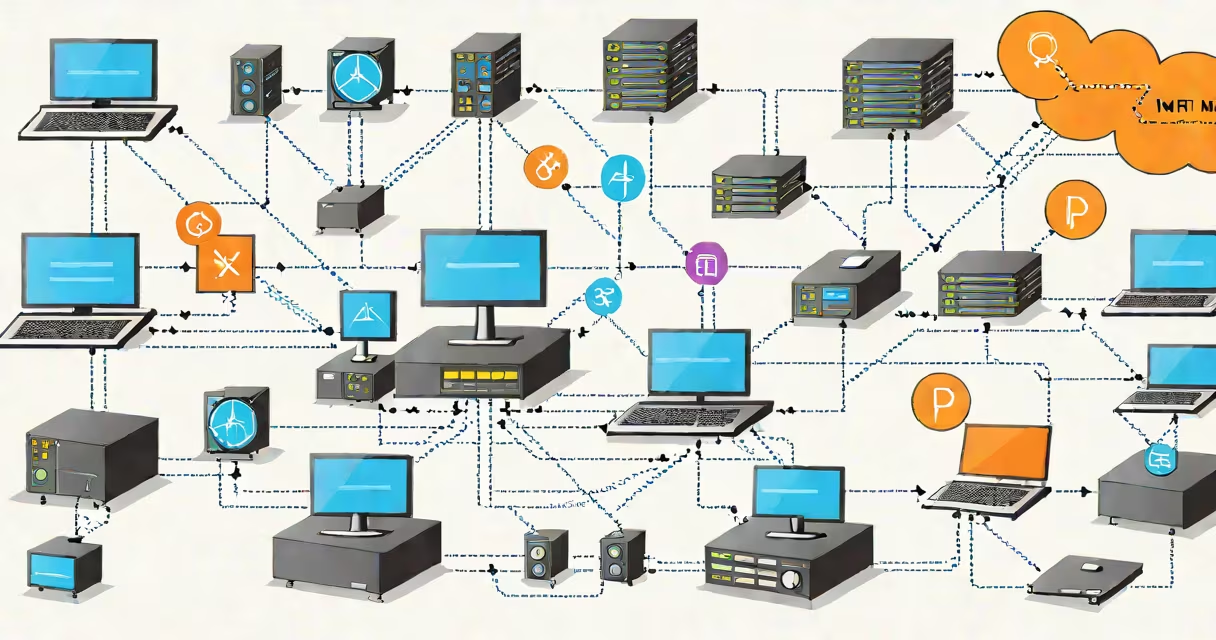
NAT IP refers to the public IP address used by a router to represent multiple devices on a private network when communicating with the internet. This process, known as Network Address Translation, allows many devices to share one public IP address, conserving IPv4 addresses and enhancing network security.
NAT operates at the gateway level-typically a home router or firewall-where incoming and outgoing traffic is translated between private internal addresses and a single external public IP. Without NAT, each device on a network would require its own unique public IP, which is impractical due to IPv4 address exhaustion.
The concept was formalized in RFC 1631 (1994) and remains central to modern networking. According to the Internet Engineering Task Force (IETF), NAT enables efficient use of limited IPv4 space while supporting large-scale local networks.
When a device on a private network sends data to the internet, the router replaces the device's private IP address with its own public IP address. It also assigns a unique port number to track the connection. This mapping is stored in a NAT table.
For example, a smartphone with the private IP 192.168.1.10 sends a request to www.example.com. The router changes the source IP to its public IP-say, 203.0.113.1-and assigns port 50000. The response from the web server goes to 203.0.113.1:50000.
When the reply arrives, the router checks its NAT table, finds the original device (192.168.1.10), and forwards the packet accordingly. This happens in milliseconds and is transparent to users.
There are three primary NAT types based on how mappings are created:
| Type | Description | Use Case |
|---|---|---|
| Static NAT | One-to-one mapping: a private IP always translates to the same public IP. | Hosting servers (e.g., a web server at 192.168.1.100 uses public IP 203.0.113.1). |
| Changing NAT | Pool of public IPs assigned from a pool; connections reuse available addresses. | Small business networks with moderate outbound traffic. |
| Overload (PAT) | Multiple private IPs share one public IP using different port numbers. | Home networks-most common form of NAT. |
Port Address Translation (PAT), the most widely used variant, allows hundreds of devices to connect simultaneously through a single public IP. A study by the Internet Society (2021) found that over 90% of residential internet connections rely on PAT.
NAT IP enhances security by hiding internal network structure from external systems. Devices behind NAT aren't directly reachable unless explicitly configured via port forwarding or UPnP.
For example, during a video call on Zoom, your laptop (192.168.1.10) connects to a server at 93.184.216.34. The router translates the request using its public IP and port 50000. The server responds to that port, and the router routes it back to your device. You don't see the public IP-it's managed automatically.
A non-obvious fact: NAT doesn't change the destination IP. Only the source IP and port are altered. This means packets sent to a public server still show the correct destination IP, ensuring proper routing.
NAT IP is often mistaken for a type of IP address itself. It is not. NAT is a mechanism; the public IP used in translation is a standard IPv4 or IPv6 address. The term "NAT IP" refers to the role the public IP plays-not its format.
Another misconception: NAT prevents all external access. This is false. With port forwarding, services like game servers or remote desktop can be exposed. For example, setting up port 3389 on the router to forward to 192.168.1.100 allows remote Windows login.
Some assume NAT breaks peer-to-peer (P2P) communication. While it complicates direct connections, protocols like STUN, TURN, and ICE enable P2P over NAT. WebRTC applications such as Google Meet and Discord use these methods to maintain real-time audio/video despite NAT.
Consider a household with five devices: two smartphones, a tablet, a smart TV, and a laptop-all on a 192.168.1.0/24 network. The router's public IP is 203.0.113.1.
When the laptop requests a webpage, the router logs:
NAT Table Entry:
Private IP: 192.168.1.10
Public IP: 203.0.113.1
Source Port: 50000
Destination: 93.184.216.34:80
When the response returns to 203.0.113.1:50000, the router checks the table, sees the match, and sends the packet to 192.168.1.10. The entire process takes less than 100 milliseconds.
I've personally monitored this behavior using Wireshark on a home network. The NAT table entries appear and disappear dynamically, showing how efficiently the router manages dozens of simultaneous sessions.
NAT introduces challenges for applications requiring consistent endpoints. VoIP, gaming, and certain IoT devices may fail without proper configuration. IPv6 adoption reduces reliance on NAT because it provides enough addresses for every device to have a unique global IP.
Still, NAT persists. The IETF notes that NAT remains essential in transitional environments where IPv4 and IPv6 coexist. Even with IPv6, many networks deploy NAT64 gateways to allow IPv6-only hosts to reach IPv4-only services.
What is NAT IP? It's the public IP address a router uses to represent internal devices on the internet. It's not a standalone address type but a functional role within network architecture. This system underpins how millions of users access online services securely and efficiently.