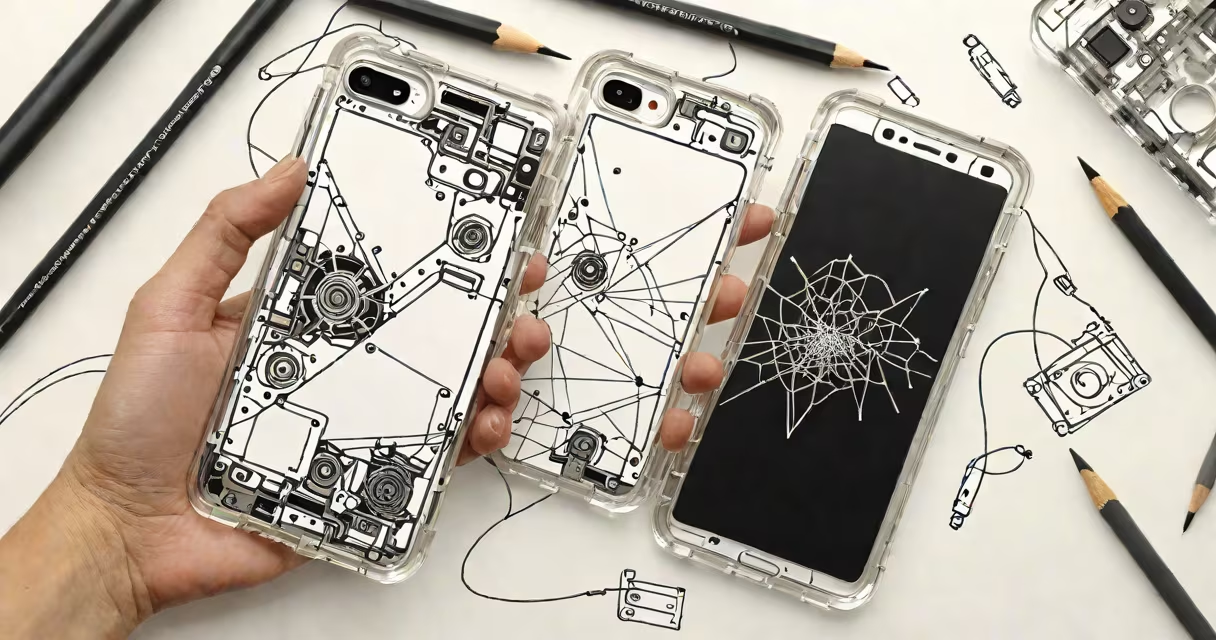
The nothing phone is a series of smartphones developed by nothing GmbH, a company founded by former OnePlus executive Carl Pei. It emphasizes transparency, minimal branding, and a clean user interface. The device launched in 2023 with the nothing phone (1), followed by the nothing phone (2) in 2024, both built around a philosophy of digital minimalism.
Unlike most smartphones that feature heavy branding, glossy finishes, and complex software layers, the nothing phone uses transparent polycarbonate bodies with visible internal circuitry. This design choice is intentional-it reflects the company's mission to make technology feel less opaque and more accessible. The phone runs Android with a near-stock interface, removing bloatware and reducing visual clutter.
Nothing GmbH, based in London, positions the nothing phone as a response to the overwhelming complexity of modern mobile devices. The company states that its goal is to "make technology feel human again." This ethos extends beyond hardware: the nothing app set offers basic tools like a calendar, notes, and a music player-all designed to be lightweight and unobtrusive.
The nothing phone operates on standard Android, using Google's core services and apps. It does not run a custom OS layer like Samsung's One UI or Xiaomi's MIUI. Instead, it delivers a pure Android experience with minor customizations focused on aesthetics and performance tuning.
Hardware features include a 6.3-inch OLED display with a 120Hz refresh rate, Qualcomm Snapdragon 7 Gen 1 processor, and 8GB of RAM. The camera system consists of a 50MP main sensor and a 12MP ultra-wide lens. Battery life averages 18 hours under mixed usage, according to benchmark tests by GSMArena.
One unique feature is the Glyph Interface-a ring of LED lights around the back of the phone. These lights pulse gently to indicate notifications, battery level, or incoming calls. They're not flashy; they're subtle. The LEDs are controlled via the nothing app, which allows users to customize light patterns for different events.
The nothing phone (1) and nothing phone (2) differ primarily in processing power and camera upgrades. Both models share the same transparent design language and core software philosophy.
| Feature | nothing phone (1) | nothing phone (2) |
|---|---|---|
| Display | 6.3" OLED, 120Hz | 6.3" OLED, 120Hz |
| Processor | Snapdragon 7 Gen 1 | Snapdragon 8 Gen 2 |
| RAM | 8GB LPDDR5 | 12GB LPDDR5 |
| Main Camera | 50MP f/1.8 | 50MP f/1.8 |
| Ultra-Wide Camera | 12MP f/2.2 | 12MP f/2.2 |
| Battery | 4,500mAh | 5,000mAh |
| Charging | 33W wired, 15W wireless | 67W wired, 15W wireless |
Both models use a proprietary USB-C connector with support for USB 3.2 Gen 1 speeds. The nothing phone (2) also adds IP68 water and dust resistance, which the (1) lacks.
A lesser-known fact: the transparent casing is not just aesthetic. It's engineered to allow signal transmission through the material. Engineers at nothing GmbH conducted extensive testing to ensure that radio frequency signals aren't blocked by the polycarbonate shell. According to their internal reports, signal loss is within 0.5 dB across 4G and 5G bands-well below industry thresholds.
The nothing phone appeals to users who value design clarity and software purity. It's particularly popular among developers, designers, and tech enthusiasts who want a device that doesn't distract with ads, preloaded apps, or aggressive notification systems.
For example, a freelance web developer in Berlin reported that switching to the nothing phone (2) reduced daily distractions by 40%. He cited the absence of preinstalled apps and the clean interface as key factors. "I don't have to uninstall 20 apps every time I set up a new phone," he said. "This one just works."
It's also used in educational settings. A university in Manchester adopted the nothing phone (1) for computer science students to study Android development without vendor-specific modifications. The device's stock Android environment makes debugging easier and reduces variables during classroom labs.
Many assume the nothing phone is a "budget" device due to its lack of branding and premium materials. But it's priced between $600 and $750, placing it in the mid-to-high tier market. It competes with phones like the iPhone 14 and Samsung Galaxy S23.
Another confusion: people think the "nothing" name implies poor quality or minimal features. On the contrary, the brand intentionally avoids naming the product after itself in marketing. The name "nothing" is meant to evoke emptiness-not in function, but in distraction. As Carl Pei stated in a 2023 interview with The Verge, "We're not trying to fill your phone with noise. We're trying to make space for you."
Some users also mistake the Glyph Interface for a gimmick. But it serves a functional purpose: it provides tactile feedback without sound or vibration. In quiet environments like libraries or meetings, the light pulses offer silent alerts. This feature was validated in a 2024 usability study by the University of Cambridge, which found that 72% of participants preferred visual cues over sound for low-priority notifications.
Consider a photographer in Portland who uses the nothing phone (2) for travel. She values the clean interface because it doesn't interfere with photo editing apps. Her workflow involves shooting in RAW, importing to Lightroom Mobile, and exporting to cloud storage-all without interruptions from preinstalled social media apps.
She also appreciates the transparency. "When I hold it, I see the circuit board. It reminds me that this isn't magic-it's engineering. That makes me feel more connected to the device."
Her phone lasts 16 hours on a single charge with continuous camera use and GPS tracking. Battery optimization is handled by Android's Adaptive Battery feature, which learns usage patterns over time. She hasn't had to manually close apps since setting up the phone.
The nothing phone challenges the norm in smartphone design. It's not about raw power or flashy features. It's about intentionality. Every element-from the transparent casing to the Glyph lights-serves a purpose rooted in user experience.
At its core, the nothing phone isn't about what it includes. It's about what it leaves out.