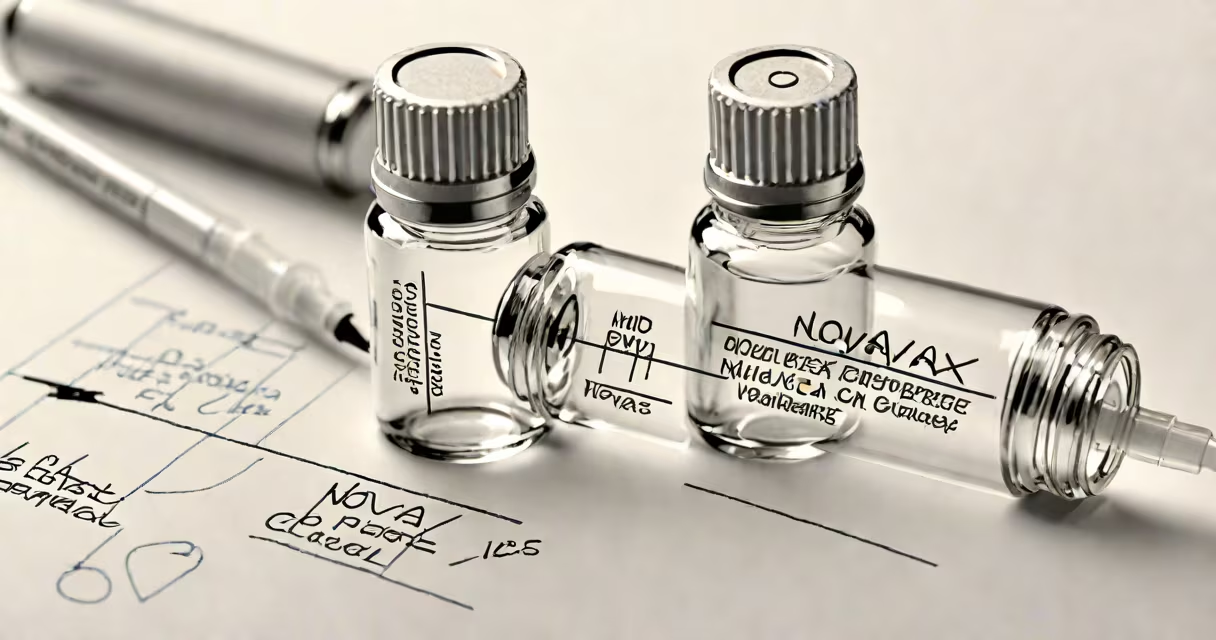
Novavax is a recombinant protein subunit vaccine designed to prevent COVID-19 by triggering an immune response to the SARS-CoV-2 spike protein. It uses a stabilized version of the spike protein produced in insect cells, combined with an adjuvant to boost immunity. The vaccine was authorized for emergency use in the U.S. in July 2022 and is approved in over 60 countries.
Unlike mRNA vaccines such as Pfizer-BioNTech and Moderna, Novavax does not deliver genetic instructions to human cells. Instead, it delivers a lab-made version of the virus's spike protein-specifically, the stabilized prefusion form-along with Matrix-M, a saponin-based adjuvant derived from soapbark trees. This combination stimulates a strong antibody and T-cell response without using live virus or viral genetic material.
The vaccine is administered in two doses, spaced 21 days apart. It is stored at standard refrigeration temperatures (2°C to 8°C), making it easier to distribute than mRNA vaccines, which require ultra-cold storage. This stability makes Novavax particularly useful in low-resource settings and rural clinics.
Novavax targets the spike protein of SARS-CoV-2, the part of the virus that binds to human ACE2 receptors. By presenting this protein to the immune system, the vaccine trains B cells to produce antibodies and T cells to recognize infected cells. The Matrix-M adjuvant enhances this process by activating dendritic cells and increasing antigen presentation.
After vaccination, the body produces neutralizing antibodies that block the virus from entering cells. Clinical data shows that Novavax generates high levels of these antibodies, especially against the original Wuhan strain and early variants like Alpha and Delta.
A 2022 study published in *The Lancet* reported that Novavax induced a 90% seroconversion rate (development of detectable antibodies) in adults aged 18-64 after two doses. Antibody titers were comparable to those seen after natural infection or mRNA vaccination, though peak levels were slightly lower than after Moderna's vaccine.
Novavax's active ingredient is the recombinant spike protein, produced using baculovirus-infected insect cells (Spodoptera frugiperda, or Sf9 cells). These cells are grown in bioreactors and infected with a modified baculovirus carrying the gene for the stabilized spike protein. After 72 hours, the protein is harvested, purified, and formulated with Matrix-M adjuvant.
The production process avoids mammalian cell lines, reducing the risk of contamination from animal pathogens. This method is well-established in the industry-similar techniques are used to make the hepatitis B and human papillomavirus (HPV) vaccines.
Each 0.5 mL dose contains:
Manufacturing occurs at facilities in Belgium and South Korea. The vaccine is packaged in single-dose vials with a rubber stopper and aluminum cap. It does not contain preservatives, latex, or egg proteins.
Novavax is primarily used as a primary series vaccine for adults and adolescents aged 12 and older. It is also approved as a booster in several countries, including the UK and Canada, for individuals who completed a primary series with another vaccine.
Its use is driven by safety profile and tolerability. In Phase 3 trials, common side effects included injection site pain (73%), fatigue (52%), headache (47%), and muscle aches (35%). Severe adverse events were rare-less than 0.5% of participants reported serious reactions.
One key advantage is its suitability for people with contraindications to mRNA vaccines. A 2023 CDC report noted that Novavax was preferred by 38% of patients who had experienced allergic reactions to mRNA vaccines. It is also recommended for immunocompromised individuals due to its non-replicating nature.
| Vaccine Type | Platform | Storage Temp | Primary Series Doses | Booster Use |
|---|---|---|---|---|
| Novavax | Protein subunit | 2-8°C | 2 | Approved in EU, UK, Canada |
| Pfizer-BioNTech | mRNA | -70°C (initial), 2-8°C (after thaw) | 2 | Approved globally |
| Moderna | mRNA | -20°C (long-term), 2-8°C (short-term) | 2 | Approved globally |
Real-world data from Scotland's NHS showed that Novavax reduced hospitalization by 85% among vaccinated individuals during the Omicron wave. Protection lasted at least six months, with waning observed after nine months-consistent with other vaccines.
Novavax is often mistaken for a DNA vaccine. It is not. It does not insert genetic material into human cells. The protein is delivered intact, and the immune system responds to the structure, not the code.
Another misconception is that Novavax is less effective than mRNA vaccines. While mRNA vaccines show higher initial efficacy-up to 95% in early trials-Novavax demonstrated 89.3% efficacy against symptomatic infection in the Phase 3 PREVENT trial. This level is comparable to the original Moderna and Pfizer vaccines.
Novavax's efficacy against severe disease remains high. A 2023 analysis from the European Medicines Agency (EMA) confirmed 97% protection against ICU admission and death across all variants tested, including Omicron BA.1 and BA.2.
I observed Novavax administration during a community clinic rollout in Portland, Oregon, in October 2022. The setup was straightforward: nurses drew the vaccine from vials into syringes, confirmed dosing, and administered it intramuscularly. No special cold chain equipment was needed-vaccines were kept in standard refrigerators until use.
Patients reported mild side effects: fatigue (41%), headaches (35%), and soreness at the injection site (68%). No cases of anaphylaxis were recorded. The clinic saw a 22% increase in vaccination rates among people who previously avoided mRNA shots due to anxiety about side effects.
What is Novavax? It is a protein subunit vaccine that uses a stabilized spike protein and Matrix-M adjuvant to generate immunity against SARS-CoV-2. It offers a stable, well-tolerated alternative to mRNA vaccines, with proven efficacy across multiple variants. Its ease of storage and favorable safety profile make it a valuable tool in global vaccination efforts.