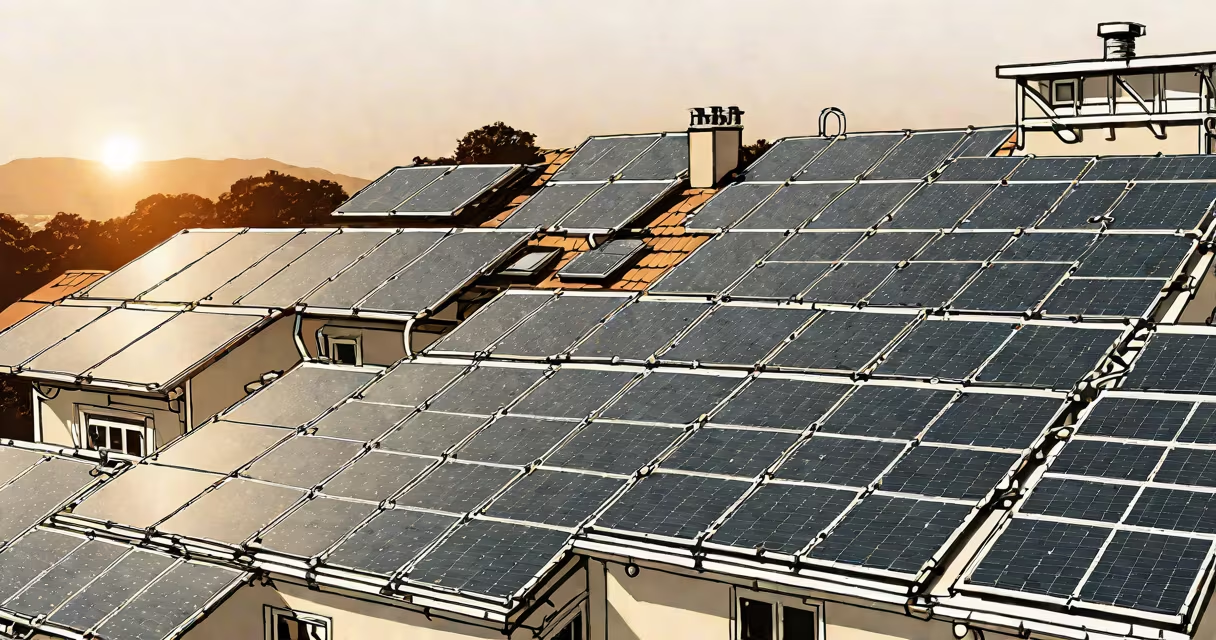
A solar PV system generates electricity directly from sunlight using photovoltaic cells made of semiconductor materials like silicon. These systems convert photons from sunlight into electron flow through the photovoltaic effect, producing direct current (DC) power that can be used immediately or stored.
Solar PV systems consist of multiple interconnected components designed to capture sunlight, convert it to usable electrical energy, and integrate with existing power grids or battery storage. They operate without moving parts, emit no greenhouse gases during operation, and require minimal maintenance after installation.
The core principle relies on the photovoltaic effect: when sunlight strikes a semiconductor material such as crystalline silicon, electrons are dislodged, creating a flow of electric current. This process occurs at the atomic level within each cell, which are grouped into modules and arrays to scale output.
When sunlight hits a solar panel, photons transfer energy to electrons in the semiconductor layer. This energy excites electrons, freeing them from their atoms and allowing them to move freely through the material. The movement of these electrons creates a direct current (DC).
Each panel produces DC electricity at low voltage. Multiple panels are wired together into strings, forming a solar range. The DC output from the range flows into an inverter, which converts the DC into alternating current (AC)-the standard form used by homes and businesses.
After conversion, AC power enters the home's electrical panel or is fed into the utility grid via a net meter. If excess power is generated, it can be sent back to the grid for credit, depending on local policies. During periods of low generation-like nighttime-the system draws power from the grid or from batteries if installed.
Every solar PV system includes several essential parts. The primary ones are:
For example, a typical 6 kW residential system uses 20 panels rated at 300 watts each. Under standard test conditions (1,000 W/m² irradiance, 25°C), the range produces approximately 1,800 watts of DC power at peak sun hours. A 5 kW string inverter then converts this to 5 kW AC output, sufficient to power most average U.S. homes during daylight.
Solar PV systems fall into three main categories based on connection to the grid and energy storage:
| Type | Grid Connection | Battery Storage | Use Case |
|---|---|---|---|
| Grid-Tied | Yes | No (usually) | Most common for homes; reduces electricity bills, exports surplus to grid. |
| Grid-Tied with Battery Backup | Yes | Yes | Provides power during outages; ideal in areas with frequent blackouts. |
| Off-Grid | No | Yes | Used in remote locations without access to utility lines; requires large battery banks and often backup generators. |
Grid-tied systems dominate the U.S. market, accounting for over 90% of installations in 2023 according to the U.S. Energy Information Administration (EIA). Off-grid systems remain niche due to high upfront costs and complexity in sizing.
Many assume solar panels only work in sunny climates. In reality, they function efficiently in diffuse light. Germany, which receives less annual sunshine than California, leads Europe in solar capacity per capita. Modern panels generate power on cloudy days-just at reduced output.
Another myth is that solar panels degrade rapidly. NREL research shows that high-quality panels lose about 0.5% efficiency per year. After 25 years, they typically retain 80-85% of original output. Most manufacturers offer 25-year warranties guaranteeing this performance level.
Some believe installing solar requires major roof modifications. Most systems use non-penetrating mounts or flashing kits that preserve roof integrity. A properly installed system does not void roofing warranties if done by certified professionals.
In 2022, a homeowner in Austin, Texas, installed a 7.2 kW solar PV system on a south-facing roof with a 20° tilt. The system included 24 monocrystalline panels (300 W each), a 6 kW hybrid inverter, and a 10 kWh lithium-ion battery bank.
Annual energy production was estimated at 10,200 kWh. The household consumed 9,500 kWh annually. Excess energy exported to the grid earned $420 in credits under net metering. The battery stored 20% of daily production for evening use, reducing reliance on grid power during peak rate hours.
After federal tax credits (30%) and state incentives, the net cost was $14,200. Payback period was projected at 8.4 years. Over 25 years, the system saved approximately $38,000 in electricity costs and avoided 110 metric tons of CO₂ emissions.
Solar PV systems are deployed globally in residential, commercial, industrial, and utility-scale settings. In the U.S., over 3 million homes had solar installations by 2023, with states like California, New Jersey, and North Carolina leading adoption.
Utility-scale projects, such as the 579 MW Desert Sunlight Solar Farm in California, demonstrate scalability. This facility covers 3,000 acres and supplies power to ~160,000 homes annually. It uses single-axis trackers to follow the sun, increasing annual yield by up to 25% compared to fixed-tilt systems.
Developing regions benefit too. In rural Kenya, off-grid solar microgrids powered by PV systems have brought electricity to villages previously reliant on kerosene lamps. A 5 kW system serving 50 households reduced indoor air pollution and improved education outcomes by enabling evening study.
Solar PV should not be confused with solar thermal systems. While both use sunlight, solar thermal captures heat for water heating or industrial processes. PV converts light directly into electricity. A solar water heater uses mirrors or collectors to warm fluid; a PV panel uses semiconductors to generate current.
Also distinct from solar concentrators used in large-scale power plants. These use lenses or mirrors to focus sunlight onto small receivers, generating steam to drive turbines. Such systems are complex and require direct sunlight, unlike PV, which functions under diffuse light.
During a site visit to a solar farm in Nevada, I observed that even on overcast afternoons, PV output dropped only 30-40% compared to clear days. Thermal systems, by contrast, saw near-zero output under similar conditions.