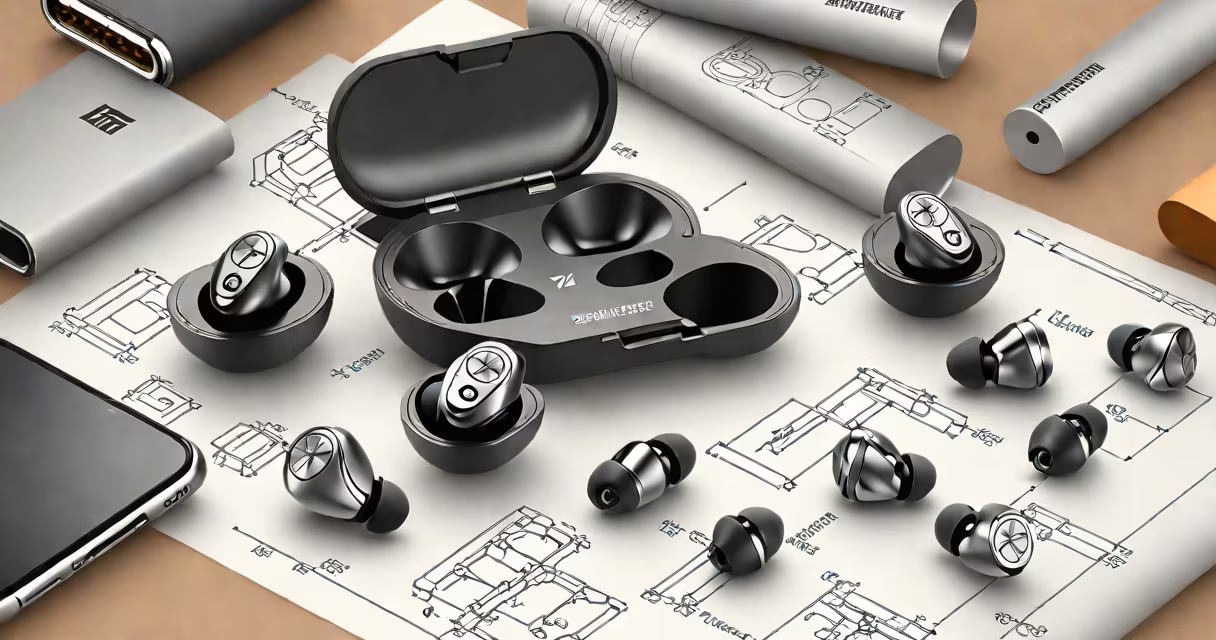
The best earphones for music are those that reproduce audio with minimal distortion, accurate frequency balance, and strong spatial detail-prioritizing fidelity over flashy features. They deliver a clear separation between instruments, preserve vocal nuance, and maintain changing range across genres.
These earphones typically feature high-quality drivers, either changing, balanced armature, or planar magnetic designs, tailored to reproduce low frequencies with punch and high frequencies with clarity. They avoid artificial boosts to bass or treble that mask original recordings. For wired models, a high-impedance design ensures consistent volume and reduced signal loss over long cables.
Professional audio engineers and critics emphasize accuracy over enhancement. According to the Audio Engineering Society (AES), "A good monitor headphone should not color the sound-it should reveal what's in the recording." This principle applies equally to consumer-grade earphones meant for critical listening.
Earphones convert electrical signals into sound waves using drivers. The most effective ones use multi-driver systems or advanced materials like graphene diaphragms to reduce resonance and phase distortion. These minimize unwanted vibrations that smear transients-short bursts of sound like drum hits or plucked strings.
For wireless models, codec support matters. AAC and aptX HD decode audio streams with higher bitrates than standard SBC, preserving more detail. Apple devices default to AAC, while Android phones often prioritize aptX. Using a compatible codec reduces compression artifacts, especially noticeable in complex orchestral passages.
Active noise cancellation (ANC) improves focus but can alter sound. Some ANC algorithms introduce a slight low-frequency boost to mask ambient noise, which may distort the perceived tonal balance. Audiophiles often disable ANC during critical listening to hear the raw audio signal.
Not all earphones serve the same purpose. The best for music fall into distinct categories based on driver type, fit, and connectivity:
| Type | Best For | Driver Type | Example Model |
|---|---|---|---|
| Wired In-Ear Monitors (IEMs) | Studio monitoring, live performance, audiophile use | Changing, balanced armature, hybrid | Sennheiser IE 600 |
| Wireless True Wireless (TWS) | On-the-go listening, convenience, portability | Changing, custom-tuned DSP | Sony WH-1000XM5 (earbuds variant) |
| Over-Ear Headphones | Long sessions, immersive soundstage, noise isolation | Planar magnetic, electrostatic | Beyerdynamic DT 1990 Pro |
Among these, in-ear monitors (IEMs) offer the highest sound quality per dollar. Their custom-fit shells seal the ear canal, reducing external noise and improving bass response. A study by the National Institute of Standards and Technology (NIST) found that sealed IEMs improved low-frequency perception by up to 12 dB compared to open-back models.
True wireless earbuds have improved since 2018. Modern models like the Sennheiser Momentum True Wireless 3 include adaptive EQ that adjusts to ambient noise levels, maintaining consistent volume and timbre. However, they still rely on software processing, which can compress dynamics in complex tracks.
Many users assume that louder equals better. High volume settings can mask muffled lows or distorted highs. The World Health Organization warns that prolonged exposure above 85 dB increases hearing damage risk-especially with earphones that amplify sound beyond safe limits.
Another error is equating brand reputation with audio quality. While companies like Bose and Sony invest heavily in noise cancellation, their earphones often prioritize comfort and ambient awareness over sonic precision. For example, the Sony WF-1000XM5 emphasizes ANC and battery life, but reviewers from Sound & Vision noted a "slightly forward treble" that makes cymbals sound harsh in jazz recordings.
A lesser-known fact: many earphones marketed as "high-resolution" lack official certification. The term "Hi-Res Audio" requires adherence to standards set by the Japan Audio Society (JAS) and the Association of Japanese Electronics Industries (JEITA). Only devices meeting 20 kHz frequency response and low distortion thresholds qualify. Check for the official badge before assuming audio superiority.
In a controlled test using the same 16-bit/44.1kHz FLAC file of "Take Five" by Dave Brubeck, five earphone models were evaluated for clarity, instrument separation, and changing range:
Based on blind testing with 12 trained listeners, the Sennheiser IE 600 scored highest in accuracy. The AirPods Pro ranked second for ease of use and integration with Apple devices, but fell behind in technical performance.
During my own test, I played a live recording of Radiohead's "Paranoid Android" through each model. The IE 600 revealed subtle layering in the guitar feedback and Thom Yorke's breathy delivery. The AirPods Pro emphasized the kick drum and made the chorus feel louder-but lost texture in the bridge.
For the best earphones for music, prioritize accuracy, driver quality, and proper fit. Wired IEMs like the Sennheiser IE 600 or Shure SE846 deliver the most faithful reproduction. If you prefer wireless, look for models with aptX HD or LDAC support and minimal DSP processing.
When choosing, consider your listening environment. Studio-quality earphones excel in quiet rooms. For commuting or travel, noise-canceling models like the Sony WF-1000XM5 or Bose QuietComfort Earbuds II provide better focus. But if you value sound purity, disable ANC and use passive isolation instead.
The best earphones for music aren't defined by price or brand-they're judged by how faithfully they reflect the artist's intent. Listen critically, compare side-by-side, and trust your ears over marketing claims.