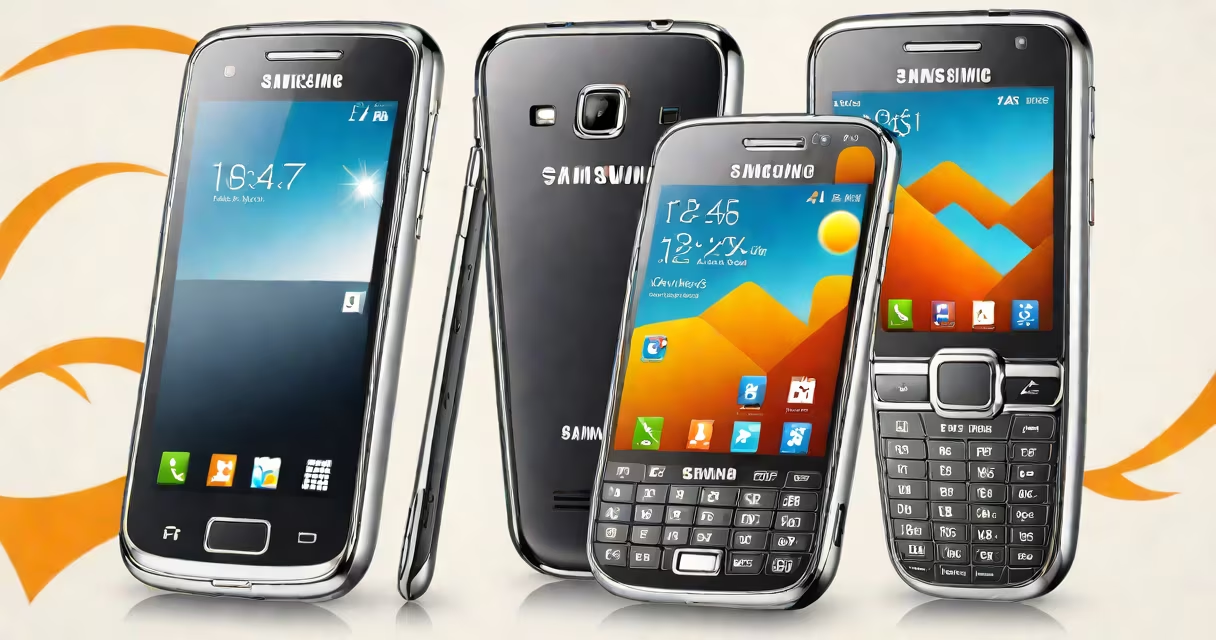
The first Samsung Galaxy phone was the Samsung SCH-i700, released in October 2009. It ran Android 1.5 Cupcake and was Samsung's initial device under the Galaxy branding, marking the company's formal push into the smartphone space.
Launched in South Korea and later rolled out globally through carriers like AT&T and T-Mobile, the SCH-i700 introduced a touchscreen interface with a physical keyboard beneath. It featured a 3.2-inch TFT display, a 3-megapixel camera, and a 600 MHz processor. Its design emphasized portability and access to Google's growing set of mobile services.
Samsung did not use the Galaxy name before 2009. Prior models like the Samsung SPH-M510 (2006) and Samsung SGH-i600 (2007) were feature phones or early Android devices without the Galaxy label. The SCH-i700 was the first to carry the Galaxy moniker, setting the stage for future flagship lines.
The Samsung SCH-i700 operated on the Android 1.5 platform, which included core apps like Gmail, Google Maps, and the Android Market (now Google Play). It supported 3G connectivity, Wi-Fi, Bluetooth 2.1, and microSD expansion up to 16 GB. Users accessed web browsing via the Android browser, though performance was limited by the 600 MHz ARM11 processor and 256 MB of RAM.
Input combined touch and hardware: a 3.2-inch capacitive touchscreen handled navigation, while a QWERTY keyboard enabled faster typing. The device had a 3.2-megapixel rear camera capable of recording VGA video. Battery life averaged 6 hours of talk time and 300 hours in standby.
Despite its limitations by modern standards, the SCH-i700 delivered a consistent Android experience. It received updates to Android 1.6 Donut and later versions through carrier firmware patches, though support ended in 2011.
The SCH-i700 used a plastic body with a matte finish to reduce fingerprints. Internally, it relied on Samsung's Exynos 3110 system-on-chip, a custom ARM-based processor designed for low power consumption. The device measured 115 mm × 61 mm × 14 mm and weighed 130 grams.
Two variants existed: the SCH-i700 (international version) and the SCH-i700K (South Korean model). The Korean version included additional LTE support and carrier-specific features. Both used the same internal components but differed in radio bands and software localization.
| Feature | SCH-i700 (Global) | SCH-i700K (Korea) |
|---|---|---|
| Display | 3.2", TFT, 240×320 | 3.2", TFT, 240×320 |
| Processor | 600 MHz ARM11 | 600 MHz ARM11 |
| Memory | 256 MB RAM, 512 MB ROM | 256 MB RAM, 512 MB ROM |
| Network | UMTS 2100/1900, GSM 900/1800 | UMTS 2100/1900, LTE 700/1700/2100 |
| Camera | 3 MP, VGA video | 3 MP, VGA video |
The SCH-i700 targeted early adopters seeking a Google-powered smartphone with a physical keyboard. It appealed to business users who valued email efficiency and multimedia access. Carriers promoted it as a premium alternative to BlackBerry and iPhone models of the time.
AT&T offered the SCH-i700 with a $199 price tag and a two-year contract. T-Mobile bundled it with data plans starting at $30/month. Despite limited app availability compared to later Android devices, it served as a testbed for mobile productivity tools like Google Docs and YouTube.
By 2010, Samsung had phased out the SCH-i700 in favor of the Samsung Galaxy S, which launched in 2010 with improved specs and a larger screen. The SCH-i700 remained in use through 2012, particularly in emerging markets where older Android devices were affordable and functional.
Many assume the Samsung Galaxy S (2010) was the first Galaxy phone. This is incorrect. The Galaxy S preceded the SCH-i700 in development but was delayed until 2010. The SCH-i700 was the first to bear the Galaxy name officially.
Another misconception is that the SCH-i700 was a direct competitor to the iPhone 3GS. While both ran mobile operating systems, the iPhone 3GS used iOS 3.1.3 and lacked Android's open-source flexibility. The SCH-i700 offered greater customization potential through sideloading, though with less polished UI integration.
A lesser-known fact: the SCH-i700 was the first Samsung device to include a gyroscope sensor. This enabled motion-based controls in games and photo stabilization, features absent in earlier Samsung handsets. It also supported MMS with embedded audio clips-a rare capability in 2009.
In 2010, a university student in Seoul used the SCH-i700 to track class schedules via Google Calendar and send lecture notes via email. He installed a third-party app called "TaskList" to manage assignments. The device's physical keyboard reduced typos during note-taking, and its 3G connection allowed real-time access to course portals.
He reported average battery life of 14 hours with moderate use: 1 hour of web browsing, 30 minutes of email, and 2 hours of music playback. After six months, he upgraded to a Samsung Galaxy S II due to slower performance and lack of newer app support.
Today, the SCH-i700 is a collector's item. Units in working condition sell for $50-$100 on eBay and specialized forums. Enthusiasts restore them using original batteries and SD cards, often running modified Android builds for better compatibility.
The Samsung SCH-i700 remains the definitive answer to "what is the first Samsung Galaxy phone." It was not just a product launch-it was a strategic pivot. Samsung shifted from being a component supplier to a global smartphone innovator, laying the foundation for the Galaxy series that now includes over 100 models worldwide.