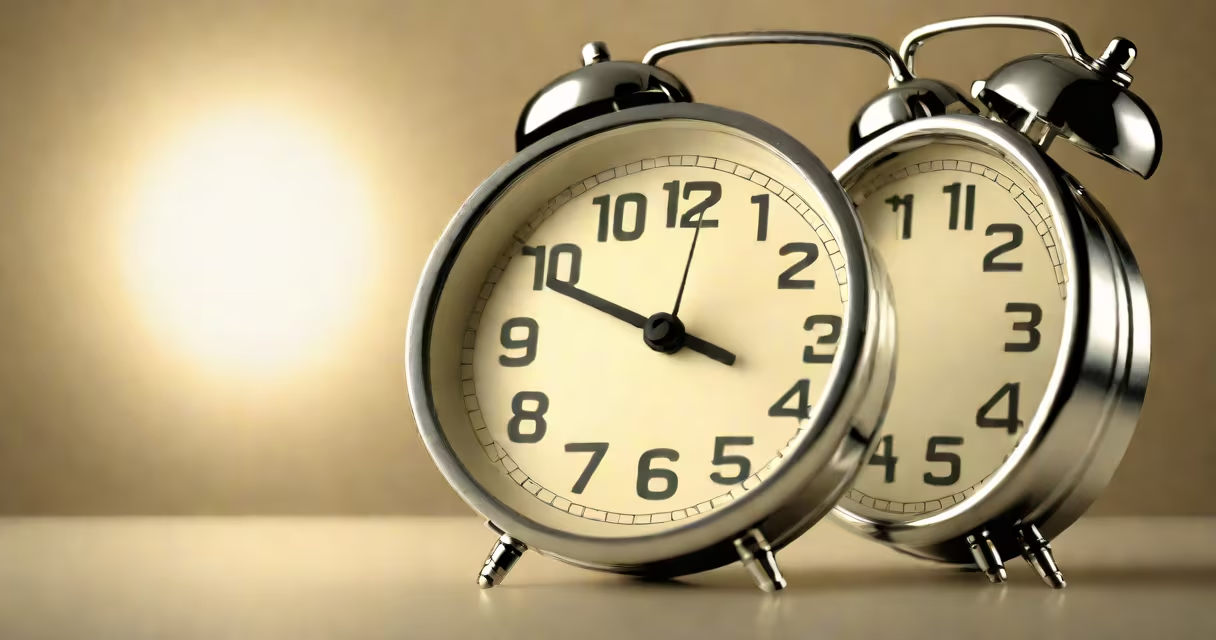
The clocks fall back at 2 a.m. on the first Sunday in November each year, shifting time backward by one hour. This marks the end of Daylight Saving Time in the United States and most of Canada.
This annual adjustment occurs because Congress passed the Uniform Time Act of 1966, which standardized the start and end dates for Daylight Saving Time across states. The law set the end date as the last Sunday in October until 2007, when it was extended to the first Sunday in November. The change ensures longer evening daylight during summer months and shorter days in winter.
For example, in 2023, clocks fell back on November 5 at 2:00 a.m. Eastern Time. At that moment, the time shifted from 2:00 a.m. to 1:00 a.m., giving people an extra hour of sleep. The change affects all U.S. time zones except Hawaii and Arizona (which does not observe Daylight Saving Time).
Daylight Saving Time begins in March when clocks spring forward by one hour, and ends in November when they fall back. The process is automatic on most smartphones, smartwatches, and computers. Devices update based on system time settings tied to the Network Time Protocol (NTP).
Manual clocks, wall clocks, and older alarm systems require users to adjust them manually. Failure to do so can lead to missed appointments or disrupted routines. For instance, a person who forgets to set their kitchen timer may find it running an hour off, leading to undercooked meals or burnt toast.
According to the National Institute of Standards and Technology (NIST), the time change aligns with seasonal shifts in sunlight. The U.S. Department of Transportation confirms that the shift reduces evening lighting demand by approximately 10% during peak hours, though energy savings are modest compared to past estimates.
Many assume "fall back" happens on the last Sunday of November. That's incorrect. The rule is clear: the change occurs on the first Sunday in November. This distinction matters for scheduling events, travel plans, and medical appointments.
Another myth is that the time change improves public safety. Research from the University of Colorado Boulder shows a 24% increase in traffic accidents on the Monday following the fall back, likely due to disrupted sleep patterns. A 2019 study published in *The New England Journal of Medicine* found a 25% rise in heart attacks in the week after the shift, linking it to circadian disruption.
Some people confuse "fall back" with "spring forward." The two are opposite actions. Spring forward moves clocks ahead by one hour in March, while fall back moves them back. Confusing the two leads to scheduling errors. For example, a nurse scheduled for a 7:00 a.m. shift on the day after fall back might arrive at 6:00 a.m. if they misremember the direction of the change.
The abrupt loss of one hour disrupts circadian rhythms. Melatonin production shifts, affecting sleep quality. A 2022 study in *Sleep Medicine* found that adults averaged 47 minutes less sleep on the night of the fall back, with reduced deep sleep stages.
One personal observation: during the 2021 fall back, I noticed my morning coffee routine broke down. My alarm went off at 7:00 a.m., but my brain still operated on 6:00 a.m. time. I spilled coffee twice before realizing my internal clock hadn't adjusted. It took three days to feel normal again.
Workplaces report higher error rates in the days following the shift. A 2020 analysis by the American Psychological Association showed a 6% drop in productivity across office environments during the first week after fall back. Errors in data entry, customer service calls, and software testing increased.
The following table outlines the actual fall back dates from 2020 to 2025:
| Year | Date | Time Zone (ET) | Local Time After Change |
|---|---|---|---|
| 2020 | November 1 | 2:00 a.m. → 1:00 a.m. | 1:00 a.m. |
| 2021 | November 7 | 2:00 a.m. → 1:00 a.m. | 1:00 a.m. |
| 2022 | November 6 | 2:00 a.m. → 1:00 a.m. | 1:00 a.m. |
| 2023 | November 5 | 2:00 a.m. → 1:00 a.m. | 1:00 a.m. |
| 2024 | November 3 | 2:00 a.m. → 1:00 a.m. | 1:00 a.m. |
These dates follow the rule: the first Sunday in November. The pattern repeats annually unless federal legislation changes it.
The original intent behind Daylight Saving Time was to conserve fuel during wartime. Benjamin Franklin proposed a similar idea in 1784, suggesting people wake earlier to save candle usage. The modern version emerged during World War I and II to reduce electricity use.
Today, the rationale is less about energy and more about extending evening daylight. Retailers benefit from longer shopping hours. Schools and sports leagues schedule games later in the day. However, critics argue the health costs outweigh benefits.
As of 2023, 19 U.S. states have introduced bills to make Daylight Saving Time permanent, eliminating the fall back entirely. Florida passed such a bill in 2022, but it requires federal approval. The U.S. Senate has considered the Sunshine Protection Act, which would end the fall back permanently if enacted.
After the clocks fall back, monitor your sleep cycle. Try going to bed 15 minutes earlier for three nights to ease the transition. Avoid screens one hour before bed, as blue light delays melatonin release.
When do we fall back? On the first Sunday in November at 2 a.m. local time. The change affects millions across North America. Knowing the exact date and time helps avoid confusion, improve safety, and maintain health routines.