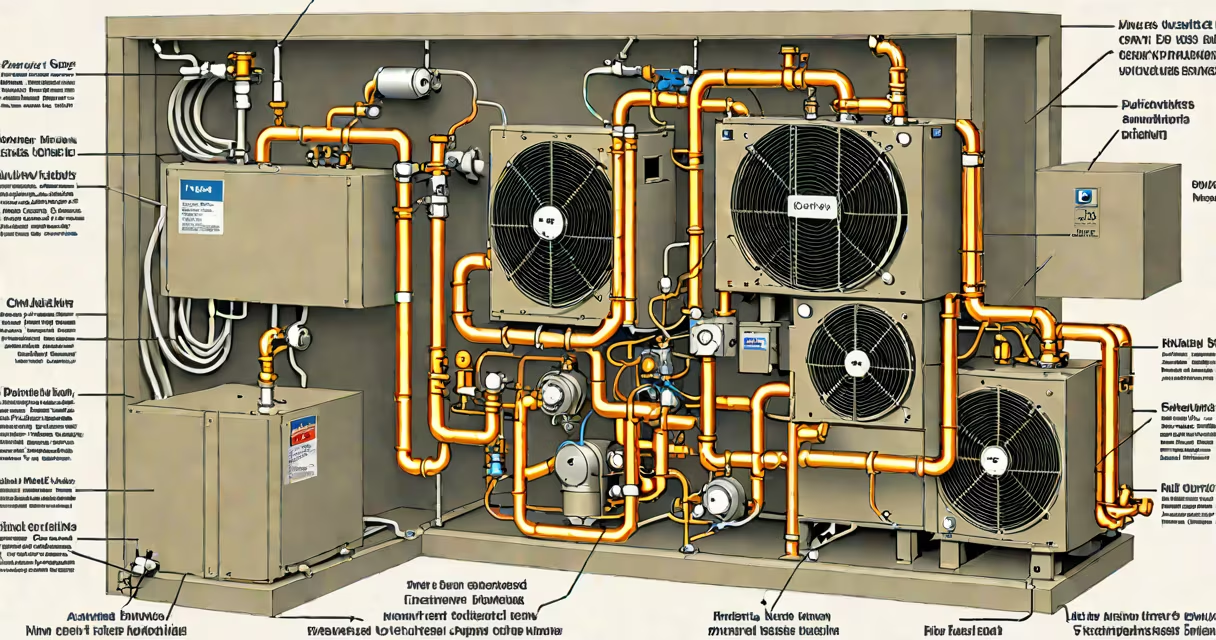
Freon, a brand name for chlorofluorocarbons (CFCs) and hydrochlorofluorocarbons (HCFCs), is the refrigerant used in most residential air conditioning systems. It circulates through sealed copper tubing within the indoor evaporator coil and outdoor condenser unit, absorbing heat indoors and releasing it outdoors.
Freon operates under pressure and is contained entirely within the sealed refrigeration loop. It does not get consumed during cooling cycles. The refrigerant flows between two primary components: the indoor evaporator coil and the outdoor condenser unit. These components connect via two copper lines-one thick, one thin-running through the wall or floor from the indoor unit to the outdoor condenser.
For safety and environmental reasons, handling freon requires EPA-certified technicians. Improper release contributes to ozone depletion and violates federal regulations. Always contact a licensed HVAC professional if you suspect a leak or low refrigerant level.
The refrigerant cycle begins when liquid freon enters the indoor evaporator coil. As warm indoor air passes over the cold coil, the freon absorbs heat and turns into a low-pressure gas. This process cools the air, which then circulates back into the room.
The gaseous freon travels through a large-diameter copper line to the outdoor condenser unit. There, a compressor increases the pressure and temperature of the gas. A fan blows ambient air over the condenser coils, forcing the hot gas to release heat and condense back into a liquid.
The liquid freon returns through a smaller-diameter line to the indoor unit, completing the cycle. This closed-loop system ensures no freon is lost unless there's a leak or improper servicing.
Freon is stored and moves through three critical parts of the AC system:
These components are permanently sealed. Any access requires specialized tools and certification. Attempting to locate or adjust freon levels without proper training risks damaging the system or releasing harmful chemicals.
Many homeowners believe freon is added regularly or that leaks are normal. This is false. A properly maintained AC system loses less than 15% of its refrigerant charge per year, according to the U.S. Environmental Protection Agency (EPA). A significant drop indicates a leak, not routine loss.
Another misconception is that freon can be found in the air handler's blower compartment or near electrical panels. Freon does not travel outside the sealed system. If you smell a chemical odor, it's likely not freon-it may be a different coolant or a refrigerant leak detected by sensors, but freon itself is odorless and colorless.
A third error is attempting to recharge the system using DIY kits. These products often lack accurate pressure gauges and can overcharge the system. Overcharging causes excessive strain on the compressor, leading to early failure. The EPA states that only certified technicians may legally handle refrigerants.
In a 2022 case study published by the Air Conditioning Contractors of America (ACCA), a homeowner reported weak cooling and ice forming on the indoor coil. An HVAC technician measured the refrigerant pressure and found it 20 psi below the manufacturer's specification for the ambient temperature.
Using a leak detection dye injected into the system, the technician traced a small pinhole in the suction line near the wall penetration. After repairing the line and evacuating the system, the technician recharged the unit with precisely 3.5 pounds of R-410A (a modern replacement for older freon types).
Post-repair testing confirmed stable pressures and consistent cooling. The repair cost $320, including labor and materials. The homeowner avoided further damage by not operating the system with low refrigerant.
While "freon" is often used generically, actual refrigerants have specific designations. Modern systems use R-410A or R-32 instead of older R-22 (Freon-22). Each has distinct physical properties and compatibility requirements.
| Refrigerant Type | Common Use | Pressure Range (psi) | Line Size | Environmental Impact |
|---|---|---|---|---|
| R-22 | Pre-2010 systems | 150-250 | Suction: 5/8"; Discharge: 3/4" | High ODP (ozone depleting potential) |
| R-410A | Post-2010 systems | 250-400 | Suction: 3/8"; Discharge: 1/2" | Zero ODP, high GWP |
| R-32 | Newer models (2020+) | 200-350 | Suction: 3/8"; Discharge: 1/2" | Low ODP, moderate GWP |
Each refrigerant requires different charging procedures and equipment. Mixing types damages compressors and voids warranties. Always verify the correct refrigerant type before servicing.
If your AC runs longer than usual, produces weak airflow, or freezes up, low freon is a likely cause. Ice formation on the indoor coil happens because the refrigerant pressure drops too low, causing the coil temperature to fall below freezing.
I've seen this firsthand while inspecting a home in Phoenix, Arizona. The unit had been running continuously for three days. Upon inspection, the evaporator coil was completely encased in frost. The technician found a slow leak in the suction line due to vibration wear. After sealing the leak and recharging the system, cooling returned to normal.
Do not attempt to open or tamper with refrigerant lines. Even minor punctures release refrigerant rapidly and pose health risks. If you suspect a problem, shut off the system and call a licensed HVAC contractor.
Understanding where freon is in your AC unit clarifies why maintenance must be handled by professionals. The refrigerant remains inside sealed components throughout the cooling cycle. Its location is not accessible for user inspection or adjustment.
Freon is not a consumable. It doesn't burn out or evaporate. When problems arise, they stem from leaks, blockages, or incorrect charge levels-not from running out.
Knowing where freon is in your AC unit prevents dangerous DIY attempts. The sealed refrigeration loop protects both performance and safety. Only trained technicians should handle refrigerant recovery, charging, or leak detection.