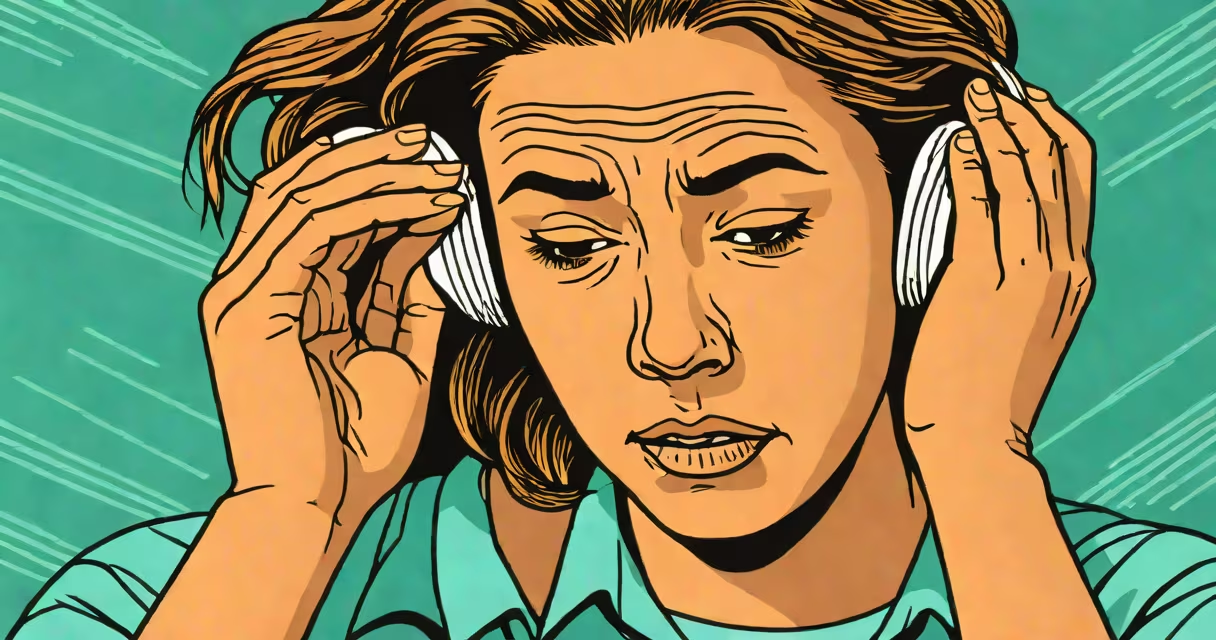
You're unusually sensitive to sound when everyday noises-like dishes clattering, voices, or traffic-feel overwhelming, painful, or impossible to ignore. This condition, often linked to hyperacusis or heightened auditory processing, stems from neurological or physiological differences in how the brain interprets sound.
Sound sensitivity isn't just being "easily bothered." It's a measurable difference in auditory perception. For some, a whisper in a quiet room feels like a shout. A coffee shop's hum can trigger physical discomfort or anxiety. These reactions aren't imagined-they reflect real changes in how the auditory system processes input.
Hyperacusis, a recognized medical condition, occurs when the brain misinterprets normal sound levels as dangerously loud. According to the American Academy of Otolaryngology-Head and Neck Surgery (AAO-HNS), hyperacusis affects approximately 1 in 10,000 people and often develops after trauma, infection, or prolonged exposure to loud noise. It's not the same as hearing loss-it's a problem with sound tolerance, not volume detection.
The auditory pathway begins in the inner ear, where sound waves become electrical signals sent to the brainstem and then the auditory cortex. In people with sound sensitivity, this process may be disrupted at multiple points. The brain may amplify incoming signals or fail to dampen them properly, leading to an exaggerated response.
Neuroimaging studies show that individuals with hyperacusis exhibit increased activity in the amygdala-the brain's fear center-when exposed to moderate sounds. This explains why a sudden car horn might trigger panic, even if the sound itself is unremarkable. The limbic system treats the noise as a threat, initiating fight-or-flight responses.
A 2021 study published in *Frontiers in Neurology* found that people with hyperacusis had reduced GABAergic inhibition in the auditory cortex. GABA is a neurotransmitter that calms neural activity. Lower GABA levels mean less control over sound processing, making the brain more reactive to stimuli.
Several factors contribute to sound sensitivity. The most common include:
Environmental factors also play a role. Urban living, constant background noise, and frequent exposure to high-decibel environments (concerts, construction sites) can lower auditory tolerance over time. A 2019 WHO report noted that long-term noise exposure contributes to auditory fatigue and increased sound reactivity.
Sound sensitivity isn't a single condition. It includes several distinct patterns:
| Type | Description | Common Triggers |
|---|---|---|
| Hyperacusis | Perceiving normal sounds as painfully loud. Often involves a reduction in sound tolerance over time. | Loud music, sudden noises, voices in crowds |
| Misophonia | Intense emotional reaction to specific sounds (e.g., chewing, typing). Not about volume, but about meaning or association. | Clicking, breathing, keyboard taps |
| Phonophobia | Fear of sound, often linked to migraines or anxiety disorders. Sounds are perceived as threatening. | Any unexpected noise, especially in silence |
Many confuse hyperacusis with misophonia. Hyperacusis is about loudness; misophonia is about emotional aversion. A person with misophonia may tolerate a loud concert but panic at someone eating chips nearby. The trigger isn't volume-it's the pattern of sound and personal association.
Another misconception: sound sensitivity is purely psychological. That's false. While mental health plays a role, biological evidence shows structural and functional differences in the brains of affected individuals. The presence of physical symptoms-headaches, nausea, dizziness-confirms this is not just "anxiety about noise."
Consider Sarah, a 32-year-old graphic designer who developed sound sensitivity after recovering from a viral illness. Before her illness, she enjoyed city life. Now, walking through downtown requires noise-canceling headphones. The clatter of heels on pavement, the ring of a phone in a café, even the refrigerator humming in her kitchen-each triggers a spike in heart rate and muscle tension.
She consulted an audiologist. Audiometric testing showed normal hearing thresholds but abnormally low tolerance to moderate sounds. She was diagnosed with acquired hyperacusis. Her treatment plan included sound desensitization therapy using broadband noise played at increasing volumes over weeks. After six months, she could tolerate background noise in public spaces without distress.
This case illustrates that sound sensitivity is treatable-but only when correctly identified. Misdiagnosis as anxiety or OCD delays effective care.
If you suspect sound sensitivity, start with a consultation with an otolaryngologist or neurologist specializing in auditory disorders. Audiological evaluation, including loudness discomfort levels (LDLs), can confirm whether your threshold for sound tolerance is below normal.
Non-medical strategies include:
For those with comorbid conditions like autism or PTSD, specialized sensory integration therapy can help. A 2022 study in *Autism Research* found that 68% of autistic adults experienced significant improvement in sound tolerance after 12 weeks of tailored auditory training.
Remember: sensitivity isn't weakness. It's a sign your nervous system is working differently-not poorly, but in a way that needs accommodation. Accepting this reduces shame and opens doors to real solutions.
If you've noticed changes in your response to sound, especially after illness, trauma, or prolonged stress, seek evaluation. Early intervention improves outcomes. You don't have to live in discomfort.
For further reading on related sensory experiences, explore how physical sensitivity can overlap with neurological processing.