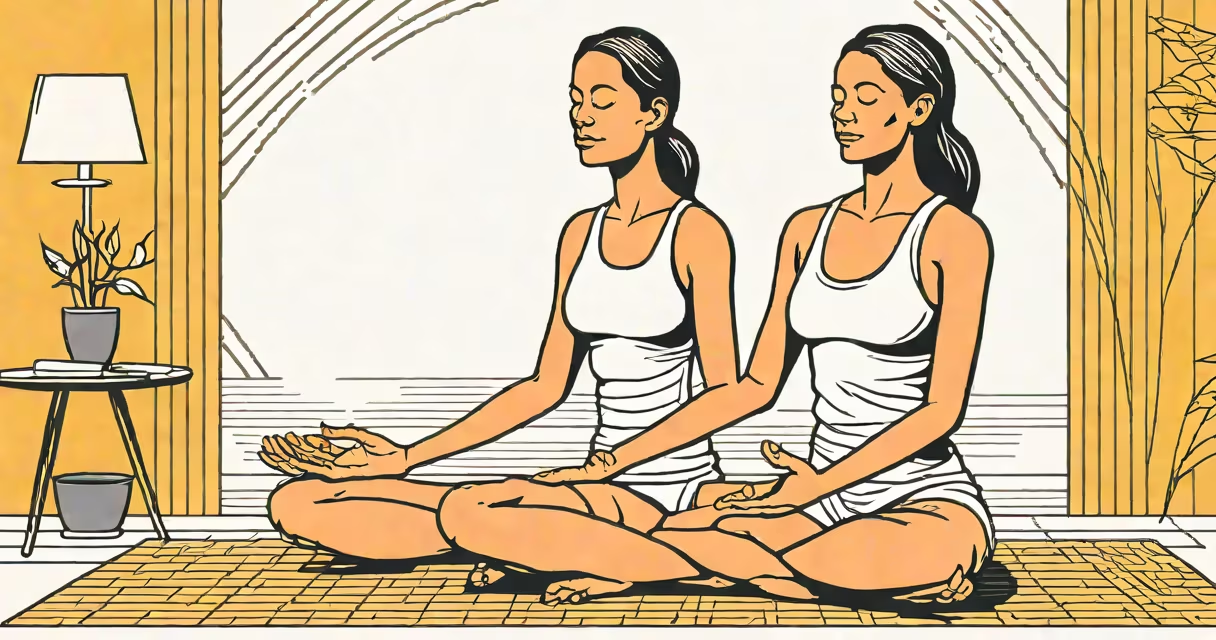
A 10 minute body scan is a structured mindfulness practice that guides attention sequentially through different parts of the body to cultivate present-moment awareness and reduce physical tension. It is typically done lying down or seated, using breath and mental focus to notice sensations without judgment.
This technique originated in Buddhist meditation traditions and was adapted into clinical settings by Jon Kabat-Zinn, founder of the Mindfulness-Based Stress Reduction (MBSR) program. Research shows it reduces cortisol levels and improves emotional regulation. A 2016 study published in *JAMA Internal Medicine* found that mindfulness practices, including body scans, reduced symptoms of anxiety and depression in adults.
The practice is not about fixing or changing sensations-it's about observing them. You don't need to feel anything specific. If discomfort arises, you acknowledge it and return focus to the breath. This builds resilience to stress and enhances interoception-the ability to sense internal bodily states.
During a 10 minute body scan, you begin by focusing on your feet. You notice temperature, pressure, texture against the floor or mattress. Then you move attention upward-ankles, calves, knees, thighs, hips-pausing briefly at each area. The process continues to the torso, arms, shoulders, neck, face, and scalp.
Each segment takes roughly 30 to 45 seconds. The goal is not speed but presence. You're not trying to "clear" your mind. Instead, you're training attention to rest on sensation. If thoughts arise-about work, a memory, or planning the next hour-you gently return to the current body part.
For example, while focusing on the left hand, you may notice warmth in the palm, tingling in the fingers, or tightness in the wrist. You label it: "warmth," "tingling," "tension." No evaluation. Just noticing. After 10 minutes, you slowly bring awareness back to the whole body, then to the breath, and finally open your eyes.
A 10 minute body scan consists of four core elements: posture, breath, sequential focus, and non-judgmental observation. Posture matters-lying flat on your back with arms at your sides is ideal. If lying down isn't possible, seated with spine upright works. The breath is used as an anchor to return to when attention drifts.
There are two main delivery formats: audio-guided and self-led. Audio-guided versions are widely available through apps like Insight Timer, Headspace, and Calm. These include a calm voice that narrates each step. Self-led versions require memorizing the sequence or using a written script.
| Format | Best For | Duration | Source Example |
|---|---|---|---|
| Audio-guided (app-based) | Beginners, consistent users | 10 minutes | Insight Timer's "Body Scan for Beginners" (10 min) |
| Self-led (script-based) | Practitioners, those avoiding tech | 10 minutes | Jon Kabat-Zinn's MBSR manual, Section 3 |
| Group session (in-person) | Therapy patients, retreat attendees | 10-15 minutes | University of Massachusetts Medical School's MBSR program |
One non-obvious detail: the sequence matters. Scanning from feet to head creates a downward flow of attention that mirrors the body's natural sensory hierarchy. Starting at the head often leads to distraction because the brain processes facial sensations more intensely. The foot-first approach grounds the mind in the physical base before moving upward.
Healthcare providers use the 10 minute body scan in treating chronic pain, PTSD, and anxiety disorders. The National Institute of Health reports that patients with fibromyalgia who practiced body scans twice daily for eight weeks showed a 35% reduction in pain severity compared to controls.
In workplace wellness programs, companies like Google and Salesforce integrate body scans into employee mental health initiatives. Employees report improved focus and fewer afternoon energy crashes. One internal survey at a tech firm found that staff who did a daily 10 minute body scan were 28% less likely to report burnout symptoms over six months.
It's also effective for sleep improvement. A 2020 randomized controlled trial in *Sleep Medicine* found that participants who did a nightly body scan fell asleep 12 minutes faster on average than those who didn't. The practice lowers heart rate variability and shifts the nervous system toward parasympathetic dominance-calming the body.
Many people think the 10 minute body scan requires relaxation. It doesn't. You're not trying to make your body feel good. If you feel numbness, heat, or discomfort, that's valid data. The practice is not about eliminating sensation-it's about meeting it with curiosity.
Another myth: "I'm bad at it because my mind wanders." Wandering is normal. The act of returning attention to the foot is the practice itself. As Kabat-Zinn wrote in *Full Catastrophe Living*: "The mind will wander. That's not failure. Returning is the discipline."
Some confuse it with progressive muscle relaxation (PMR), which involves tensing and releasing muscles. PMR aims to reduce physical tension. The body scan observes without changing. They're both useful, but serve different purposes. One is action-oriented; the other is observational.
Consider Sarah, a software engineer in Seattle. She wakes at 6:30 AM, lies in bed, and begins her 10 minute body scan. She focuses on her toes-feels the weight of the blanket, the cool air on skin. She moves to her ankles-notice stiffness from yesterday's walk. She pauses at her lower back-feels a dull ache. She doesn't judge it. She notes it. Then she moves on.
After five minutes, her mind drifts to a pending project deadline. She notices the thought, says "thinking," and returns to her right thigh. By minute seven, she feels her shoulders relax slightly. At the end, she opens her eyes, stretches, and begins her day with clearer focus.
She repeats this daily. Over time, she notices that when stress arises at work, she can pause, take three breaths, and scan her body in under a minute. This micro-practice prevents small tensions from building into headaches or irritability.
I once led a group of 12 office workers through a 10 minute body scan during a midday break. One participant, a manager with chronic neck pain, reported afterward: "I've done yoga for years. But this was the first time I noticed how tight my jaw had gotten. I didn't realize I was clenching until I scanned there." He later incorporated the practice into his evening routine and reduced his reliance on over-the-counter painkillers.
That moment confirmed something I'd seen in research: body awareness isn't just mental-it changes physiology. Noticing tension often reduces it, simply by making it visible.
Find a quiet space. Lie down or sit comfortably. Close your eyes. Begin with your feet. Spend 30 seconds on each area. Use a timer. Start with one session per day. Gradually increase frequency if it feels sustainable.
The 10 minute body scan is not a quick fix. It's a daily tool for tuning into the body's signals. With repetition, it becomes a foundation for emotional stability, better sleep, and greater self-awareness.