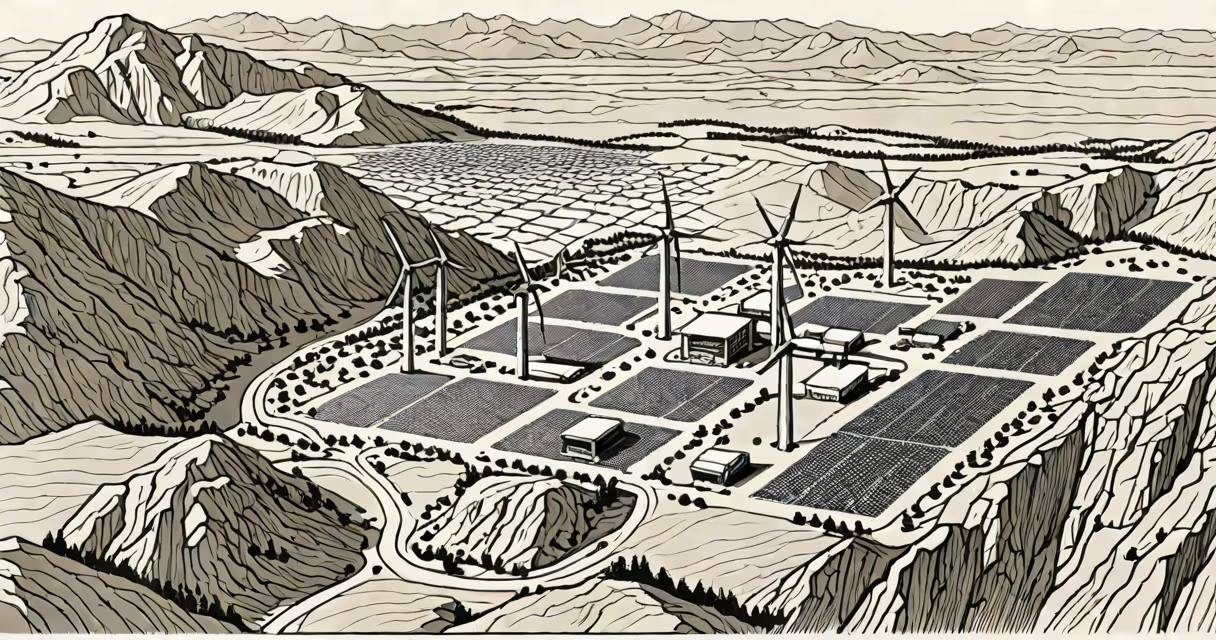
Five renewable energy sources-solar, wind, hydropower, geothermal, and biomass-are sustainable alternatives to fossil fuels that replenish naturally within human timescales. They generate electricity or heat without depleting finite resources or emitting significant carbon dioxide during operation.
Solar power captures sunlight using photovoltaic cells or mirrors focused on heat collectors. Wind energy uses turbines to convert airflow into mechanical power, then electricity. Hydropower relies on flowing water-typically from dams-to spin turbines. Geothermal energy extracts heat from beneath Earth's surface through wells or steam vents. Biomass energy burns organic material such as wood, crop waste, or animal manure to produce heat or electricity.
These sources differ in scalability, geographic suitability, and environmental trade-offs. Solar and wind are highly deployable but intermittent. Hydropower offers consistent output but requires large infrastructure and can disrupt ecosystems. Geothermal is stable but limited to tectonically active regions. Biomass can reduce waste but risks deforestation if poorly managed.
Solar panels convert photons from sunlight into direct current via the photovoltaic effect. A single panel rated at 400 watts produces about 1.6 kilowatt-hours per day under optimal conditions-enough to run a refrigerator for 8 hours. Utility-scale solar farms in California's Mojave Desert generate over 1 gigawatt of capacity, powering hundreds of thousands of homes.
Wind turbines use aerodynamic blades to capture kinetic energy from air movement. Modern offshore turbines like the Vestas V174 reach 9.5 megawatts, producing enough electricity annually to supply 4,500 average U.S. homes. Wind farms in Texas and Denmark contribute over 20% of national electricity grids.
Hydropower systems channel river flow through turbines in dams. The Hoover Dam on the Colorado River generates 2 billion kilowatt-hours yearly-enough for 1.3 million homes. Pumped storage hydropower acts as grid-scale batteries, storing excess energy by reversing turbine flow to refill reservoirs.
Geothermal plants tap steam or hot water from underground reservoirs. Iceland runs 90% of its heating and 30% of its electricity from geothermal sources. The Hellisheiði Power Station near Reykjavík supplies 300 megawatts of power and heats 90% of the city's buildings.
Biomass facilities burn organic matter in combustion chambers. The Drax Power Station in England converted four of its six coal units to burn wood pellets, reducing emissions by 75%. However, sourcing sustainably grown feedstock remains critical to avoid carbon debt.
| Type | Energy Source | Typical Output Range | Key Limitation |
|---|---|---|---|
| Solar | Direct sunlight | 150-400 W/m² (panel) | Intermittent; depends on daylight and weather |
| Wind | Atmospheric wind | 2-10 MW/turbine | Variable speed; noise and bird collision concerns |
| Hydropower | Flowing water | 100 MW-2 GW/dam | High upfront cost; habitat disruption |
| Geothermal | Earth's internal heat | 5-50 MW/plant | Region-specific; drilling risks |
| Biomass | Organic matter | 10-100 MW/unit | Emissions if burned inefficiently; land use competition |
Each type performs best in specific climates and terrains. Solar thrives in deserts and sunny coasts. Wind excels in coastal plains and high-altitude zones. Hydropower requires rivers with steady flow. Geothermal needs proximity to tectonic plate boundaries. Biomass scales well where agricultural residues are abundant.
A common misconception is that all renewables are equally clean. While none emit CO₂ during generation, lifecycle emissions vary. Solar panels require mining and manufacturing-producing roughly 40 grams of CO₂ per kWh over 30 years. Wind turbines emit about 11 g/kWh. Hydropower projects may release methane from decomposing submerged vegetation. Geothermal plants emit trace hydrogen sulfide. Biomass combustion releases nitrogen oxides unless scrubbed.
Global deployment varies widely. In 2023, renewables supplied 30% of worldwide electricity, according to the International Energy Agency (IEA). China leads in installed solar capacity-over 500 gigawatts-and wind-440 gigawatts. Germany generated 50% of its electricity from renewables in 2022, with wind and solar together providing 28%.
Small nations demonstrate rapid adoption. Costa Rica ran on 99% renewable electricity for 300 consecutive days in 2022, relying on hydropower (60%), wind (20%), geothermal (10%), and solar (5%). Morocco's Noor Ouarzazate complex-the largest solar plant in the world-supplies 1.5 million people with clean power using concentrated solar thermal technology.
Urban areas increasingly integrate rooftop solar. In San Diego, California, over 15% of homes have solar installations. The city mandates solar readiness in new residential construction, aiming for 100% renewable electricity by 2035.
One non-obvious fact: solar and wind often complement each other seasonally. In Northern Europe, winter months see higher wind speeds and lower sun angles-balancing daily demand patterns. Pairing solar with battery storage reduces reliance on backup gas plants.
People often assume biomass is carbon-neutral because plants absorb CO₂ while growing. But this overlooks time lags. Burning wood pellets from clear-cut forests creates immediate emissions that take decades to offset. The European Environment Agency notes that some biomass projects result in net carbon increases over 20-year periods.
Another error is equating "renewable" with "zero-emission." All energy systems have upstream impacts. Manufacturing a wind turbine emits about 15 grams of CO₂ per kWh over its lifetime-higher than solar's 40 g/kWh, but still far below coal's 1,000 g/kWh. Lifecycle analysis reveals that efficiency gains matter more than source purity.
I once visited a small village in Nepal where a micro-hydro system powered 40 homes. The generator ran continuously, but maintenance was inconsistent. After three months, sediment buildup reduced output by 40%. This showed that reliability depends not just on resource availability but on ongoing technical care-often overlooked in policy discussions.
Consider a 1-megawatt solar farm in Arizona. It covers 5 acres and uses 3,000 panels, each rated at 330 watts. With 6.5 peak sun hours per day, the system generates approximately 21,000 kilowatt-hours daily-enough to power 200 average U.S. households.
Installation costs totaled $2.1 million. Federal tax credits covered 30%, reducing net cost to $1.47 million. Over 25 years, annual revenue from electricity sales averages $180,000. The project offsets 1,200 metric tons of CO₂ annually-equivalent to removing 260 passenger vehicles from roads.
Local jobs were created during construction. Maintenance staff monitor inverters and clean panels monthly. Rain washes away dust, but sandstorms in spring require additional cleaning cycles. The system's performance ratio-actual output divided by theoretical maximum-is 82%, typical for desert installations.