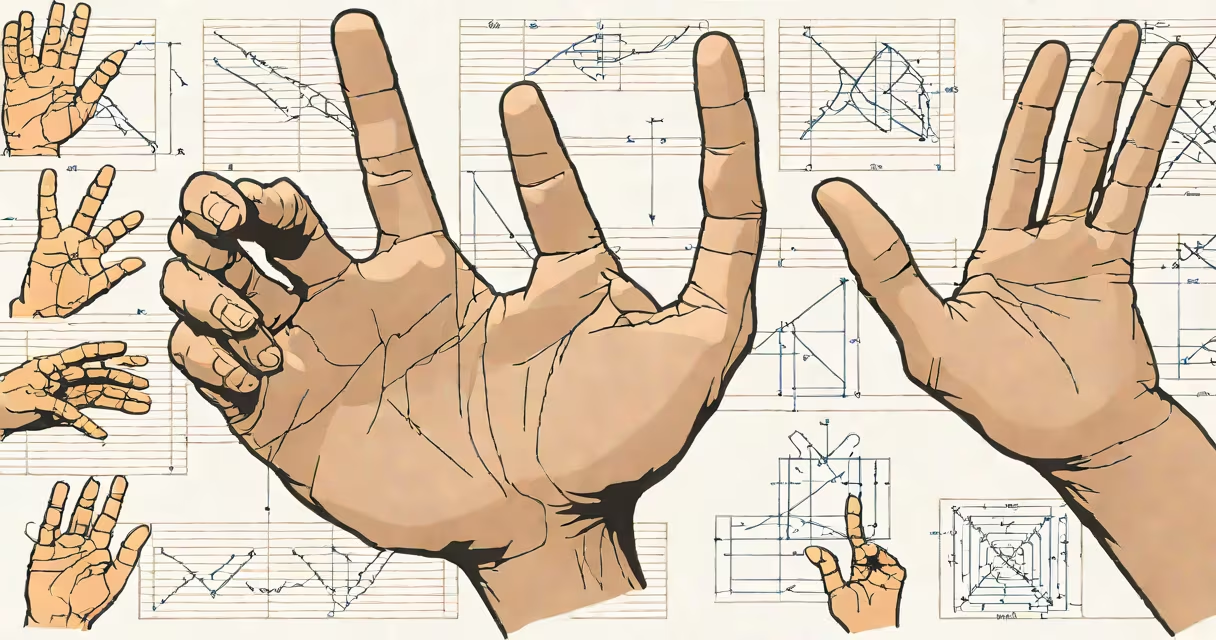
The "asl english sign" is the manual representation of English words using American Sign Language (ASL), a complete visual-gestural language with its own grammar and syntax, not a direct translation of spoken English. It uses handshapes, movements, facial expressions, and spatial relationships to convey meaning.
ASL is not a signed version of English. It is a distinct language with native speakers, including Deaf individuals who use it as their primary mode of communication. The term "asl english sign" often refers to finger spelling-where letters of the English alphabet are manually represented-and not full ASL grammar. For example, the word "cat" may be finger-spelled C-A-T, but in ASL, it is signed with a single motion mimicking a cat's pawing action.
According to the National Association of the Deaf (NAD), ASL is the primary language of over 500,000 Deaf and hard-of-hearing people in the United States. The Linguistic Society of America recognizes ASL as a natural language with complex structure, independent of English. This distinction is critical: while ASL includes signs for English-derived vocabulary, it does not follow English word order or syntax.
ASL relies on visual-spatial grammar. Sentences are structured around topics, predicates, and spatial referencing rather than subject-verb-object sequences. A simple sentence like "I eat apples" becomes "I eat apple" in ASL, with the signer moving their dominant hand from near the mouth toward the chest to indicate eating, then signing "apple" with a flat hand tapping the palm.
Facial expressions are integral. Raised eyebrows signal yes/no questions; furrowed brows indicate negation. In ASL, "You're going?" is signed with a rising intonation in the face and a questioning hand movement. Without facial cues, the meaning changes entirely.
For example, the sentence "She is happy" in ASL uses a flat hand moving upward from the chest while smiling. The sign "happy" is not a static gesture-it involves movement and expression. A signer cannot simply spell "happy" letter by letter and expect comprehension. The correct sign requires both form and affect.
ASL signs are composed of five parameters: handshape, location, movement, orientation, and non-manual signals (facial expressions, head tilts, etc.). Altering any one parameter changes the meaning. For instance, the sign for "mother" (hand touching chin, fingers spread) differs from "father" (same handshape, but fingers pointed downward).
Finger spelling is used for proper names, technical terms, or words not yet in the ASL lexicon. It's not a substitute for full ASL. For example, "New York" is finger-spelled N-E-W Y-O-R-K. But "I live in New York" uses the sign for "live" and the location "New York," not a string of spelled-out letters.
A common misconception is that ASL is universal. It is not. Regional dialects exist, and ASL differs from British Sign Language (BSL), French Sign Language (LSF), or Japanese Sign Language (JSL). Even within the U.S., regional variation occurs-signers from different states may use slightly different signs for the same concept.
ASL is used in education, healthcare, legal settings, and everyday communication among Deaf and hearing communities. In schools, Deaf students are taught in ASL, especially in early childhood. Research from Gallaudet University shows that Deaf children who learn ASL early develop stronger literacy skills in English later.
In medical contexts, accurate ASL interpretation prevents miscommunication. A study published in *The Journal of Deaf Studies and Deaf Education* found that patients receiving care with certified ASL interpreters had better health outcomes and higher satisfaction rates than those relying on family members or written materials.
Businesses increasingly require ASL training. Companies like Microsoft and Google have implemented internal ASL programs to improve accessibility. For example, Microsoft's Deaf Employee Network offers monthly workshops on ASL basics and cultural competence.
Many assume ASL is "English with gestures." This is false. ASL has its own grammar. A sentence like "I am going to the store" is not signed word-for-word. Instead, the signer establishes the topic ("I"), then uses a movement indicating direction and destination. The sign for "store" is a closed fist moving forward twice-no spelling involved.
Another myth: "All Deaf people can sign." Not true. Only about 10% of Deaf people in the U.S. are fluent in ASL. Many were raised in oral-only environments and lack exposure to sign language. The National Deaf Center reports that only 20% of Deaf adults in the U.S. have high proficiency in ASL.
Also, finger spelling is not slow. It's precise. The average rate of finger spelling is 10-12 letters per second. Skilled signers can spell out names like "Jennifer Smith" in under five seconds, with clear articulation.
| Feature | ASL English Sign | Spoken English |
|---|---|---|
| Primary modality | Visual-gestural | Auditory-verbal |
| Grammar structure | Topic-prominent, spatial | Subject-verb-object |
| Time reference | Signs show duration via movement speed | Verbs change tense (e.g., "walked") |
| Proper names | Finger-spelled or unique signs | Spelled aloud or written |
| Non-manual signals | Essential for meaning (e.g., facial expressions) | Optional (tone, pitch) |
One non-obvious fact: ASL signs are not arbitrary. They often reflect iconicity-the sign visually resembles the concept. The sign for "tree" involves a vertical hand moving up and down, mimicking a tree swaying in wind. The sign for "run" uses a running motion with the arms. These are not random-they are rooted in physical experience.
I once attended a community event where a hearing person attempted to sign "I love you" using only finger spelling. They spelled "I-L-O-V-E-Y-O-U" slowly and. The Deaf attendees reacted with confusion. Later, a Deaf interpreter explained: "That's not how we say it. We don't spell 'love' in ASL. We sign it with a heart-shaped hand over the chest." The emotional weight of the gesture was lost in literal spelling.
Understanding the "asl english sign" means recognizing that it is not a mechanical translation. It is a living language shaped by culture, space, and expression. Mastery requires immersion, not memorization. The goal is not to replicate English in signs-but to think in ASL.