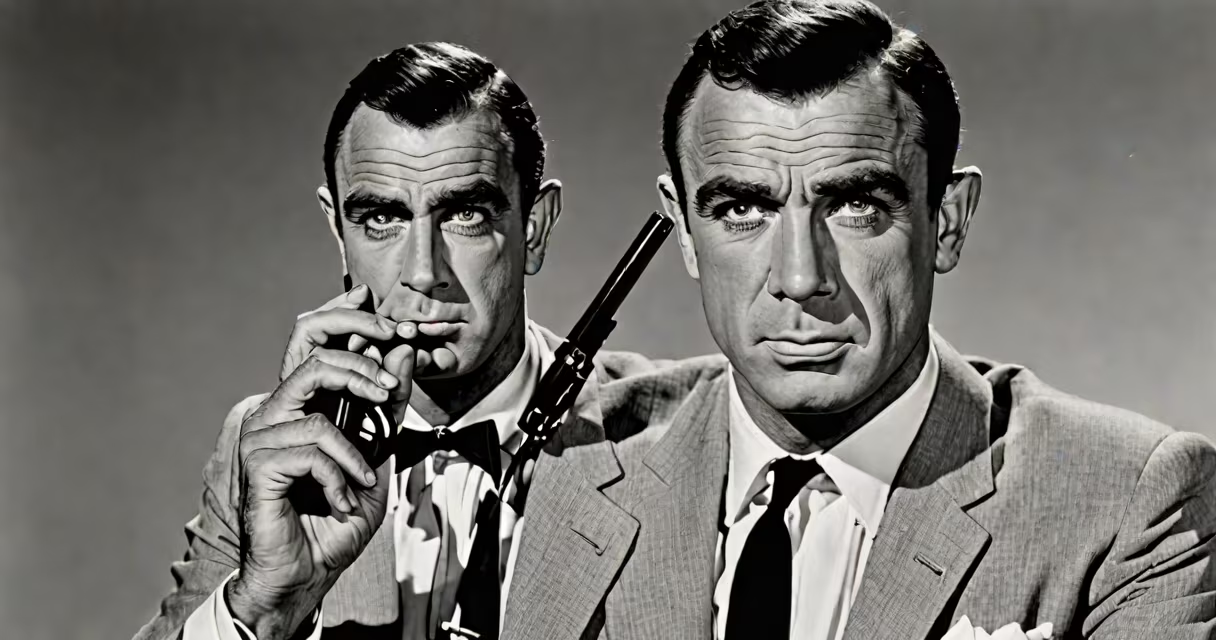
The role of James Bond has been portrayed by eleven actors since the character's debut in 1962. Each actor brought distinct traits to the role, shaping the public image of the British secret agent across decades.
Sean Connery originated the role in *Dr. No* (1962), establishing the archetype of the suave, intelligent, and physically capable spy. His portrayal set the standard for future actors, blending charm, wit, and action. Connery starred in six Bond films between 1962 and 1983, including *Goldfinger*, *Thunderball*, and *Diamonds Are Forever*. He was the first actor to play Bond in a major motion picture, and his performance remains the most referenced in discussions of the character's legacy.
Connery's successor was George Lazenby, who appeared in only one film, *On Her Majesty's Secret Service* (1969). Lazenby left the role after the film's release due to dissatisfaction with the production and lack of long-term commitment. His brief tenure marked the only time a Bond actor did not return for a sequel.
Following Lazenby, Roger Moore took over the role in 1973 with *Live and Let Die*. Moore's Bond was lighter in tone, emphasizing humor and gadgetry over grit. He starred in seven films, including *The Man with the Golden Gun*, *Octopussy*, and *A View to a Kill*. Moore's portrayal lasted until 1985, making him the longest-serving Bond actor. His tenure coincided with the franchise's peak global popularity during the 1970s and 1980s.
Pierce Brosnan succeeded Moore in 1995 with *GoldenEye*. Brosnan brought a modernized version of Bond, emphasizing physicality and emotional depth. He starred in four films: *GoldenEye*, *Tomorrow Never Dies*, *The World Is Not Enough*, and *Die Another Day*. Brosnan's Bond was often described as more romantic and introspective than previous versions, reflecting changing audience expectations.
Daniel Craig replaced Brosnan in 2006 with *Casino Royale*. Craig's interpretation marked a deliberate departure from earlier portrayals. He introduced a darker, more vulnerable Bond, grounded in realism and psychological complexity. His films include *Quantum of Solace*, *Skyfall*, *Spectre*, and *No Time to Die*. Craig's Bond is the first to have a detailed backstory involving trauma and personal loss, aligning with contemporary storytelling trends in action cinema.
| Actor | Years Active | Films | Tone |
|---|---|---|---|
| Sean Connery | 1962-1983 | 6 | Classic, suave, adventurous |
| George Lazenby | 1969 | 1 | Short-lived, serious |
| Roger Moore | 1973-1985 | 7 | Light-hearted, witty, gadget-focused |
| Pierce Brosnan | 1995-2002 | 4 | Modern, romantic, action-driven |
| Daniel Craig | 2006-2021 | 5 | Dark, realistic, emotionally complex |
Each actor's casting was influenced by studio direction, market trends, and evolving audience tastes. For example, the decision to cast Connery came after a lengthy search; producers initially considered actors like David Niven and Peter Sellers. According to *The Guardian*, Connery was chosen partly because he "looked like a man who could survive a fall from a skyscraper and still make a joke."
Brosnan's casting in 1995 followed a period of uncertainty after the 1994 film *GoldenEye* failed to meet box office expectations. The studio wanted a fresh face with star power. Brosnan had recently gained fame through *The Thomas Crown Affair* remake and *Mighty Ducks*, giving him broad appeal. His casting was controversial among fans who preferred a more traditional Bond look.
Craig's casting in 2006 was notable for its departure from the established mold. The film's director, Martin Campbell, insisted on an actor who looked "like someone who'd been through war." Craig's background in stage and television drama, including roles in *The Girl with the Dragon Tattoo* and *The Mother*, made him an unexpected but effective choice. His physical presence and understated delivery contrasted sharply with Moore's flamboyance and Connery's effortless cool.
A common misconception is that all Bond actors were British. While most were, Connery was Scottish, and Brosnan was Irish. This reflects the broader UK identity associated with the character rather than strict nationality. The franchise has never required Bond to be from a specific region, though he is consistently portrayed as a British subject.
Another misunderstanding is that Bond films are always produced in sequence. In reality, gaps between releases have occurred due to delays, recasting, or studio changes. After Brosnan's final film, *Die Another Day* (2002), a five-year gap occurred before Craig's *Casino Royale* (2006). This delay allowed for extensive rewrites and a reboot of the series' tone and narrative structure.
One non-obvious fact: the original Bond novels by Ian Fleming never describe Bond's appearance in detail. Fleming wrote that Bond "wasn't tall, but he was well-built," and focused on his demeanor, not his looks. This lack of visual detail gave studios freedom to cast actors based on charisma and screen presence rather than physical resemblance.
For example, in *Casino Royale* (2006), Craig's Bond wears a tailored suit, drinks Vodka Martini (shaken, not stirred), and uses a Walther PPK. These choices were consistent with the novel's descriptions. However, the film's opening scene shows Bond being tortured in a prison cell-a scene not in the book. This change emphasized Craig's Bond as traumatized and flawed, a narrative shift absent in earlier adaptations.
When the franchise moved to digital distribution, the BBC reported in 2020 that *No Time to Die* (2021) became the most-watched Bond film globally, with over 15 million viewers in its first week on streaming platforms. This highlights how the role continues to evolve beyond theatrical release, reaching audiences through multiple channels.
Despite the variety in portrayals, the core elements of Bond remain consistent: intelligence, loyalty to country, and a preference for women who challenge him intellectually. The character's longevity stems from this balance between tradition and reinvention.