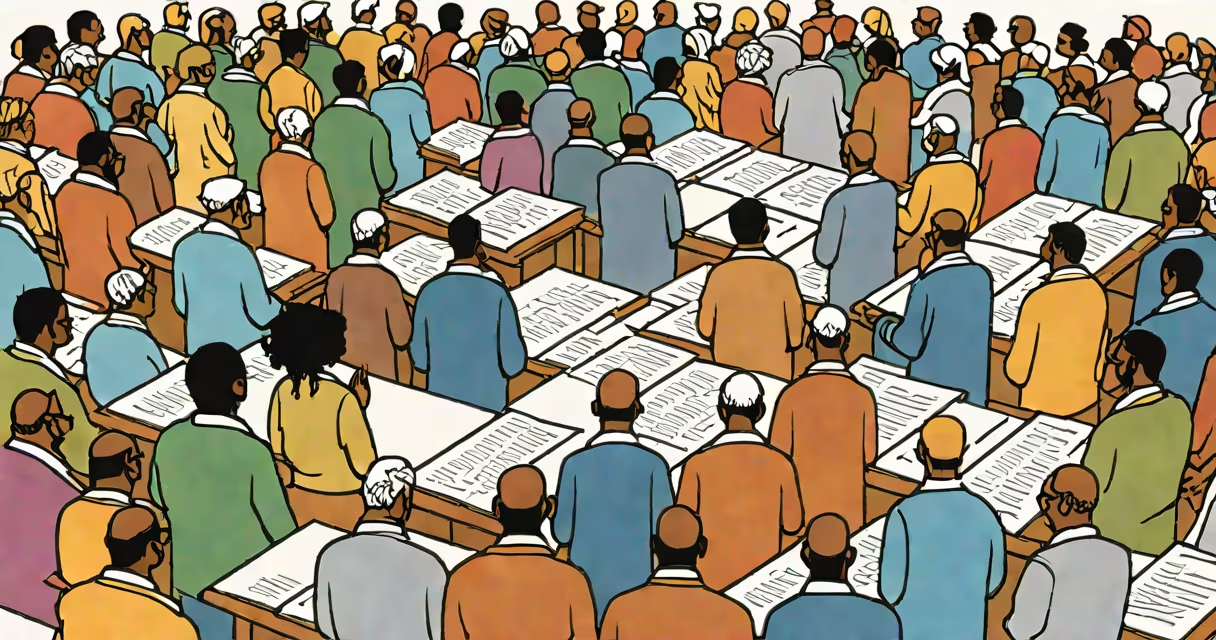
A denomination in religion is a formal subcategory within a major religious tradition that holds distinct doctrinal positions, organizational structures, and worship practices. Denominations arise when groups diverge over theology, leadership, or ritual, forming autonomous communities with shared identity and institutional continuity.
Denominations are not synonymous with sects or cults. While all three involve religious grouping, denominations typically have stable membership, public recognition, and established institutions. Sects often emerge from denominations through schism, emphasizing purity and separation from mainstream society. Cults usually lack historical continuity and may center on a charismatic leader.
The term "denomination" originated in Christianity during the Reformation. As Protestant movements splintered from Catholicism, each new group adopted a name reflecting its theological stance-Lutheran, Calvinist, Anglican. These names became denominational identifiers. Today, the concept applies broadly across religions, including Islam's Sunni-Shia divide, Hinduism's Vaishnava-Saiva schools, and Buddhism's Theravāda-Mahāyāna branches.
Denominations emerge from doctrinal disagreements, cultural adaptation, or shifts in religious authority. A single belief-such as baptismal practice, clerical ordination, or scriptural interpretation-can trigger division. Once a group establishes consistent teaching, leadership, and rituals, it qualifies as a denomination.
For example, the Baptist denomination formed in 17th-century England when groups rejected infant baptism and insisted on believer's baptism by immersion. They organized churches independently, developed their own seminaries, and created publishing networks. By the 18th century, Baptists had distinct regional associations-Southern Baptist Convention in the U.S., Baptist Union in Britain-each operating under a shared theological structure.
Denominations are not always permanent. Some evolve into new traditions. Others merge due to shared goals. The United Methodist Church emerged in 1939 from the merger of the Methodist Episcopal Church and the Methodist Episcopal Church, South, following decades of debate over race, governance, and doctrine. This consolidation created a single denomination with national structure and unified doctrine.
Religious denominations vary in size, influence, and internal structure. The table below outlines common forms based on authority, scale, and autonomy.
| Type | Authority Source | Size & Reach | Example |
|---|---|---|---|
| National | National council or synod | Large, country-wide | Episcopal Church (U.S.) |
| Regional | Regional conference or district | State or province-level | California Baptist Convention |
| Global | International body or council | Transnational, multiple countries | World Communion of Reformed Churches |
| Independent | Local congregation or board | Small, localized | Non-denominational churches in rural towns |
Not all religious groups labeled as "denominations" meet the criteria. Some use the term loosely. For instance, "Pentecostal" is often treated as a single denomination, but it includes dozens of independent bodies-Assemblies of God, Church of God in Christ, Foursquare Gospel Church-each with unique governance and doctrine. These are better described as a movement with multiple denominational expressions.
A key distinction lies in institutional permanence. A denomination maintains records, ordains clergy, owns property, and operates schools or charities. A temporary gathering or informal fellowship may share beliefs but lacks the administrative infrastructure to qualify as a denomination.
People often confuse denomination with sect, cult, or simply "a church." A denomination is not defined by size or popularity. The Southern Baptist Convention has over 15 million members in the U.S. alone, while the Church of Scientology has fewer than 100,000 adherents globally. Both are denominations because they meet the structural and doctrinal criteria-not because of scale.
Another error is assuming denominations are purely theological. While doctrine matters, governance and ritual are equally defining. Two groups may agree on core beliefs-say, the divinity of Jesus-but differ on whether priests must be celibate or married. That difference can lead to separate denominations, even within the same tradition.
Even within Christianity, the term "denomination" is sometimes misapplied. The Roman Catholic Church is not a denomination-it is the largest Christian tradition. Within it, there are rites (e.g., Latin Rite, Maronite Rite), but these are not denominations. They are liturgical families under one ecclesiastical authority. Splitting off from Catholicism creates a new denomination, such as the Ukrainian Greek Catholic Church, which maintains Catholic doctrine but uses Eastern liturgy and has its own hierarchy.
In 1988, three Lutheran denominations merged to form the Evangelical Lutheran Church in America (ELCA): the American Lutheran Church, the Association of Evangelical Lutheran Churches, and the Lutheran Church in America. Each had distinct histories, theological emphases, and regional bases.
The ELCA was formed to unify resources, reduce duplication, and strengthen advocacy. It adopted a constitution, elected a bishop-led synod, and established centralized offices. Membership grew from 2.5 million to 3.6 million over ten years. Despite unity, internal debates continue-especially over LGBTQ+ inclusion in ministry. In 2009, the ELCA approved the ordination of openly gay and lesbian pastors, a move that led to the formation of the Lutheran Church-Missouri Synod (LCMS) as a conservative alternative.
This illustrates how denominations can split over doctrine. The LCMS remains a separate denomination despite sharing origins with the ELCA. Both are recognized by the World Council of Churches, but their stances on gender, sexuality, and biblical interpretation differ.