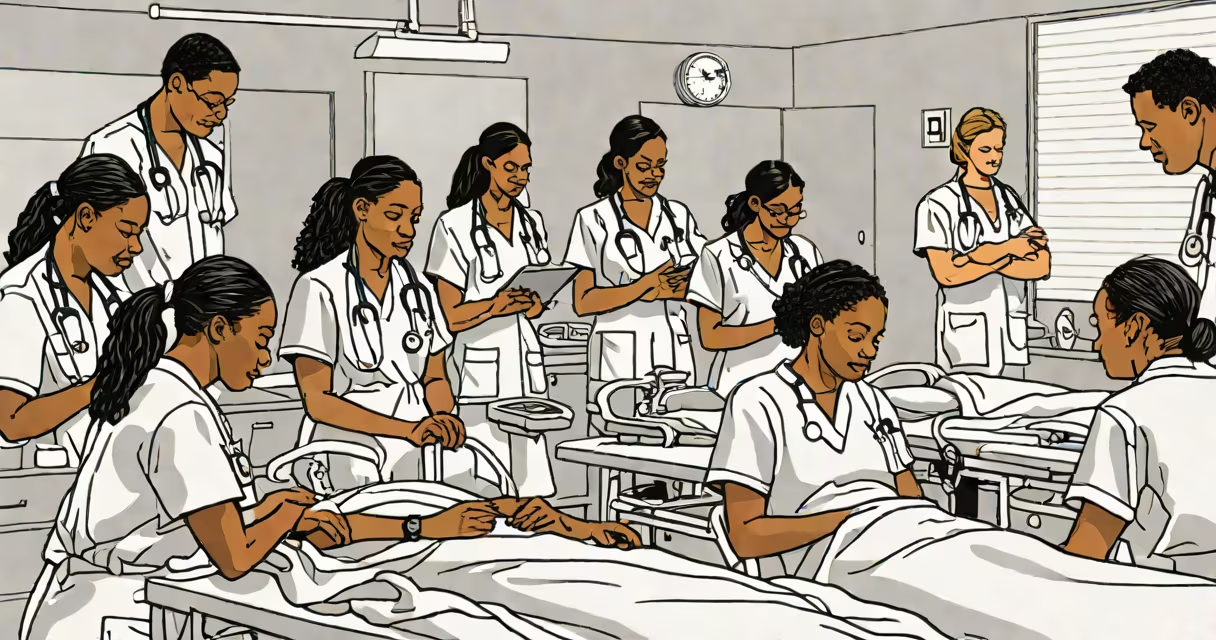
Bachelor of Science in Nursing (BSN) programs are four-year undergraduate degrees that prepare students for licensure as registered nurses (RNs) through clinical training, core science courses, and supervised patient care experiences. These programs are offered by accredited colleges and universities and serve as the standard educational path for entry into professional nursing practice.
BSN programs differ from associate degree in nursing (ADN) programs, which take two years and lead to the same RN license but typically limit initial job placement to hospital settings. BSN graduates qualify for broader roles across healthcare environments, including outpatient clinics, public health agencies, and leadership positions. According to the National Council of State Boards of Nursing (NCSBN), 60% of RNs in the U.S. hold a bachelor's degree or higher, reflecting growing employer preference for BSN-prepared nurses.
Admission to bachelors in nursing schools requires completion of high school prerequisites in biology, chemistry, and math. Many programs also require standardized test scores (SAT/ACT), letters of recommendation, and personal statements. Students begin with foundational courses in anatomy, physiology, microbiology, and psychology before advancing into nursing-specific coursework such as maternal-child health, psychiatric nursing, and community health.
BSN curricula follow a structured progression over eight semesters. The first two years focus on general education and pre-requisite sciences. Students complete 1,000-1,200 hours of clinical rotations in hospitals, long-term care facilities, and community health centers during their junior and senior years. These rotations expose learners to diverse patient populations and medical conditions under supervision.
Clinical sites vary by institution. For example, the University of Pennsylvania's BSN program partners with Penn Medicine, allowing students to train in Level I trauma centers and specialized pediatric units. Clinical assignments are scheduled weekly, often requiring early morning shifts and weekend coverage. Students must maintain a minimum GPA of 3.0 to remain in good academic standing.
Upon graduation, students take the NCLEX-RN exam to obtain state licensure. The National Council Licensure Examination (NCLEX) is administered by Pearson VUE and consists of 75-145 computer-adaptive questions. The average pass rate for BSN graduates across U.S. schools was 89.4% in 2023, according to NCSBN data.
BSN programs fall into three primary categories: traditional full-time, accelerated, and online hybrid. Traditional programs accept high school graduates and span four years. Accelerated BSN tracks are designed for individuals with prior bachelor's degrees in non-nursing fields and compress the curriculum into 12-18 months. Online programs offer asynchronous coursework with in-person clinical placements arranged locally.
| Program Type | Duration | Admission Requirements | Best For |
|---|---|---|---|
| Traditional Full-Time | 4 years | High school diploma, science prerequisites | Recent high school graduates |
| Accelerated BSN | 12-18 months | Bachelor's degree in another field, GRE optional | Career changers with prior college experience |
| Online Hybrid | 3-4 years | High school or transfer credits, tech access | Working adults seeking flexible scheduling |
Some institutions offer dual-degree pathways. For example, Duke University's BSN program allows students to earn a B.S. in Nursing and a minor in global health within four years. Others integrate research components-such as the University of Michigan's BSN track, which includes a capstone project analyzing disparities in rural healthcare access.
Only programs accredited by the Commission on Collegiate Nursing Education (CCNE) or the Accreditation Commission for Education in Nursing (ACEN) meet national standards for quality. CCNE focuses on outcomes-based evaluation and institutional integration, while ACEN emphasizes program structure and faculty qualifications. As of 2023, 78% of U.S. BSN programs held CCNE accreditation, the most widely recognized standard.
Unaccredited programs may not qualify students for NCLEX-RN eligibility or state licensure. The U.S. Department of Education maintains a database of accredited nursing programs, updated quarterly. Always verify accreditation status before enrolling. A 2022 study published in *Nurse Educator* found that graduates from CCNE-accredited programs had a 12% higher first-time NCLEX pass rate compared to those from non-accredited programs.
Hospitals remain the largest employer of BSN-trained nurses, particularly in critical care, emergency medicine, and surgical units. However, demand is rising in outpatient settings. The U.S. Bureau of Labor Statistics projects a 6% growth in RN employment from 2022 to 2032, with 225,000 new jobs expected. BSN holders are increasingly preferred for roles in public health, case management, and healthcare administration.
Employers value BSN graduates for their ability to apply evidence-based practice, communicate effectively in interdisciplinary teams, and manage complex patient cases. A 2021 report by the American Association of Colleges of Nursing (AACN) found that 80% of hospitals surveyed required or strongly preferred BSN-prepared nurses for promotion to charge nurse or team leader positions.
Some institutions offer direct-entry pathways into advanced practice. For example, Johns Hopkins University's BSN-to-DNP program allows students to enter a Doctor of Nursing Practice track after completing their bachelor's degree. This enables faster advancement into roles such as nurse practitioner or clinical nurse specialist.
Many assume that all nursing schools offer BSN degrees. In reality, only about 65% of U.S. nursing programs are four-year BSN programs. The rest are associate degree (ADN) or diploma programs. ADN programs are still valid paths to licensure but do not provide the same depth in leadership, research, and population health as BSN programs.
Another misconception is that BSN programs guarantee a job. While employment rates for BSN graduates are high-92% within six months of graduation, per AACN data-placement depends on location, specialization, and individual performance. Some graduates pursue additional certifications, such as Certified Emergency Nurse (CEN) or Certified Pediatric Nurse (CPN), to improve competitiveness.
I once observed a BSN cohort at a Midwest university complete a simulated mass casualty event during their final semester. Students triaged patients using color-coded tags, coordinated with EMS teams, and documented interventions in real time. The exercise revealed gaps in communication and decision-making under pressure-issues later addressed in debrief sessions. This hands-on simulation underscored how BSN programs build both technical skill and situational judgment.
When evaluating bachelors in nursing schools, prioritize programs with strong clinical partnerships, high NCLEX success rates, and clear pathways to specialty certification. The right BSN program equips graduates not just with a license, but with the foundation for lifelong learning and impact in patient care.