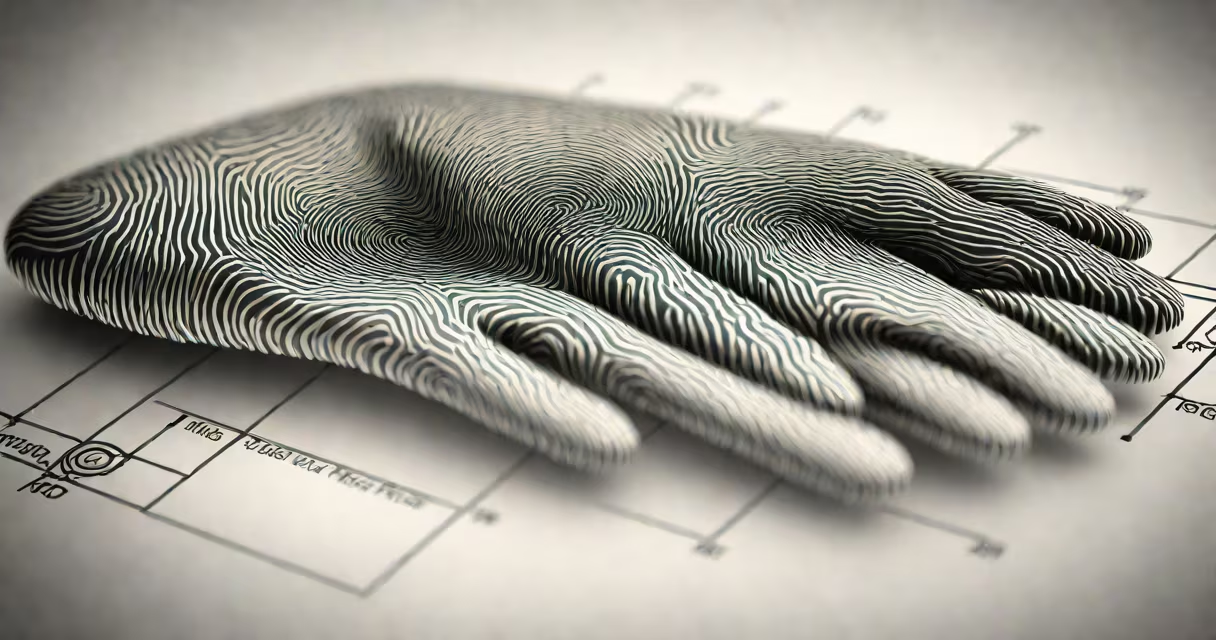
Biometric records are digital data derived from measurable biological characteristics-such as fingerprints, facial features, or iris patterns-that uniquely identify individuals. These records enable secure authentication in systems ranging from smartphones to border control. They are not physical samples but processed templates used for comparison.
Unlike passwords or ID numbers, biometric records rely on innate physical traits that are difficult to replicate. A single fingerprint scan, for example, produces a mathematical representation of ridge patterns, not an image. This template is stored and matched against future scans during access attempts. The National Institute of Standards and Technology (NIST) confirms that such systems reduce false acceptance rates to under 0.1% in controlled environments.
These records are central to modern identity verification. They power phone unlocking, airport security checkpoints, and employee time tracking. Their use spans government databases, financial institutions, and consumer electronics. Because they are tied to the body, they offer stronger security than traditional credentials-but also raise privacy concerns when misused.
When a biometric system captures data-say, a face scan-it applies algorithms to extract key features. For facial recognition, the software maps distances between eyes, nose width, jawline shape, and other landmarks. These measurements form a vector-a set of numerical values-stored as the record.
During verification, a new scan is converted into the same format. The system compares the new vector to the stored one using similarity thresholds. If the difference falls below a set margin, access is granted. This process happens in milliseconds. Apple's Face ID, for instance, uses a neural engine to match facial geometry with 99.9% accuracy under normal conditions, according to Apple's technical documentation.
The raw image is not saved. Instead, a compressed template is generated. This reduces storage needs and limits exposure. However, if the template is compromised, attackers can't reverse-engineer the original face or fingerprint. Still, research from the University of Washington shows that reconstructed images can sometimes be synthesized from leaked templates using generative models.
There are several categories based on the biological trait measured. Each has distinct strengths and limitations in real-world deployment.
| Type | Common Use Cases | Accuracy Rate (NIST 2020) | Privacy Risk Level |
|---|---|---|---|
| Fingerprint | Smartphone enable, border control | 96.2% | High |
| Facial Recognition | Security cameras, social media tagging | 95.1% | Very High |
| Iris Scan | High-security facilities, airport entry | 99.8% | Medium |
| Voiceprint | Phone banking, virtual assistants | 92.4% | Medium |
NIST's 2020 study evaluated 100 commercial systems across demographics. It found that facial recognition systems had higher error rates for women and people of color-up to 34% higher false negative rates in some cases. This disparity underscores the risk of bias in algorithmic design.
Some systems combine multiple biometrics. Multimodal systems use both fingerprint and facial data, improving accuracy while reducing spoofing risks. The U.S. Department of Homeland Security uses such hybrid systems at major international airports.
Government agencies deploy biometric records for national security and immigration processing. The U.S. Customs and Border Protection (CBP) requires travelers to provide fingerprints and photos upon entry. These records are cross-checked against watchlists and visa databases in real time.
In private sectors, banks use facial recognition to verify customers during mobile app logins. A 2023 report by JPMorgan Chase revealed that biometric login reduced account takeover incidents by 78% compared to password-only systems. Similarly, companies like Amazon and Google integrate facial recognition into employee time clocks to prevent buddy punching.
A notable example is India's Aadhaar program, which collects biometric data from over 1.3 billion residents. The system assigns each person a unique ID linked to their fingerprints and iris scans. While it streamlines access to services, critics argue it creates a centralized database vulnerable to abuse. The Supreme Court of India ruled in 2018 that the program must comply with strict data protection laws.
Many assume biometric records are raw images or videos. They are not. A fingerprint record is a mathematical model of ridge flow-not a photo. Even if stolen, it cannot be reversed to recreate the original print. This distinction is critical: the data is not the body part itself.
Another misconception is that biometric records are immutable. While the underlying traits don't change, the digital templates can be altered through sophisticated attacks. Researchers at the University of Michigan demonstrated in 2021 that adversarial patches-tiny visual distortions-could fool facial recognition systems into accepting fake faces.
At Los Angeles International Airport (LAX), passengers using TSA PreCheck can opt into biometric boarding. Upon arrival, a camera captures their face. The system generates a template and matches it against the one on file from prior travel registration.
During a test run in 2022, the TSA reported that 94% of passengers verified within 12 seconds. False matches occurred in 0.3% of cases-most due to lighting changes or facial hair growth. The system flagged 12 potential mismatches for manual review, none of which were actual errors.
This example shows how biometric records balance speed and accuracy. They enable faster processing while maintaining security. But they also require oversight: in one incident, a passenger's template was incorrectly linked to a wanted individual due to a database sync error. The error was corrected within 48 hours, highlighting the need for audit trails.
Biometric records are not just tools-they are digital proxies of identity. They represent a shift toward living in systems where your body becomes part of your digital footprint. As adoption grows, understanding their mechanics and limitations is essential for protecting privacy and ensuring fair access.