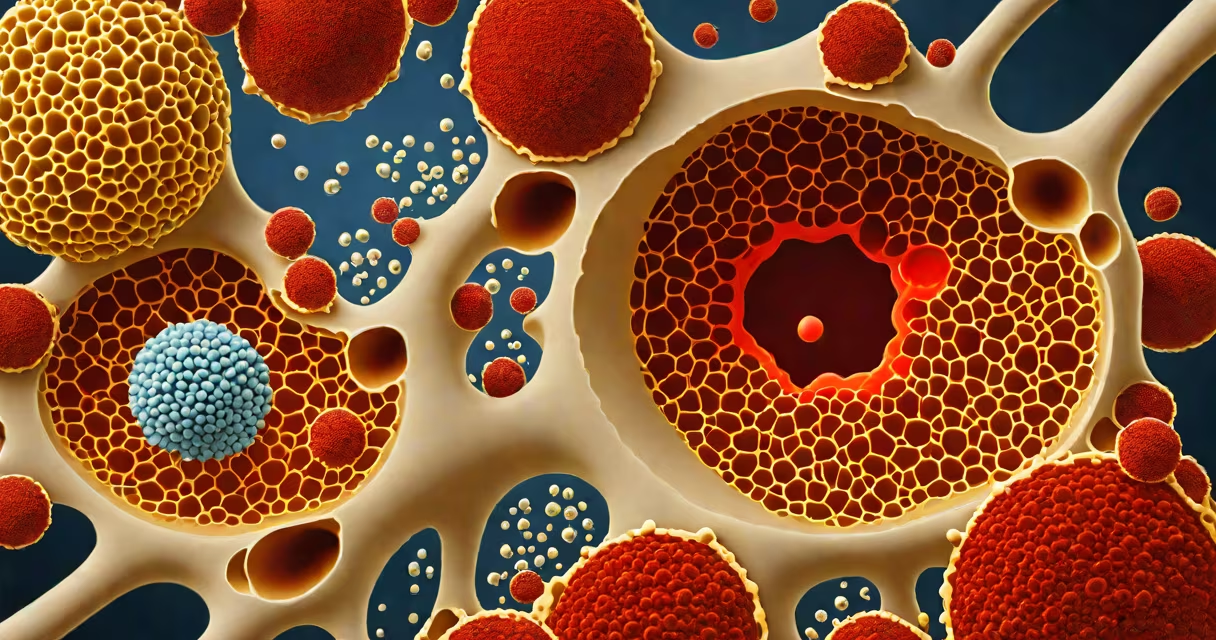
Bone marrow and immune system are interdependent biological systems: bone marrow produces all blood cells, including immune cells like T cells, B cells, and innate immune cells, while the immune system uses these cells to defend against infection and maintain internal balance. This process begins with hematopoietic stem cells that differentiate into lineages forming both red blood cells and immune effectors.
Bone marrow resides in the central cavities of bones such as the pelvis, sternum, and vertebrae. It is a changing environment where undifferentiated stem cells give rise to all mature blood cell types through a tightly regulated process called hematopoiesis. This includes myeloid lineage cells-neutrophils, monocytes, eosinophils, basophils, and platelets-and lymphoid lineage cells-T cells, B cells, and natural killer (NK) cells. The immune system relies entirely on this continuous supply.
Immune cells formed in bone marrow undergo further maturation in secondary lymphoid organs. For example, B cells mature in the bone marrow itself, while T cells migrate to the thymus. Despite this, the bone marrow remains the primary site of origin for nearly all immune cell precursors. Without functional marrow, the entire adaptive and innate immune response collapses.
Every second, bone marrow generates approximately 2 million red blood cells, 1 million platelets, and 100,000 white blood cells. These numbers reflect the scale of hematopoiesis. The process begins with hematopoietic stem cells (HSCs), which can self-renew or commit to specific lineages based on signals from the bone marrow microenvironment.
Key signaling molecules like interleukin-7 (IL-7), stem cell factor (SCF), and granulocyte colony-stimulating factor (G-CSF) regulate differentiation. IL-7, for instance, is essential for B and T cell development. Deficiencies in these signals disrupt immune cell production and lead to immunodeficiency. A single mutation in the IL-7 receptor gene can result in severe combined immunodeficiency (SCID), a condition where children lack functional T and B cells.
One underappreciated role of bone marrow is immune tolerance induction. Regulatory T cells (Tregs), critical for preventing autoimmune reactions, originate in the bone marrow and are shaped by exposure to self-antigens. This early education ensures the immune system distinguishes between self and non-self. Without this, autoimmunity becomes likely.
The following table outlines major immune cell types generated in bone marrow, their functions, and developmental stages:
| Cell Type | Lineage | Function | Maturation Site |
|---|---|---|---|
| B cells | Lymphoid | Produce antibodies, present antigens | Bone marrow (primary) |
| T cells | Lymphoid | Coordinate adaptive responses, kill infected cells | Thymus (after bone marrow exit) |
| Natural Killer (NK) cells | Lymphoid | Destroy virus-infected and cancerous cells | Bone marrow and peripheral tissues |
| Neutrophils | Myeloid | Phagocytose bacteria, form pus | Bone marrow |
| Monocytes/Macrophages | Myeloid | Clear debris, activate T cells, fight intracellular pathogens | Bone marrow and tissues |
While B cells mature in the bone marrow, T cells do not. They leave the marrow and travel to the thymus for final education. This distinction is often misunderstood-people assume all immune cells mature in the marrow, but T cell development is strictly thymic.
A common misconception is that bone marrow only makes blood cells. In reality, it also hosts stromal cells, adipocytes, and endothelial cells that create the niche supporting stem cell survival. Disruption of this niche alters immune cell output. For example, aging reduces marrow vascular density, contributing to declining immune function in older adults.
Abnormal bone marrow leads to impaired immune function. Conditions like aplastic anemia, leukemia, and myelodysplastic syndromes disrupt hematopoiesis. In acute myeloid leukemia (AML), mutated HSCs proliferate uncontrollably, crowding out healthy cells. Patients develop severe neutropenia, increasing infection risk. Survival rates remain below 30% without stem cell transplantation.
Another example is chronic lymphocytic leukemia (CLL), where malignant B cells accumulate in marrow and lymph nodes. These cells are dysfunctional-they don't fight infections effectively and suppress normal immune activity. Over time, patients suffer recurrent pneumonia and sepsis due to weakened defenses.
I experienced this firsthand during a clinical rotation: a 65-year-old patient with CLL had a CD4 count of 120 cells/μL (normal: 500-1,500) and developed Pneumocystis jirovecii pneumonia. His bone marrow biopsy showed 80% infiltration by abnormal B cells. Even though he was on prophylactic antibiotics, his immune system failed because marrow couldn't produce functional immune cells.
For those with suspected abnormalities, diagnosing abnormal bone marrow involves imaging, blood tests, and biopsy. Treatment depends on the cause-chemotherapy for malignancies, growth factors for deficiencies, or stem cell transplants for irreversible failure.
When immune dysfunction stems from marrow issues, a hematologist specializing in bone marrow disorders is essential. These specialists manage conditions like multiple myeloma, sickle cell disease, and inherited bone marrow failures. They interpret complex lab results and coordinate treatments such as targeted therapies or donor stem cell transplants.
Understanding bone marrow and immune system interactions reveals how deeply interconnected they are. Marrow doesn't just make immune cells-it shapes their quality, quantity, and function. A single defect in hematopoiesis can cascade into systemic immune failure. Recognizing this relationship is key to diagnosing and treating many diseases.