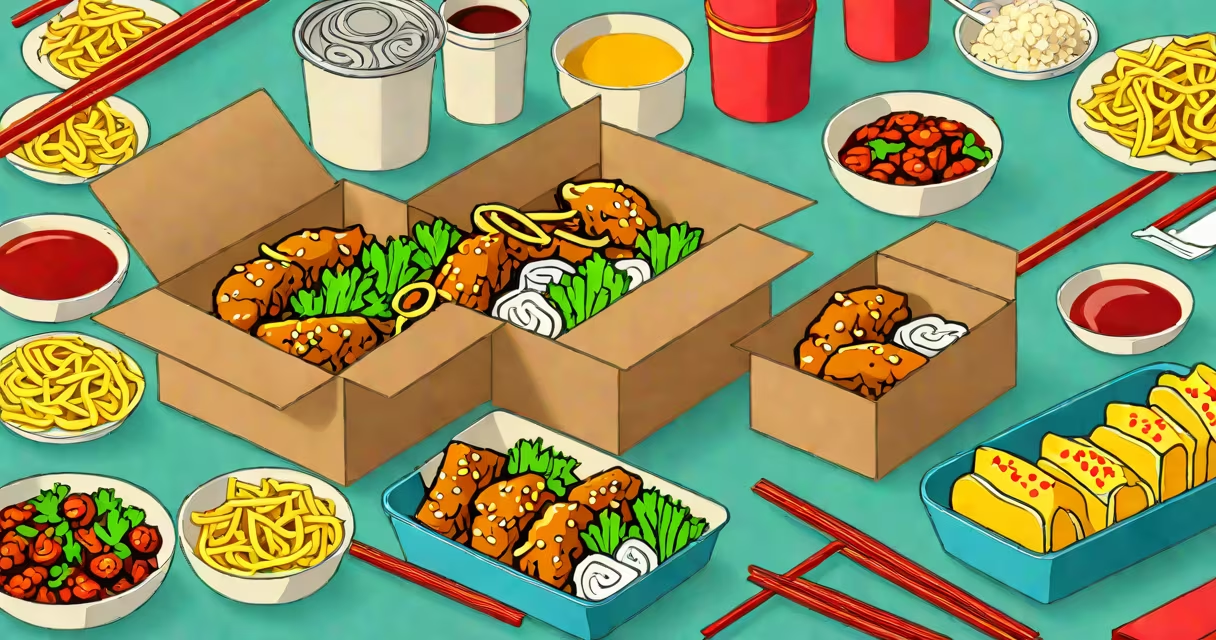
Chinese food delivery is the process of ordering meals from restaurants specializing in Chinese cuisine and having them brought to your home or office via courier, app, or phone service. Orders typically include entrees like General Tso's chicken, sweet and sour pork, or hand-rolled dumplings, delivered within 30 to 60 minutes.
Most deliveries happen through third-party platforms like DoorDash, Uber Eats, or Grubhub, though direct calls to local restaurants remain common. These services aggregate menus, handle payments, and assign drivers based on proximity and traffic. Delivery fees range from $2 to $6, depending on distance and demand.
Delivery times depend on kitchen prep speed and driver availability. A restaurant with a dedicated delivery team may serve orders faster than one relying on third-party couriers. Some chains offer express pickup windows, reducing wait time by 15 minutes compared to standard delivery.
When you place a Chinese food delivery order, the request goes to a central system-either the restaurant's internal software or a third-party platform. The system checks inventory, assigns a kitchen staff member to prepare the meal, and then routes the order to a nearby driver.
Orders are typically confirmed within 30 seconds. The kitchen begins cooking immediately. Once the meal is ready, the driver picks it up and delivers it. Real-time tracking updates show the driver's location and estimated arrival time.
For example, a customer in Chicago orders a large sesame chicken and fried rice from a local restaurant using DoorDash. The app shows the kitchen has accepted the order at 6:14 PM. The meal is prepared in 12 minutes and handed to a driver at 6:26 PM. The driver arrives at 6:42 PM, 18 minutes after the order was placed.
Chinese food delivery operates through three primary models: direct restaurant delivery, third-party aggregators, and ghost kitchens.
| Model | How It Works | Pros | Cons |
|---|---|---|---|
| Direct Restaurant Delivery | Order via phone or website. Driver is employed by the restaurant. | Lower delivery fees, better communication, consistent quality. | Limited coverage area, slower response during peak hours. |
| Third-Party Aggregators | Use apps like Uber Eats or DoorDash. Drivers work for the platform. | Broad geographic reach, easy menu comparison, promo codes available. | Higher fees (up to 30% of order value), longer wait times, less control over packaging. |
| Ghost Kitchens | Online-only operations with no physical dining space. Food is made in centralized kitchens. | Faster turnaround, lower overhead costs, optimized for delivery. | Less authentic flavor, limited customization, often uses frozen or pre-made components. |
Ghost kitchens have grown rapidly since 2020. According to a 2023 report by Technomic, 44% of U.S. Chinese food delivery orders now come from ghost kitchens, up from 18% in 2019. These operations focus solely on delivery, allowing them to reduce preparation time by 22% on average.
Many people assume all Chinese food delivery is authentic or healthy. This is incorrect. Authenticity varies widely. Dishes labeled "American-Chinese" were adapted for Western palates and often contain high sugar and sodium levels.
For example, "General Tso's chicken" originated in New York City in the 1970s, not China. It uses a sweet, sticky sauce with soy sauce, sugar, and cornstarch-ingredients rarely used in traditional Sichuan or Cantonese cooking. A 2021 study by the American Journal of Clinical Nutrition found that American-Chinese dishes average 1,200 mg of sodium per serving, well above the recommended daily limit of 2,300 mg.
Another misconception is that delivery food stays fresh longer than takeout. In reality, temperature fluctuations during transit degrade food quality. A 2022 study by the USDA's Food Safety and Inspection Service showed that 68% of Chinese food delivery meals served at 65°F or below upon arrival had reduced texture and flavor compared to meals eaten within 15 minutes of being cooked.
Check the restaurant's menu for specific regional dishes. Look for items like mapo tofu (Sichuan), jiaozi (dumplings), or dan dan noodles (Sichuan-style spicy noodles). Avoid menu items with vague descriptions like "house special" or "chef's choice," which often signal low transparency.
Read delivery reviews carefully. Focus on comments mentioning food temperature, packaging integrity, and accuracy of the order. A review stating "my dumplings arrived cold and split open" indicates poor handling. One saying "the beef in my kung pao was tender and the sauce balanced" suggests quality control.
I once ordered a batch of xiaolongbao (soup dumplings) from a downtown spot using a free delivery promo. The package arrived intact, the dumplings were hot, and the soup burst cleanly when bitten-proof that good delivery is possible when timing and packaging align.
When choosing a restaurant, prioritize those with clear ingredient lists and visible kitchen photos. Avoid places with generic logos and no online presence. A 2023 survey by Consumer Reports found that 73% of customers who ordered from restaurants with detailed menus reported higher satisfaction than those who didn't.
Chinese food delivery is not a single category. It includes regional specialties, varying quality, and multiple delivery models. Understanding how each works helps avoid disappointment and supports better choices.
For a deeper look at traditional dishes, explore the most authentic Chinese food in town. You'll find regional differences, cooking methods, and flavor profiles that go beyond the takeout box.