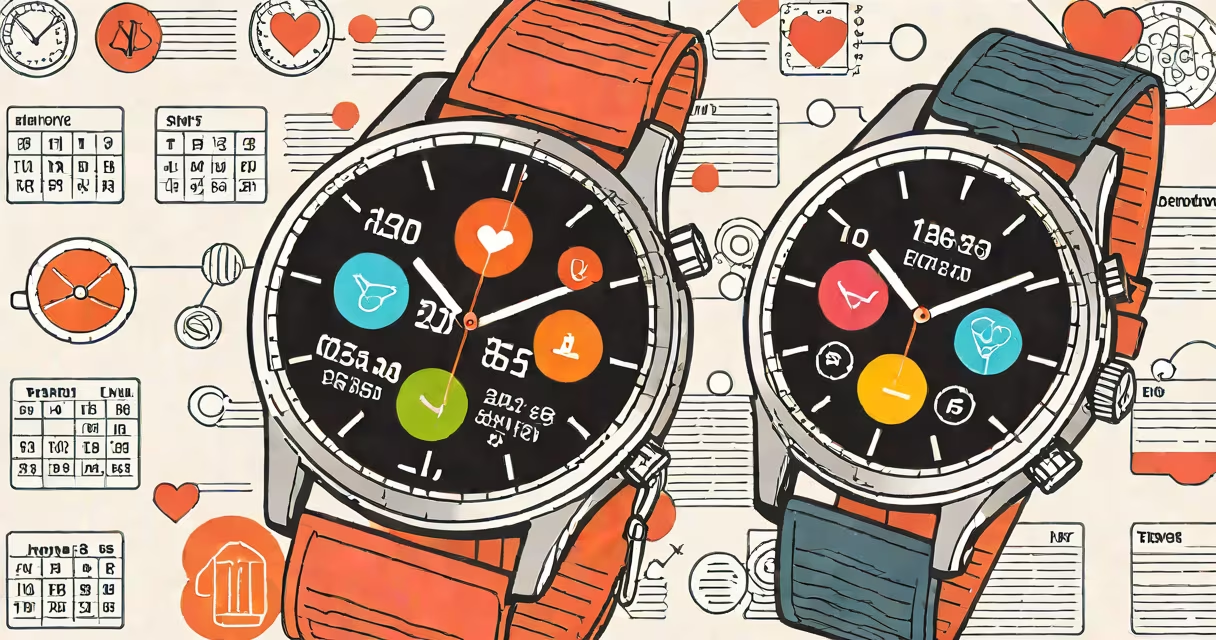
A smart watch is a wearable device that functions as a timepiece while offering internet connectivity, health monitoring, app support, and smartphone integration. It runs on a dedicated operating system and typically syncs with a paired mobile phone via Bluetooth or Wi-Fi.
Unlike traditional watches, smart watches process data in real time. They track physical activity, monitor heart rate, measure sleep quality, and deliver alerts for calls, messages, and calendar events. These functions are powered by sensors, processors, and software designed for continuous use on the wrist.
Manufacturers such as Apple, Samsung, Garmin, and Fitbit produce models with varying levels of capability. Entry-level versions focus on basic tracking and notifications. High-end models include GPS, cellular connectivity, fall detection, and emergency SOS features. All operate within a structure of hardware, firmware, and cloud-based services.
Smart watches rely on embedded sensors to collect biometric and environmental data. Accelerometers detect motion for step counting. Optical heart rate monitors use LEDs to measure blood flow under the skin. Gyroscopes track orientation changes during movement. Ambient light sensors adjust screen brightness automatically.
Data from these sensors feeds into a microprocessor running a lightweight OS such as watchOS, Android Wear, or Tizen. This system manages tasks like syncing with a phone, processing incoming notifications, and managing apps. For example, when a call arrives, the watch vibrates, displays caller ID, and allows a response through voice or quick replies.
Wireless communication happens primarily through Bluetooth Low Energy (BLE), which conserves battery life. Some models use LTE or 5G for standalone calling and messaging without a phone nearby. Data is stored locally and backed up to cloud services-Apple Health, Google Fit, or Fitbit's platform-enabling long-term trend analysis.
Smart watches differ based on intended use. The primary categories are lifestyle, fitness-focused, and premium smartwatches with advanced features.
| Type | Primary Use | Key Features | Examples |
|---|---|---|---|
| Lifestyle | Daily convenience and notifications | Notifications, weather, music control, voice assistant | Apple Watch SE, Samsung Galaxy Watch 6 |
| Fitness-focused | Activity tracking and performance metrics | Heart rate zones, VO2 max estimation, swim tracking, GPS | Garmin Forerunner 265, Fitbit Charge 6 |
| Premium | Full smartphone replacement | Cellular calling, eSIM, advanced health tools, custom apps | Apple Watch Ultra 2, Samsung Galaxy Watch 7 Pro |
Many users assume all smart watches have the same capabilities. That's incorrect. A $150 fitness tracker like the Fitbit Inspire 3 lacks cellular support and app ecosystems. Meanwhile, an Apple Watch Series 9 supports third-party apps, FaceTime, and emergency SOS with satellite connectivity.
One non-obvious distinction: not all smart watches are created equal in privacy handling. Apple emphasizes on-device processing for health data, storing sensitive metrics like ECG readings locally unless explicitly shared. Google's Wear OS devices often send raw sensor data to cloud servers for analysis, raising concerns about data retention policies.
Some people mistake smart watches for fitness trackers. While both monitor steps and heart rate, fitness trackers lack app ecosystems, touchscreens, and notification systems. A Fitbit Charge 6 tracks workouts and sleep but cannot run apps or receive calls.
Others confuse smart watches with "smart rings" or "smart bands." Devices like the Oura Ring or Xiaomi Band 8 offer limited functionality-sleep scoring, step counts, and basic alerts-but lack full-screen interfaces and app support. They're not interchangeable with smart watches.
Another misconception is that smart watches replace phones entirely. While high-end models like the Apple Watch Ultra 2 allow standalone calls and messaging using eSIM, they don't support full web browsing, complex document editing, or video calls. Battery life remains limited-typically 18-36 hours depending on usage.
Consider a runner preparing for a 5K race using a Garmin Forerunner 265. Before the event, they set a training plan in the Garmin Connect app. During the run, the watch uses GPS to map their route, records pace and elevation changes, and displays real-time lap splits.
After finishing, the watch uploads data to the cloud. The runner reviews a detailed report showing average pace, heart rate zones, and cadence. The app suggests improvements based on historical performance. Over time, this feedback helps refine training intensity and recovery timing.
This example shows how a smart watch goes beyond timekeeping-it becomes a personal coach, data recorder, and performance analyzer. The device doesn't just show time; it interprets movement, measures effort, and guides improvement.
I've worn a Garmin Forerunner 265 during multiple half-marathons. The real-time feedback during hills helped me adjust pacing. Post-run summaries revealed consistent heart rate spikes during the last 2 kilometers-indicating fatigue I hadn't noticed while running. That insight led to targeted endurance work.
Use a smart watch if you want to automate routine checks: heart rate during meditation, sleep stages overnight, or daily step goals. They're ideal for people who want immediate access to information without pulling out a phone.
They're less effective for users who prefer minimal tech. A simple analog watch may serve better if you only care about telling time and don't need alerts or tracking.
The definition of smart watch centers on intelligent augmentation of daily life. It's not just a gadget-it's a personal interface for health, communication, and productivity, tailored to the wearer's habits and goals.