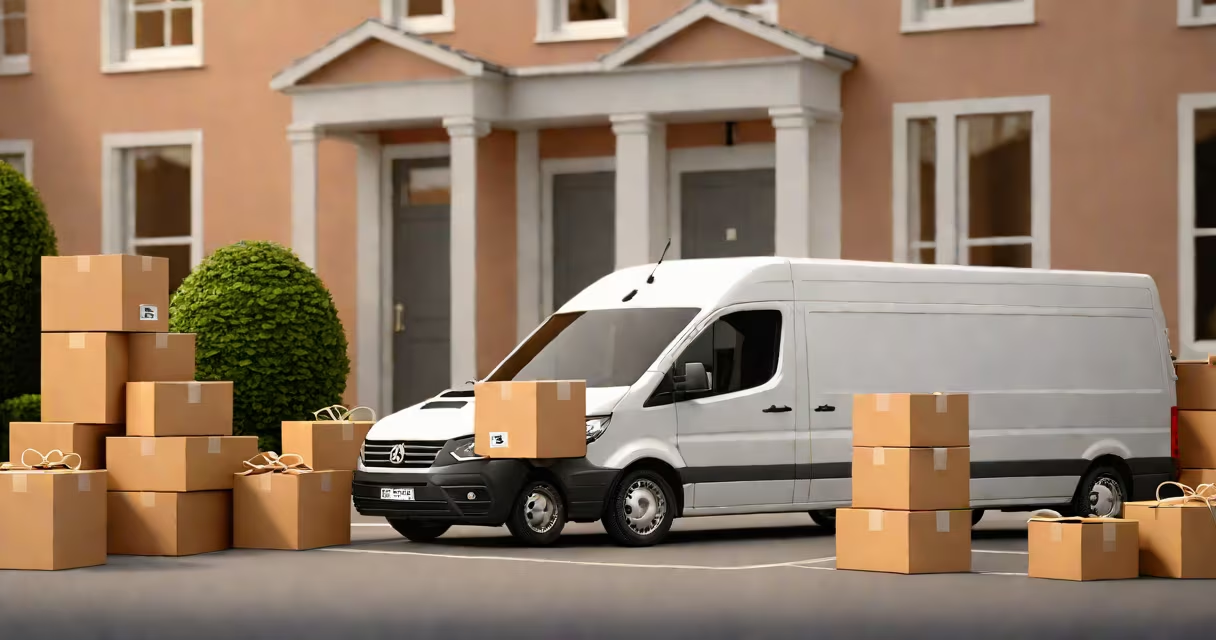
An ecommerce delivery service is a third-party provider that manages the physical movement of goods from a seller's warehouse or fulfillment center to a customer's doorstep. It handles logistics, carrier selection, tracking, and delivery confirmation, enabling online stores to scale without building their own shipping infrastructure.
These services integrate directly with ecommerce platforms like Shopify, WooCommerce, and Magento. When a customer places an order, the system sends the shipping details to the delivery service, which selects the most cost-effective and timely carrier based on destination, package size, and delivery window. The service then updates the customer with tracking information and resolves issues like failed deliveries or returns.
For example, a small handmade jewelry store using Shopify can connect to an ecommerce delivery service. After a sale, the service automatically generates a label, schedules pickup from the seller's home office, and assigns the package to a local courier. The customer receives real-time updates via email and SMS, including estimated delivery times and a photo of the package being signed for.
When a retailer enables an ecommerce delivery service, the integration creates a smooth workflow between the online store and the physical delivery chain. The process begins with order placement. The system validates the shipping address, calculates rates based on weight, dimensions, and destination, and selects the optimal carrier-such as FedEx, UPS, or a regional courier.
The service then prints a shipping label, schedules a pickup (if required), and hands off the package to the carrier. Throughout transit, the service monitors the shipment using API-based tracking feeds. If a delay occurs due to weather or customs, the system alerts both the merchant and the customer with updated timelines.
Upon delivery, the service confirms receipt through electronic proof of delivery (ePOD), such as a timestamped photo or signature. This data is stored in the merchant's dashboard, allowing for performance analysis and dispute resolution. For returns, many services offer prepaid return labels and reverse logistics coordination.
Ecommerce delivery services vary by scale, coverage, and feature set. They fall into three main categories: basic shipping aggregators, full-service fulfillment partners, and on-demand delivery networks.
| Type | Best For | Key Features | Example Provider |
|---|---|---|---|
| Basic Aggregator | Small stores with low volume | Carrier rate comparison, label printing, basic tracking | Shippo, EasyPost |
| Full-Service Fulfillment | Growth-stage brands needing inventory management | Warehousing, packing, returns processing, multi-channel shipping | Fulfillment by Amazon (FBA), ShipBob |
| On-Demand Network | Time-sensitive deliveries (food, medicine) | Real-time dispatch, driver apps, same-day delivery | DoorDash Delivery, Instacart Express, Postmates |
Many providers offer tiered pricing based on volume. Shippo, for example, charges $0.05 per label for under 100 shipments monthly, rising to $0.02 per label at 1,000+ shipments. Larger businesses often negotiate flat-rate contracts with dedicated account managers.
A non-obvious distinction: not all delivery services provide true end-to-end control. Some act as brokers who route orders to carriers but don't manage exceptions. Others, like ShipBob, operate their own warehouses and handle damage claims internally. Choosing the right model depends on whether the business prioritizes speed, cost, or risk mitigation.
One widespread error is assuming that all delivery services offer the same level of reliability. A study by McKinsey & Company (2022) found that 63% of consumers abandon carts when delivery estimates exceed five days. Yet, delivery speed varies across providers-even within the same country.
Another misconception is that using a delivery service eliminates all logistics complexity. In reality, inaccurate address formatting, incorrect weight entries, or unsupported packaging materials can trigger delays. For instance, a 2023 report from the National Retail Federation noted that 18% of delivery failures stemmed from incorrect address parsing during integration, especially with international orders.
Some merchants confuse "delivery service" with "shipping provider." While all delivery services handle shipping, not all shipping providers offer delivery tracking or last-mile execution. A postal service may ship a package but not confirm delivery unless upgraded to a trackable service.
In 2021, a boutique skincare brand based in Portland, Oregon, sold 300 units of a facial serum monthly. Initially, they used USPS Priority Mail with manual label creation. Shipping costs averaged $12 per order, and delivery times ranged from 3 to 7 days. Customer complaints about late arrivals increased by 40% over six months.
They switched to an ecommerce delivery service integrated with Shopify. The new provider offered automated label generation, changing carrier routing, and real-time tracking. Within three months, average delivery time dropped to 2.5 days. Shipping costs decreased to $8.75 per order due to negotiated carrier rates. Customer satisfaction scores rose from 3.8 to 4.6 out of 5.
When a storm delayed a shipment to Seattle, the service automatically rerouted the package via a regional carrier. The customer received a revised ETA and a $5 credit. The brand reported a 22% increase in repeat purchases over the following quarter.
Understanding the role of an ecommerce delivery service clarifies how online retail operations scale beyond the digital storefront. It is not merely a shipping tool-it is a core component of customer experience, retention, and operational efficiency.