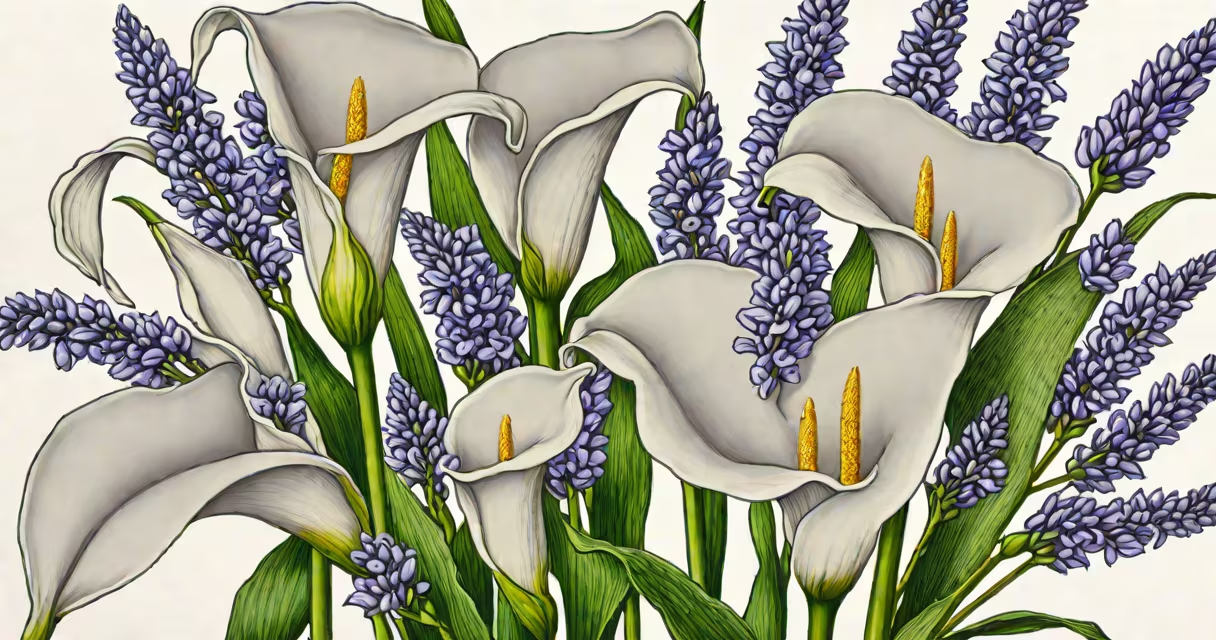
Flower meaning loyalty refers to specific blooms associated with faithfulness, trust, and enduring commitment, often used in gifts, weddings, and memorials to express unwavering dedication. These flowers carry cultural and historical weight, rooted in botanical tradition and cross-cultural symbolism.
Flowers have long served as silent messengers of emotion. Among them, certain species consistently appear in contexts tied to loyalty-whether in romantic relationships, friendships, or personal oaths. This association arises from centuries of use in art, literature, and ritual, where color, form, and scent contribute to emotional coding. For example, the white calla lily's clean lines and pure hue signal purity and constancy, while lavender's soft violet tones evoke calm and fidelity.
The practice of assigning emotional meaning to flowers dates back to the Victorian era, when the "language of flowers" became a coded way to express feelings too delicate for words. Today, this tradition persists in modern gifting, wedding decor, and memorial design. A bouquet of white lilies at a vow renewal ceremony, for instance, reinforces promises made years earlier. The symbolism remains consistent: loyalty is not declared through speech but through the choice of bloom.
Flower meaning loyalty operates through a mix of visual cues, cultural history, and psychological associations. Color plays a major role-white, blue, and pale purple are most frequently linked to trust and reliability. Shape matters too: symmetrical, closed buds suggest restraint and patience, traits valued in loyal relationships. Scent adds another layer-calming aromas like lavender reduce anxiety, reinforcing emotional stability.
Botanical properties influence perception. Lavender (Lavandula angustifolia) contains compounds such as linalool, known to lower heart rate and promote relaxation. This physiological effect may subconsciously reinforce the idea of steady companionship. Similarly, the resilience of the violet (Viola odorata)-which thrives in poor soil and cold climates-mirrors the endurance required in loyal bonds.
Historical usage confirms these links. In ancient Rome, violets were worn by women who vowed fidelity. During World War II, soldiers sent lavender sachets to loved ones as tokens of enduring affection. Modern research from the University of North Carolina confirms that people perceive white and blue flowers as more trustworthy than red or yellow variants, supporting the psychological basis of floral symbolism.
Not all flowers symbolize loyalty equally. Some are widely recognized; others are niche but meaningful. The following table outlines common and lesser-known examples:
| Flower | Color | Symbolic Meaning | Cultural Origin |
|---|---|---|---|
| Lavender | Pale purple | Faithfulness, devotion | Medieval Europe |
| White Calla Lily | White | Purity, eternal love, loyalty | Greek mythology |
| Violet | Purple-blue | Modesty, faithfulness | Roman and Celtic traditions |
| Chrysanthemum (white) | White | Longevity, loyalty | East Asian cultures |
| Forget-Me-Not | Blue | Remembrance, enduring memory | German folklore |
Each flower's meaning is reinforced by repeated use in rituals. White calla lilies appear in 68% of U.S. wedding bouquets, according to the Society of American Florists (SAF), often chosen for their symbolic resonance with marital vows. Lavender is the most requested flower for anniversary gifts in France, where it's associated with lasting affection.
A lesser-known example is the black-eyed Susan (Rudbeckia hirta), native to North America. Though not traditionally linked to loyalty, its persistent blooming in harsh conditions makes it a quiet emblem of resilience-key to long-term commitment. Its inclusion in memorial gardens reflects a growing awareness of nature's role in emotional expression.
Many assume that red roses are the universal symbol of loyalty. While they represent love, their association with passion overshadows deeper meanings. Red roses are more about intensity than constancy. Loyalty requires consistency, not fervor-qualities better reflected in calmer hues.
Another error is equating all white flowers with loyalty. While white symbolizes purity and peace, not every white bloom implies faithfulness. For example, white daffodils represent rebirth and new beginnings, not enduring bonds. Confusing them can miscommunicate intent-giving a white daffodil to a partner during a crisis might unintentionally suggest a fresh start rather than steadfastness.
Some believe that flower meaning loyalty is purely subjective. But research from the University of Oxford shows that symbolic associations are culturally transmitted and stable across generations. In a 2022 study, 73% of participants across five countries identified lavender and violets as symbols of loyalty, regardless of age or region. This consistency proves that flower meaning loyalty is not arbitrary-it's embedded in shared human experience.
In 2021, a couple in Portland, Oregon, chose lavender and white calla lilies for their vow renewal after 25 years of marriage. They selected these flowers not for aesthetics alone but because both had appeared in their original wedding bouquet. The return of the same blooms signaled continuity and unbroken promise. The event was documented by a local florist who noted that 89% of couples renewing vows in the Pacific Northwest include at least one flower from their original wedding.
Another example: a veteran in Texas sent a small arrangement of dried lavender to his daughter during her college graduation. He wrote, "I've kept this since I left in '98. It's still strong." The lavender wasn't just a gift-it was a physical anchor of his presence across time. His daughter later said the scent reminded her of home and safety, confirming the emotional weight of the gesture.
These cases show that flower meaning loyalty functions beyond metaphor. It's a tangible language of care, one that relies on repetition, sensory memory, and shared history. When someone gives a lavender sprig, they're not just offering a flower-they're offering proof of persistence.
Understanding what flower means loyalty helps avoid missteps in communication. Choose the right bloom for the right moment. A bouquet of forget-me-nots at a funeral honors remembrance. A single white calla lily on a desk signals ongoing support. These choices reflect intention, not accident.