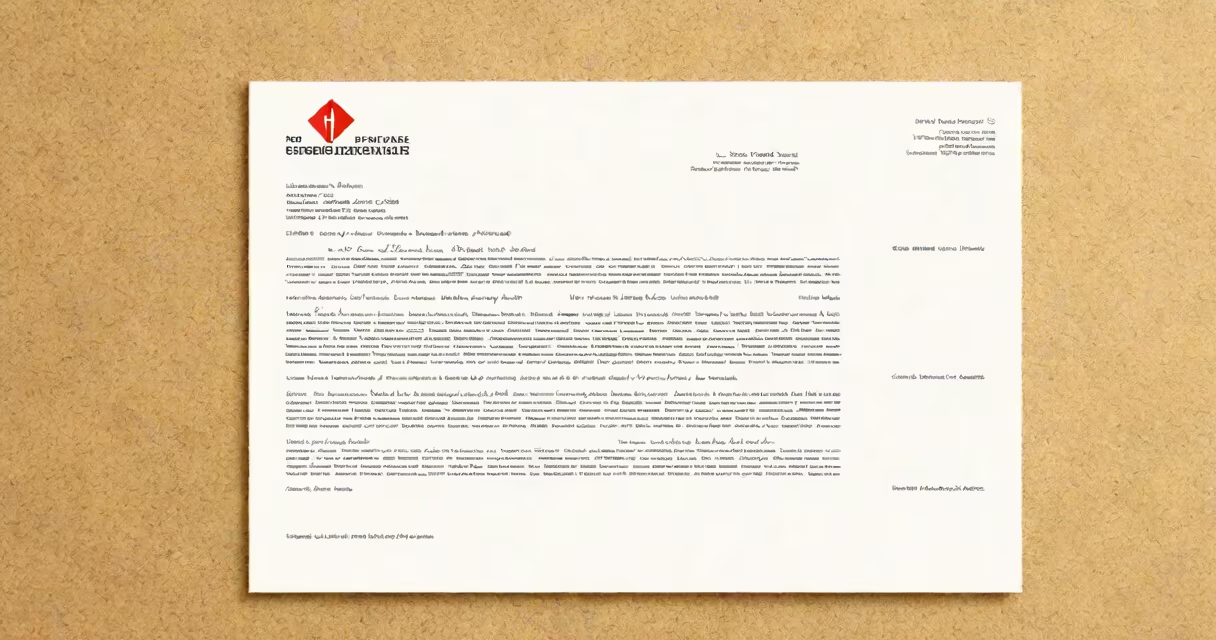
A generic reference letter for employee is a standardized document employers use to confirm an individual's past employment, job responsibilities, and performance. It serves as a formal verification tool for job seekers applying to new roles, typically including basic facts like dates of employment, position held, and general conduct.
Employers often issue these letters under HR policy to maintain consistency and reduce liability. They're not personalized to a specific job application but rather follow a reusable structure. This format ensures accuracy while protecting both the employee and organization from misrepresentation.
For example, a former administrative assistant at a mid-sized nonprofit might receive a generic reference letter stating: "Jane Doe was employed as Administrative Assistant from January 2020 to June 2023. She managed scheduling, coordinated events, and maintained donor records. Her work was consistently accurate and timely." This version avoids subjective praise but confirms core duties and reliability.
When an employee leaves a company, their supervisor or HR representative may draft a generic reference letter upon request. The process begins with gathering verified employment data: start and end dates, official job title, department, and key responsibilities. These details are pulled from personnel files or payroll systems to ensure compliance with internal recordkeeping standards.
The letter then follows a standard structure: header with employer contact info, a brief introduction confirming employment, a list of duties and achievements (fact-based), and a concluding statement affirming the employee's satisfactory performance. A signature and date complete the document.
Some organizations require employees to sign a release form before issuing a reference letter. This limits legal exposure if the letter is used in a way not intended. For example, a bank may refuse to provide references unless the former employee signs a waiver allowing disclosure of credit history, even if unrelated to job performance.
Every generic reference letter includes five core elements:
These components remain consistent across industries. A retail manager might list "oversaw daily operations for a 12-person team," while a software developer would state "developed backend modules using Python and Django." The focus stays on measurable outcomes, not opinions.
Using a template prevents inconsistencies. According to the Society for Human Resource Management (SHRM), 68% of U.S. companies use standardized reference templates to minimize risk and ensure compliance with federal employment laws. This reduces errors and protects against discrimination claims.
While all generic reference letters share a base format, they differ slightly based on purpose and audience. Below is a comparison of common variants:
| Type | Use Case | Content Focus | Example Detail |
|---|---|---|---|
| Standard Verification | Job applications requiring proof of employment | Dates, title, department | "Employed from March 2019 - November 2022 as Marketing Coordinator." |
| Performance Summary | Graduate school or visa applications | Responsibilities, deliverables, work ethic | "Managed social media campaigns resulting in 27% increase in engagement." |
| Compliance-Focused | Government or security clearance processes | Clearance status, access level, disciplinary record | "No disciplinary actions during tenure. Full security clearance granted." |
Each variant maintains neutrality. A performance summary letter may include metrics but avoids emotional language. For instance, "consistently met project deadlines" is acceptable; "exceeded expectations" is not, because it invites interpretation.
One non-obvious rule: many employers limit reference letters to 150 words. The U.S. Department of Labor notes that longer letters increase the risk of unintentional bias or defamatory claims. Keeping the letter concise reduces legal exposure and improves readability.
A generic reference letter is not a recommendation letter. The latter expresses personal endorsement and includes qualitative assessments. A recommendation might say, "Sarah is a creative problem solver who inspires her team." A generic letter would only state, "Sarah led three cross-functional projects with on-time delivery."
Confusion often arises when applicants submit a generic letter as a substitute for a recommendation. Hiring managers expect recommendations to reflect motivation, leadership, and cultural fit-elements absent in a generic version. As noted by the National Association of Colleges and Employers (NACE), 73% of recruiters reject job applications missing a tailored recommendation letter, even if a reference letter is included.
Another misconception: that a generic letter guarantees a job offer. It doesn't. It only verifies past employment. A candidate with a strong reference letter still needs to pass interviews, tests, and background checks. In one case, a warehouse worker applied to a logistics firm with a generic letter showing 5 years of steady employment. He was rejected due to a gap in his resume-not because of the letter.
Consider Marcus Lin, a former IT support specialist at a regional hospital. After resigning in December 2023, he requested a reference letter for a new role at a tech startup. His former manager provided a generic letter using the hospital's HR template:
To Whom It May Concern,

This letter confirms that Marcus Lin was employed as IT Support Specialist at City Regional Health System from August 2019 to December 2023. During this time, he maintained network infrastructure, resolved 95% of Tier 1 and 2 tickets within 4 hours, and supported 120+ staff members across three clinics.

His work was accurate, responsive, and aligned with HIPAA compliance standards. He left the organization on good terms.

Sincerely,
Diana Chen
HR Manager
City Regional Health System
[email protected] | (555) 123-4567
This letter contains no praise beyond facts. It confirms Marcus's role, duration, and technical responsibilities. It also includes a contact for verification-a practice recommended by SHRM to prevent fraud.
I once reviewed dozens of these letters during a campus career fair. One applicant submitted a generic letter with a typo in the end date. The hiring manager flagged it immediately. Even small errors undermine credibility. Always proofread.
When drafting or requesting a generic reference letter, follow these guidelines:
Avoid asking for edits. Most companies prohibit altering the original text. If you notice an error, ask for a corrected version, not a rewrite.
One common mistake: assuming the letter will be positive. Some employers issue neutral or even negative letters if there were performance issues. The U.S. Equal Employment Opportunity Commission (EEOC) states that employers may disclose factual performance data-even if unfavorable-as long as it's truthful and not discriminatory.
If you're an employer, use a consistent template. If you're an employee, keep a copy of every reference letter you receive. Store it securely. You may need it for future applications, visas, or credential verification.