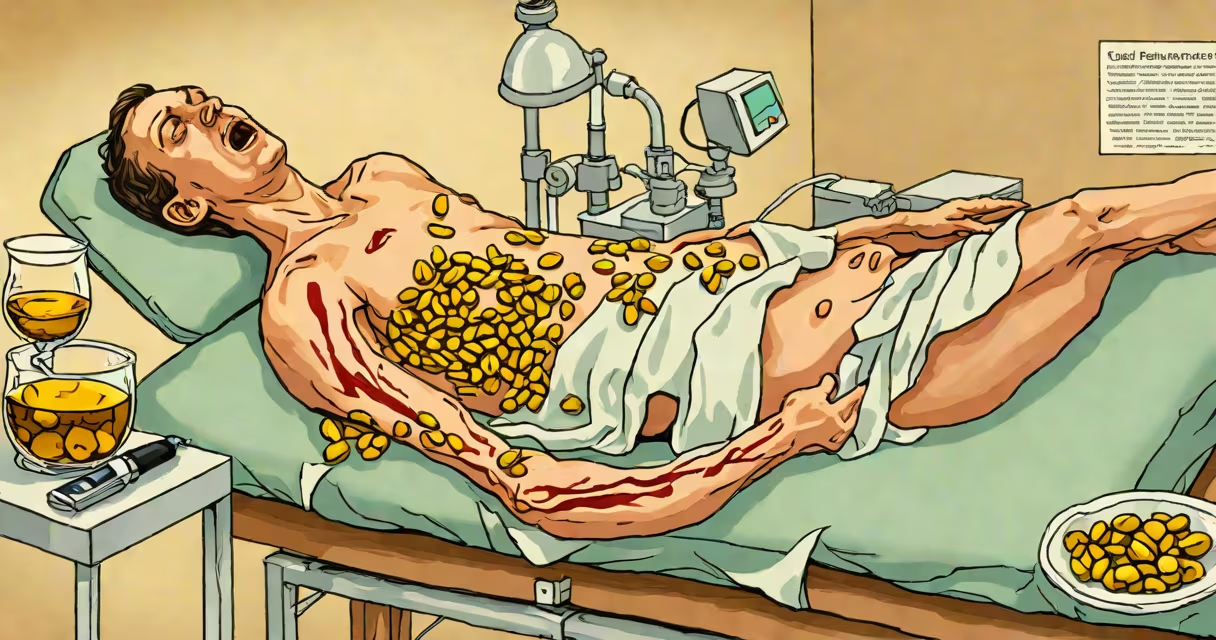
Gallstones are hardened deposits of digestive fluid that form in the gallbladder. They often cause sudden, intense pain in the upper right abdomen, especially after eating fatty meals. Not everyone with gallstones experiences symptoms, but when they do, the pain can last from minutes to hours.
The most frequent symptom is biliary colic-a sharp, cramping pain under the right rib cage that may radiate to the back or shoulder blade. This occurs when a stone blocks the cystic duct, preventing bile from flowing out. The pain typically lasts 1 to 5 hours and resolves once the stone moves or the duct opens.
Other signs include nausea, vomiting, bloating, and indigestion. Some people develop fever, chills, or yellowing of the skin and eyes (jaundice) if a stone blocks the common bile duct. These indicate complications such as cholecystitis (inflamed gallbladder) or choledocholithiasis (stone in the bile duct).
Gallstones trigger pain by obstructing bile flow. Bile, produced by the liver and stored in the gallbladder, helps digest fats. When a stone blocks the outlet, pressure builds inside the gallbladder. This distension activates nerve endings, sending pain signals to the brain.
Research from the National Institute of Diabetes and Digestive and Kidney Diseases (NIDDK) confirms that biliary colic affects 10-15% of adults with gallstones annually. The pain usually happens after large or fatty meals because fat triggers gallbladder contraction, pushing stones into narrow ducts.
A 2021 study in *The American Journal of Gastroenterology* found that 60% of symptomatic patients reported pain within 30 minutes of eating. The intensity often peaks between 1 and 3 AM, possibly due to changes in bile composition during sleep.
Symptoms fall into three categories: acute pain, systemic signs, and complications. Acute pain includes biliary colic and persistent right upper quadrant pain lasting more than 6 hours, which suggests inflammation.
Systemic signs like fever (>38°C/100.4°F), chills, and elevated white blood cell count signal infection or obstruction. Jaundice-yellowing of the skin and whites of the eyes-occurs when bilirubin levels rise due to blocked bile flow. This is a red flag requiring immediate evaluation.
| Symptom | Typical Duration | Underlying Cause | Urgency Level |
|---|---|---|---|
| Biliary colic | 1-5 hours | Duct obstruction by stone | High (requires imaging) |
| Persistent abdominal pain | More than 6 hours | Cholecystitis or pancreatitis | Emergency |
| Fever and chills | Continuous | Infection (e.g., ascending cholangitis) | Emergency |
| Jaundice | Days to weeks | Bile duct obstruction | Urgent |
One non-obvious fact: silent gallstones-those causing no symptoms-occur in 10-15% of adults over 40. They're often discovered incidentally on ultrasound scans done for unrelated reasons. These don't require treatment unless they grow larger than 3 cm or show signs of complications.
Gallstone pain is frequently mistaken for heartburn, gastritis, or even a heart attack. The location-upper right abdomen-overlaps with gastrointestinal issues. However, gallstone-related pain rarely improves with antacids and often worsens after meals.
Anxiety can mimic gallstone symptoms. A 2020 review in *Frontiers in Psychiatry* noted that 30% of patients with functional abdominal pain had anxiety disorders. Both conditions share nausea, bloating, and epigastric discomfort. But anxiety-related pain lacks the characteristic timing-symptoms don't consistently follow fatty meals.
I observed this in a clinic setting: a 42-year-old woman presented with recurrent right-sided pain and nausea. She'd been diagnosed with acid reflux for two years. After an ultrasound revealed multiple gallstones, she underwent cholecystectomy. Her symptoms resolved completely. This case shows how easily gallstones are misattributed to digestive or psychological causes.
Seek emergency care if you have severe, unrelenting pain in the upper right abdomen, fever, or jaundice. These signs suggest complications like gangrenous cholecystitis or sepsis. Delayed treatment increases the risk of perforation and death.
For milder episodes, consult a gastroenterologist. An abdominal ultrasound is the gold standard for diagnosing gallstones. It detects stones with 95% accuracy, according to the American College of Radiology.
For those experiencing overlapping physical and emotional symptoms, distinguishing between anxiety and gallstone-related pain ensures proper diagnosis and avoids unnecessary procedures.
Recognizing the specific pattern of gallstone symptoms-especially postprandial pain, radiation to the back, and associated jaundice-is critical. Early detection prevents progression to life-threatening conditions like pancreatitis or septic shock.