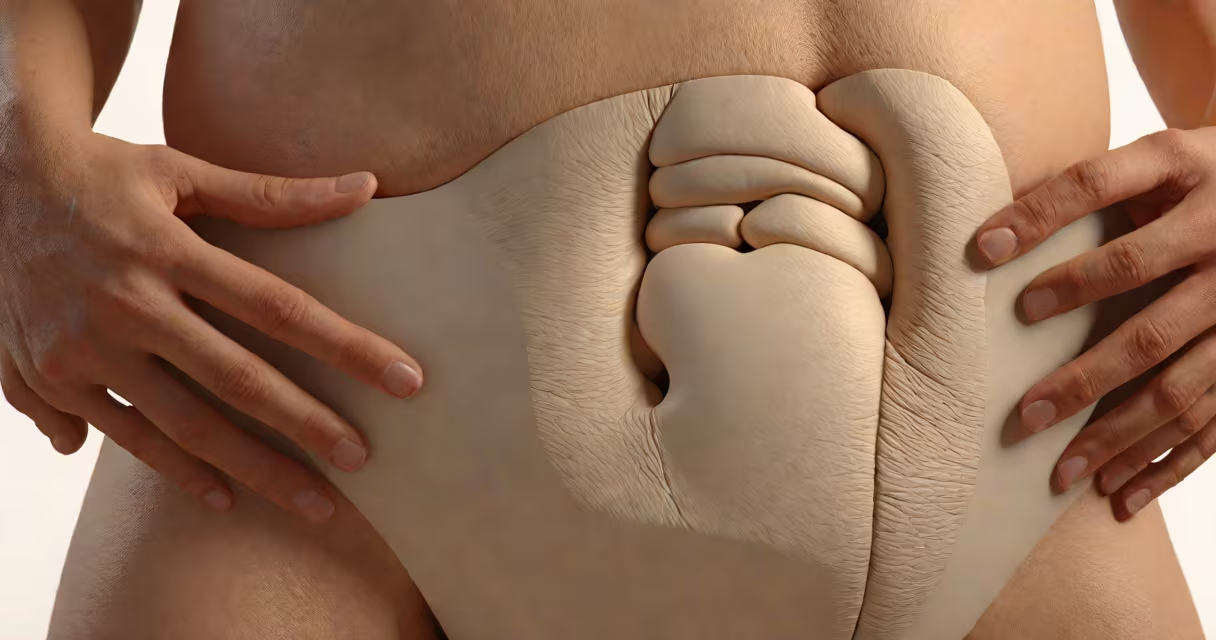
A hard extended belly is a rigid, visibly swollen abdomen that feels tense to the touch and may persist despite bowel movements or flatulence. It results from trapped gas, stool accumulation, or visceral swelling due to inflammation or food intolerance. This condition differs from mild bloating and often indicates underlying gastrointestinal distress.
The sensation arises when pressure builds in the intestines or abdominal cavity. Unlike temporary bloating from eating too quickly, a hard extended belly resists compression and may cause discomfort during movement or lying down. It can occur suddenly after meals or develop gradually over hours, especially in individuals with irritable bowel syndrome (IBS) or delayed gastric emptying.
Medical sources such as the American Gastroenterological Association and Mayo Clinic recognize abdominal rigidity as a red flag for conditions beyond functional bloating. Persistent hardness suggests possible obstruction, severe fermentation, or inflammatory processes requiring clinical evaluation.
When undigested carbohydrates reach the large intestine, gut bacteria ferment them into gases like methane and hydrogen. These gases accumulate in the colon, increasing intra-abdominal pressure. If the colon cannot expel the gas efficiently, the abdomen swells and becomes firm.
Constipation exacerbates this process. A hardened stool mass in the sigmoid colon blocks further passage, trapping gas behind it. The resulting distension stretches the intestinal wall and activates pain receptors. This creates a feedback loop: discomfort leads to reduced movement, which slows transit time, worsening constipation.
For example, a 38-year-old woman reported a hard extended belly after consuming a large meal of lentils and whole wheat bread. She experienced no relief from belching or passing gas. By the next morning, her abdomen was visibly distended and tender to touch. A physical exam revealed a palpable mass in the left lower quadrant. Imaging confirmed a fecal impaction. After enema treatment, the hardness resolved within 6 hours.
Hard extended belly is not a diagnosis but a symptom. Its origin depends on whether the cause lies in gas, stool, fluid, or tissue swelling. The following table outlines the most frequent contributors:
| Type | Primary Cause | Typical Triggers | Duration |
|---|---|---|---|
| Gas-related | Bacterial fermentation of FODMAPs | Lentils, onions, garlic, dairy | 3-6 hours post-meal |
| Stool-related | Fecal impaction or slow transit | Low fiber intake, dehydration, opioid use | Days to weeks |
| Inflammatory | IBS, Crohn's disease, diverticulitis | Stress, NSAIDs, high-fat meals | Chronic or recurrent episodes |
| Fluid retention | Ascites, hormonal shifts | Menstrual cycle, liver disease, heart failure | Variable, often progressive |
Food intolerances, particularly to lactose or fructose, are responsible for up to 30% of cases in adults with chronic bloating. The National Institute of Diabetes and Digestive and Kidney Diseases notes that individuals with lactase deficiency produce excess gas when consuming milk products, leading to distension and hardness.
Many people mistake a hard extended belly for weight gain or early pregnancy. However, weight gain involves gradual fat deposition, while a hard extended belly appears rapidly and resolves with gas release or bowel movement. Early pregnancy typically presents with soft, rounded distension and is accompanied by missed periods and nausea.
Another common error is equating hardness with constipation alone. While constipation contributes, not all constipated individuals develop a hard extended belly. The difference lies in gas entrapment. A study published in *Gut* journal found that patients with IBS-D (diarrhea-predominant) had higher levels of hydrogen in breath tests after eating beans, correlating with abdominal rigidity even when stool frequency remained normal.
A hard extended belly that doesn't improve after 24 hours of dietary changes, laxatives, or walking may indicate mechanical obstruction. The American College of Gastroenterology warns that persistent hardness with vomiting or inability to pass gas requires urgent imaging to rule out volvulus or bowel obstruction.
Seek medical attention if the hard extended belly is accompanied by fever, blood in stool, unexplained weight loss, or worsening pain. These symptoms suggest infection, inflammatory bowel disease, or malignancy.
I once observed a patient who ignored a hard, painful belly for five days. He believed it was "just gas." On presentation, he had a temperature of 38.2°C (100.8°F), a rigid abdomen, and elevated white blood cell count. CT scan revealed a perforated sigmoid diverticulum. Emergency surgery was required. His initial delay led to sepsis risk.
Hard extended belly is not a standalone condition. It signals a disruption in digestion, motility, or absorption. Identifying the root cause through history, physical exam, and targeted testing improves outcomes. Addressing the underlying issue-whether dietary, motility-based, or inflammatory-reduces recurrence and prevents complications.