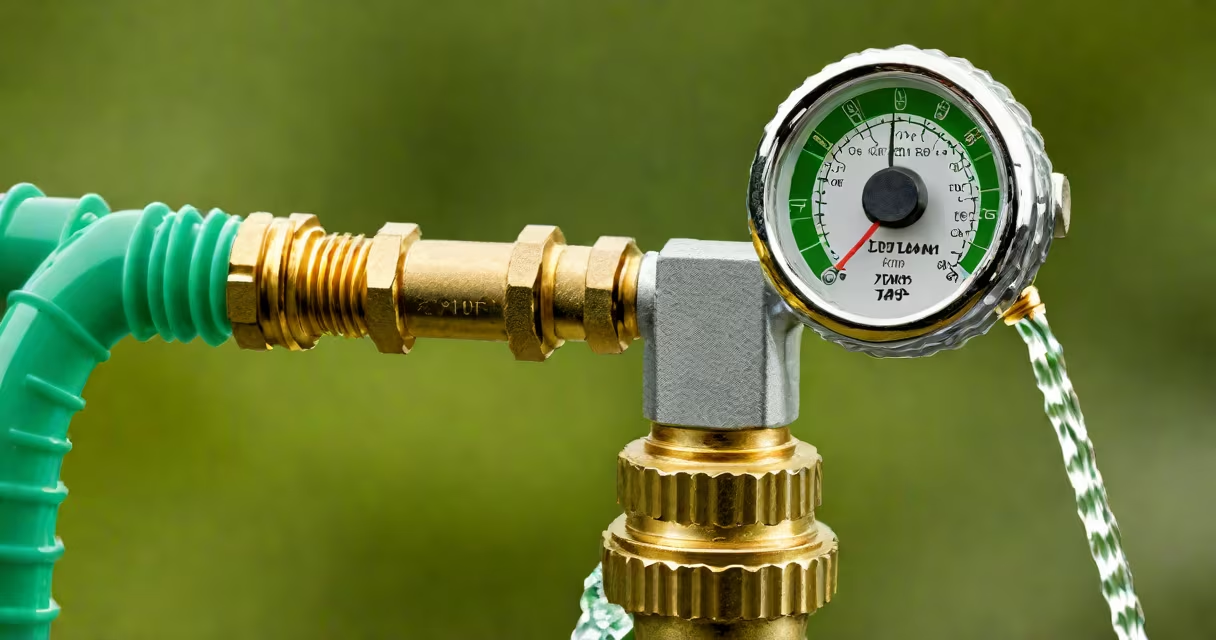
A Holman tap timer is a mechanical or electronic device that automatically controls water flow from a standard outdoor faucet based on a preset schedule. It attaches directly to a spigot and turns water on and off at programmed times, eliminating manual operation. These timers are designed for residential irrigation, lawn care, and garden maintenance.
Installed on a standard ¾-inch garden spigot, the Holman tap timer uses a rotating dial or digital interface to set start times, run durations, and frequency. Water enters through the inlet, passes through a valve controlled by a timing mechanism, and exits via the outlet to a hose or sprinkler system. The internal mechanism adjusts the valve position based on elapsed time, ensuring consistent water delivery.
Manufactured by Holman Products, a division of the American company Rain Bird Corporation, these timers are widely used in North America. They are available in both manual-dial and digital models, with options for daily, weekly, or custom schedules. Most units operate on standard household water pressure (20-80 psi) and can withstand outdoor conditions, including freezing temperatures when drained properly.
The core function of a Holman tap timer is timed water release. When installed, the user sets a start time and duration using a dial or digital display. Once the scheduled time arrives, a solenoid (in electronic models) or a mechanical cam (in older models) opens the internal valve. Water flows until the timer's cycle ends, then the valve closes automatically.
For example, a homeowner sets a Holman model HT-100 to run for 15 minutes every Tuesday and Thursday at 6:00 AM. The timer activates at 6:00 AM on those days, allowing water to flow through the connected hose for exactly 15 minutes. After that, the valve shuts off, preventing overwatering. This process repeats independently each week without user intervention.
Some models include a manual override button to start or stop water flow instantly. Others feature a battery-powered clock that maintains time settings during power outages. Units with digital displays show current time, scheduled events, and error codes if a problem occurs, such as low battery or blocked inlet filter.
Holman offers several tap timer lines, each suited to different needs. The primary differences lie in control method, programming flexibility, and durability.
| Model | Control Type | Scheduling | Power Source | Best For |
|---|---|---|---|---|
| HT-100 | Manual dial | Daily or alternate-day cycles | None (mechanical) | Simple, low-cost setups |
| HT-200 | Digital keypad | Weekly, custom, or rain delay | Battery (4 AA) | Users needing precise timing |
| HT-300 | Smart-enabled (Bluetooth) | Remote app control, weather-based adjustment | Battery (rechargeable) | Homeowners with smart home systems |
Manual models like the HT-100 rely on a rotating dial with hour markers and a spring-loaded mechanism. These are durable, require no batteries, and are ideal for basic irrigation. However, they lack advanced features like rain delay or multiple start times per day.
Digital models such as the HT-200 offer greater precision. Users program start times and run durations via a numeric keypad. A built-in clock keeps time even during brief power interruptions. These are better suited for lawns with irregular watering needs or gardens with sensitive plants.
Smart-enabled models like the HT-300 connect to Wi-Fi or Bluetooth. They allow remote access through a smartphone app, enabling users to adjust schedules from anywhere. Some integrate with local weather data to skip watering during rainfall. These models are more expensive but reduce water waste and improve convenience.
Installing a Holman tap timer requires no tools. Attach the unit to a standard ¾-inch threaded spigot by hand-tightening the inlet fitting. Ensure the rubber washer is intact to prevent leaks. Once secured, turn the water supply on slowly to avoid pressure spikes.
Set the timer by rotating the dial or entering values on the keypad. For the HT-200, press "SET" and use arrow keys to select the day, hour, and minute. Then set the run time in minutes. The display confirms the schedule with a blinking icon. After setup, test the timer by manually triggering the start sequence.
I once installed a Holman HT-200 on a backyard spigot to water a vegetable patch. I set it to run 10 minutes every morning at 5:30 AM, Monday through Saturday. Over three weeks, the soil stayed consistently moist, and plant growth improved. I noticed no leaks, and the timer continued working after a winter freeze-proof of its resilience when drained properly.
Many assume Holman tap timers can handle high-pressure systems or continuous flow. This is incorrect. These devices are rated for 20-80 psi. Exceeding 80 psi risks damaging the internal valve or causing premature wear. Always install a pressure regulator if your water supply exceeds this range.
Another misconception is that these timers work with all hose fittings. They do not. The outlet is a standard ¾-inch female thread. You must use a compatible adapter or hose connector. Using a mismatched fitting causes leaks or disconnection under pressure.
Some users believe the timer can control multiple zones. It cannot. A single Holman tap timer manages one water source. To water multiple areas, you need separate timers or a central controller with zone valves. For large landscapes, consider a programmable irrigation controller instead.
Finally, a common error is forgetting to drain the unit in cold climates. Water trapped inside can freeze and crack the housing. After the last use in fall, shut off the main valve, open the timer's outlet, and let it drain completely. Store indoors if temperatures drop below freezing.
Automated watering saves time and reduces water waste. According to the U.S. Environmental Protection Agency, households that use timers reduce outdoor water use by up to 30%. This translates to lower utility bills and less strain on local water supplies.
These timers also promote healthier plants. Consistent moisture prevents root stress caused by over- or under-watering. A study by the University of California Cooperative Extension found that automated irrigation led to 25% higher yield in vegetable crops compared to manual watering.
For gardeners, homeowners, and property managers, a Holman tap timer delivers reliability, ease of use, and long-term savings. Whether managing a small backyard or a community garden, it ensures water is delivered precisely when needed.