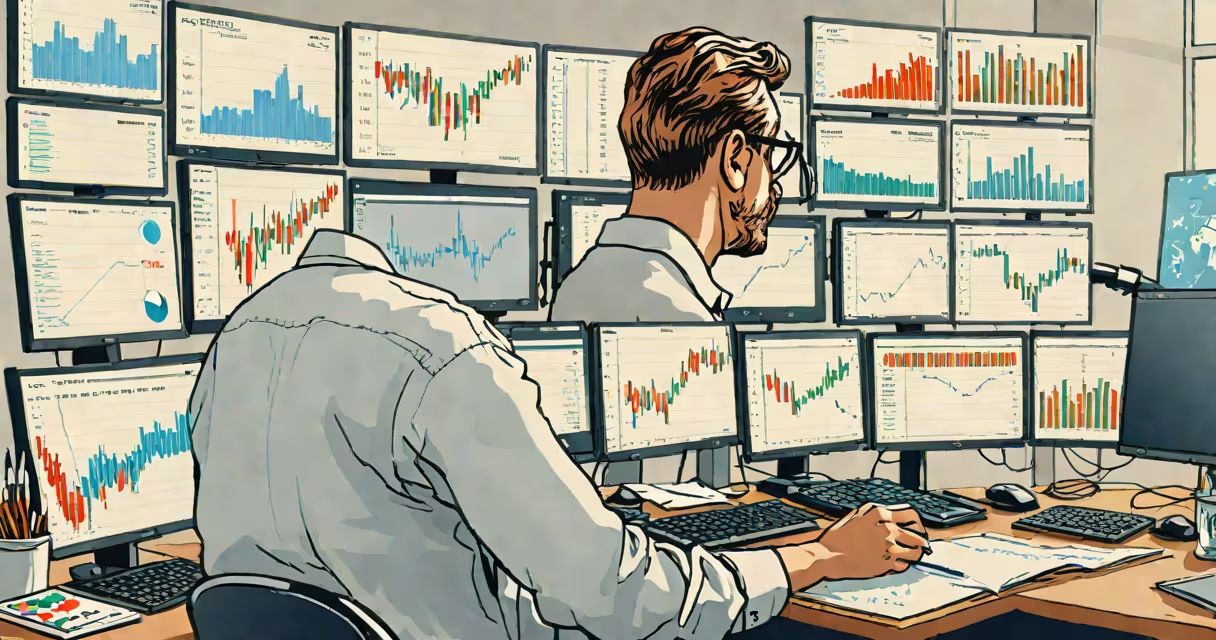
Trading is the act of buying and selling financial assets-like stocks, currencies, or cryptocurrencies-with the goal of profiting from price movements. It requires understanding market mechanics, risk management, and consistent decision-making. This process differs from long-term investing by focusing on shorter timeframes and active position management.
At its core, trading involves identifying opportunities where an asset's price is expected to move in a predictable direction. Traders use technical analysis, fundamental data, or algorithmic signals to make decisions. They enter positions based on entry points, set stop-loss orders to limit losses, and exit when targets are met or conditions change. Success depends on discipline, emotional control, and continuous learning-not luck.
The U.S. Securities and Exchange Commission (SEC) defines trading as "buying and selling securities in anticipation of a profit." According to Investopedia, over 90% of day traders lose money in their first year due to poor risk management and lack of a tested strategy. This underscores that trading is not gambling-it's a skill-based activity requiring structured study and practice.
Trading operates on supply and demand dynamics. When more people want to buy an asset than sell it, prices rise. When more want to sell, prices fall. Traders aim to anticipate these shifts using data, patterns, and timing.
For example, a day trader might analyze a 5-minute chart of Apple (AAPL) stock. If the price breaks above a recent resistance level with high volume, they may place a buy order. They set a stop-loss below the recent low to protect capital. If the price moves upward, they close the trade at a predefined profit target-often within hours.
Market participants include retail traders, institutional investors, market makers, and high-frequency firms. Retail traders use online brokerage platforms like Interactive Brokers, TD Ameritrade, or Webull. These platforms offer real-time data, charting tools, and paper trading environments to test strategies without risking real money.
Traders operate on different timeframes and with distinct goals. The most common categories are:
| Type | Timeframe | Strategy Focus | Example |
|---|---|---|---|
| Day Trading | Minutes to hours | Short-term price swings | Buying Tesla (TSLA) at 9:30 AM and selling before 3 PM |
| Swing Trading | Days to weeks | Identifying momentum shifts | Holding Amazon (AMZN) for three days after earnings news |
| Position Trading | Weeks to months | Long-term trends driven by fundamentals | Buying NVIDIA (NVDA) during a semiconductor cycle expansion |
Day trading is the most intensive. It demands constant screen monitoring, quick execution, and strict adherence to risk rules. The Financial Industry Regulatory Authority (FINRA) requires pattern day traders to maintain $25,000 in equity to trade on margin. Without sufficient capital, traders risk account restrictions.
A lesser-known fact: many successful traders don't rely on complex indicators. Instead, they focus on price action-how price moves on a chart-combined with volume confirmation. For instance, a bullish engulfing candle on high volume often signals a reversal. This approach reduces noise and avoids false signals common in overused technical tools.
People trade to generate income, hedge risk, or speculate on economic events. Day traders seek daily profits from small price changes. Swing traders capitalize on medium-term trends. Institutional traders manage large portfolios for pension funds or hedge funds.
Common motivations include building wealth, gaining financial independence, or testing analytical skills. However, the reality is harsh: the CFTC reports that 70% of retail forex traders lose money within the first six months. This loss rate highlights the gap between intention and outcome-especially without proper education.
I once spent three months practicing with a paper trading account before risking real capital. I focused on identifying clear entry and exit rules. My first real trade was a 15-minute scalp on SPY ETF. I lost 1.2%-but the lesson stuck: emotion clouds judgment. Since then, I've used a checklist before each trade. That routine reduced my emotional reactions and improved consistency.
Many assume trading is easy or that anyone can become profitable quickly. This belief stems from social media influencers who show only wins. In reality, consistent profitability requires hundreds of hours of study and backtesting.
Another error is confusing trading with gambling. Gambling relies on chance. Trading uses probability, edge identification, and risk control. A trader with a 60% win rate and a 1:2 reward-to-risk ratio can be profitable-even if they lose more trades than they win.
Some think they need expensive software or subscriptions. While advanced tools exist, basic charting and order execution are available for free. Platforms like TradingView offer free access to technical analysis features. Many brokers provide free educational webinars and research reports.
Begin with foundational knowledge. Learn how markets work, what drives price movement, and how to read a chart. Use free resources like the SEC's Investor.gov or the CME Group's educational portal.
Practice in a simulated environment. Most major brokerages offer paper trading accounts. Test strategies without financial risk. Track performance over 30-60 days to assess consistency.
Start small when going live. Begin with micro-sized positions. Focus on process, not profit. Over time, refine your edge-your repeatable advantage in the market.
Understanding i want to learn about trading begins with accepting that mastery takes time. There is no shortcut. But with deliberate practice, disciplined habits, and ongoing education, consistent results are achievable.