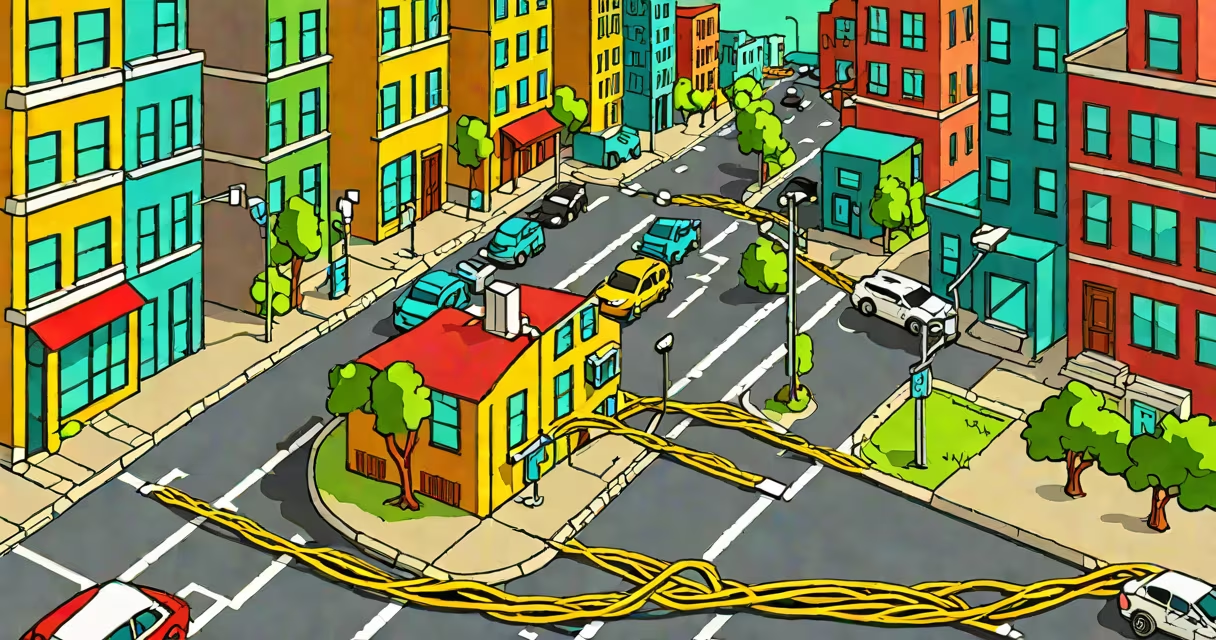
Fiber internet is not wireless. It transmits data using light pulses through glass or plastic fibers, requiring a physical connection between the service provider and the customer's premises. Unlike wireless signals that travel through air, fiber relies on dedicated cables installed underground or overhead.
Internet connectivity methods fall into two broad categories: wired and wireless. Wired connections include coaxial cable, DSL, and fiber. Wireless includes Wi-Fi, cellular data (4G/5G), and satellite. Fiber belongs exclusively in the wired category. The confusion arises because many users connect their devices to a fiber network via Wi-Fi, but that doesn't make the underlying internet service wireless.
For example, a home with fiber internet may have a Wi-Fi router providing wireless access to phones and laptops. But the actual internet signal arrives through a fiber-optic cable plugged into a modem. This distinction matters: the last mile of connectivity (from the router to the device) can be wireless, but the core delivery system is not.
Fiber internet sends data as pulses of light through thin strands of glass or plastic. These strands are bundled into cables, often buried underground or strung along utility poles. Light travels at nearly 300,000 kilometers per second through these fibers, enabling speeds up to 1 Gbps (gigabit per second) or higher in some areas.
The process begins at a central office where a laser modulates light based on digital data. That light travels through the fiber with minimal loss-unlike electrical signals in copper wires, which degrade over distance. At the customer's end, a media converter (often called an ONT, or Optical Network Terminal) translates the light back into electrical signals for use by computers and routers.
For comparison, traditional broadband uses copper wires and electrical signals. These signals weaken over long distances and are vulnerable to electromagnetic interference. Fiber avoids both issues, delivering consistent performance regardless of weather or nearby electrical activity.
Fiber internet is delivered through different deployment models. The most common are:
| Deployment Type | Description | Speed Range | Common Use Cases |
|---|---|---|---|
| FTTH (Fiber to the Home) | Direct fiber connection to the residence. No copper involved. | 100 Mbps - 1 Gbps+ | Residential homes, high-demand users |
| FTTB (Fiber to the Building) | Fiber runs to a building's basement or telecom room. Internal wiring uses copper or Ethernet. | 50 Mbps - 500 Mbps | Apartments, small offices |
| FTTC (Fiber to the Curb) | Fiber stops at a street cabinet. Last leg uses existing copper lines. | 10 Mbps - 100 Mbps | Urban areas with limited fiber rollout |
Only FTTH qualifies as pure fiber internet. FTTB and FTTC mix fiber with older copper infrastructure, reducing performance and reliability. In the U.S., major providers like Google Fiber, AT&T Fiber, and Verizon Fios offer FTTH services in select markets.
The primary reason people think fiber is wireless is because they interact with it wirelessly. A user connects their laptop to a Wi-Fi network provided by a router linked to a fiber modem. The result is smooth internet access-but the connection path is split: fiber delivers the signal, Wi-Fi distributes it locally.
This layering creates a false impression. Think of it like a water pipeline: the main pipe (fiber) brings clean water to a house, but the faucet (Wi-Fi) lets you draw it out without touching the pipe. The water source isn't "faucet-style" just because you use a tap.
A real-world example: In 2022, a study by the Federal Communications Commission (FCC) found that 68% of households using fiber internet reported higher satisfaction with stability and speed compared to those on cable or DSL. Yet 42% believed their fiber service was "wireless" due to Wi-Fi usage patterns. This misconception persists despite clear technical differences.
Understanding the difference between fiber and wireless is essential for choosing the right internet plan. Here's how they compare:
For instance, during a live stream, a fiber connection maintains stable quality even with multiple devices active. A wireless-only setup may drop frames or buffer when too many devices compete for bandwidth.
Consider a remote worker using a fiber connection. They have a 1 Gbps fiber line from their ISP, connected to a router via an Ethernet cable. Their computer, phone, and tablet connect wirelessly to the router's Wi-Fi network.
When uploading a 2 GB video file, the transfer completes in under 20 seconds. The same file takes 45 seconds on a 100 Mbps wireless-only connection due to interference and variable speeds. The fiber line ensures consistent performance, while the Wi-Fi portion handles local distribution.
This setup demonstrates that fiber is not wireless-it enables faster, more stable wireless access, but the foundation remains physical and wired.
One widespread error is assuming that any high-speed internet is "wireless." Providers sometimes market "fiber-like" speeds over wireless networks, leading consumers to equate speed with wireless delivery. But speed and transmission method are independent factors.
Another myth: "Fiber is only for urban areas." While deployment lags in rural zones, federal programs like the FCC's Rural Digital Opportunity Fund have allocated $20 billion to expand fiber access. As of 2023, over 25 million U.S. homes had access to fiber, with projections reaching 40 million by 2027.
Finally, some believe fiber requires frequent maintenance. In reality, fiber cables are durable and require less upkeep than copper. A 2021 report from the National Telecommunications and Information Administration (NTIA) showed fiber networks had 99.9% uptime over five years-higher than copper-based systems.
Choose fiber if you need consistent performance for activities like video conferencing, cloud backups, or 4K streaming. For example, a household with four people working remotely, two kids doing online school, and a home theater system benefits from fiber's low latency and high capacity.
If you're in a location without fiber availability, wireless options like 5G home internet can provide decent alternatives. However, 5G home internet typically maxes out around 300 Mbps and suffers from signal degradation indoors or during rain. Fiber remains superior for sustained, high-bandwidth use.
Fiber internet is not wireless. It is a wired technology that delivers unmatched speed, reliability, and scalability. Understanding this distinction ensures better choices when selecting internet service.