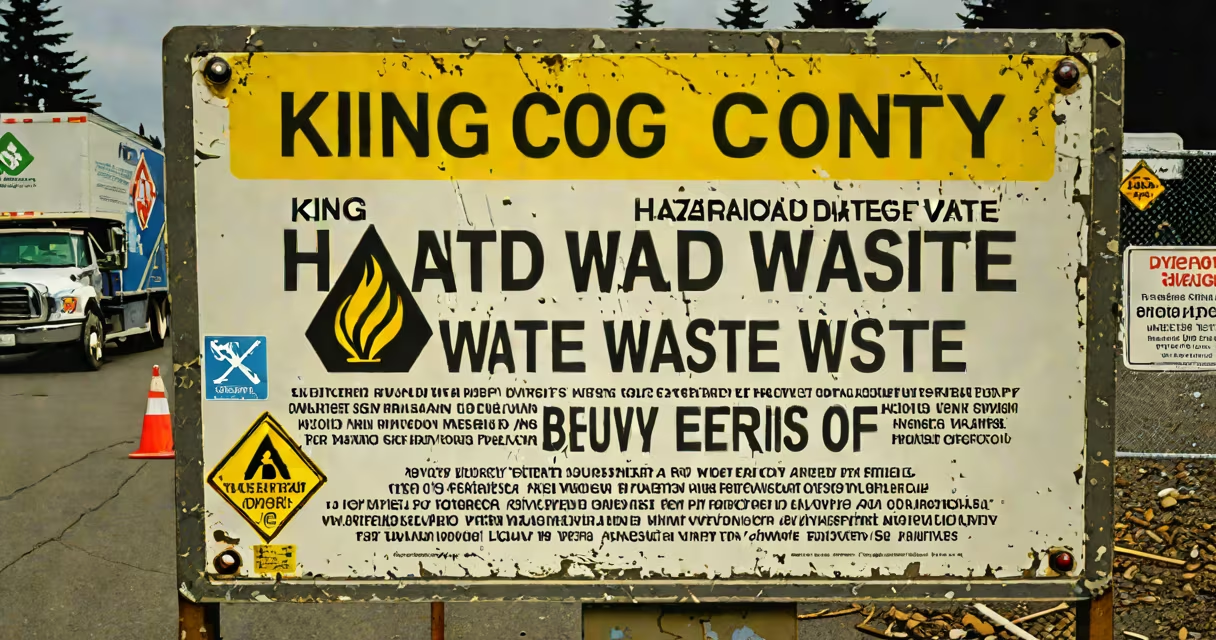
King County hazardous waste disposal refers to the regulated system of collection, transportation, and treatment of dangerous materials generated by households and businesses within King County, Washington, designed to prevent environmental harm and ensure public safety through state and federal compliance.
These services are managed by King County Public Health's Environmental Health Division and operate under Washington State Department of Ecology rules. Residents and businesses must follow specific guidelines to avoid penalties and environmental damage. Materials such as pesticides, motor oil, paint, batteries, and electronic waste are classified as hazardous due to toxicity, flammability, or reactivity.
Disposal is not permitted in regular trash or down storm drains. Improper handling can lead to soil and water contamination, posing long-term risks to ecosystems and human health. For example, a single AA battery contains enough cadmium and nickel to pollute 600,000 gallons of water-enough to fill a residential swimming pool.
King County operates a network of permanent drop-off centers and periodic mobile collection events. These facilities accept materials that cannot be handled by standard municipal waste systems due to their harmful properties.
Residents bring items to designated sites during posted hours. Staff inspect each item for proper labeling and classification. If a material is improperly packaged or labeled, it may be rejected. All accepted waste is transported in certified containers to licensed treatment facilities.
For example, in 2023, King County processed over 1.2 million pounds of hazardous waste through its program. Of that, 38% came from household sources, including old cleaning products and expired medications. The rest was from small businesses, schools, and contractors.
The following categories are accepted at King County's hazardous waste facilities:
| Type | Examples | Accepted? |
|---|---|---|
| Batteries | Alkaline, lithium-ion, Ni-Cd, Ni-MH | Yes |
| Paints & Solvents | Oil-based paint, turpentine, varnish | Yes |
| Household Cleaners | Drain cleaners, oven cleaners, bleach mixtures | Yes |
| Electronics | Old computers, TVs, cell phones, printers | Yes |
| Chemicals | Pesticides, herbicides, pool chemicals | Yes |
| Medications | Expired prescription drugs, unused opioids | Yes (via secure drop boxes) |
Items not accepted include large quantities of industrial waste, radioactive materials, and explosives. These require specialized federal permits and are handled by licensed commercial facilities.
A common misconception is that all batteries can be recycled together. Lithium-ion batteries from laptops and phones must be separated from alkaline or Ni-Cd batteries. Mixing them increases fire risk during transport and processing. King County's facility staff verify packaging and label integrity before acceptance.
King County maintains five permanent hazardous waste drop-off centers across the region. Locations include:
Hours vary by location. Most centers are open Wednesday through Saturday, 9 AM to 4 PM. Some offer evening hours on select days. Check the official King County website for real-time updates and closures.
Mobile collection events occur seasonally. In 2023, 14 events were held across the county, serving over 15,000 residents. Events are announced via email alerts and social media. Registration is required for high-volume participants, such as contractors or property managers.
I attended a spring event in Renton in 2022. I brought 12 cans of spray paint, four car batteries, and a bag of expired cleaning supplies. Staff sorted items on-site, verified labels, and provided receipts. The entire process took under 45 minutes. No fees were charged for residents.
Many assume that flushing hazardous waste down the drain is safe because it goes "away." This is false. The U.S. Environmental Protection Agency (EPA) reports that improper disposal contributes to 15% of groundwater contamination incidents in urban areas. King County's program prevents such outcomes.
Another myth is that all electronic waste can be recycled at any retailer. While stores like Best Buy accept small electronics, they do not handle large monitors, industrial equipment, or devices with embedded batteries. King County's facilities accept these items and ensure data destruction.
Some believe that hazardous waste disposal is free for everyone. While most residential materials are collected at no cost, businesses generating over 220 pounds annually must pay a fee based on volume and hazard level. The fee structure is published by the Washington State Department of Ecology.
Failure to comply with king county hazardous waste disposal rules can result in fines up to $10,000 per violation, according to King County Public Health. In 2021, two businesses were cited for dumping solvent-contaminated rags into a storm drain. One was fined $7,500; the other faced criminal charges.
Proper disposal protects local waterways like Lake Washington and Puget Sound. A 2022 study by the University of Washington found that communities using centralized hazardous waste programs had 34% lower levels of heavy metals in nearby stream sediments compared to those relying on informal disposal.
When residents participate, they support regional sustainability goals. King County aims to divert 90% of hazardous waste from landfills by 2030. Current diversion rates stand at 78%, driven largely by resident participation in drop-off programs.
King County hazardous waste disposal helps toxic materials are treated safely and legally. It prevents pollution, reduces health risks, and supports regulatory compliance. Residents and businesses must plan ahead, use approved facilities, and follow labeling and packaging rules to maintain program integrity.