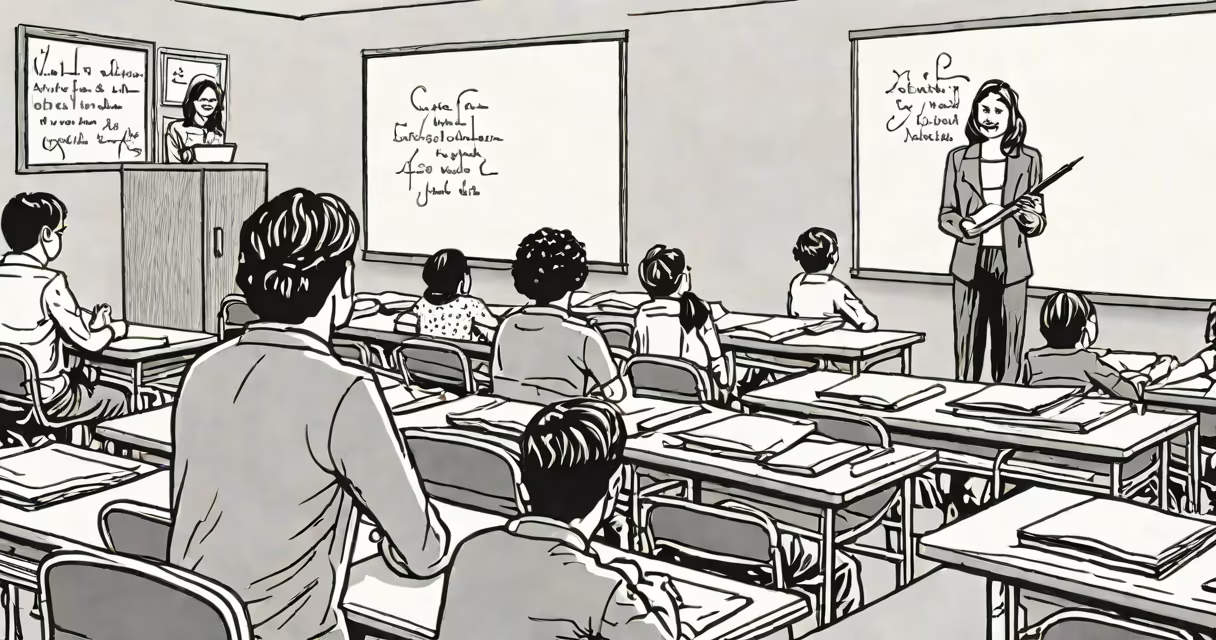
Ppr teacher certification is the official credential issued by the Texas Education Agency that authorizes individuals to teach in public schools across Texas. It confirms that a person meets state standards for subject knowledge, pedagogy, and professional conduct.
This certification is mandatory for anyone seeking employment as a teacher in Texas public schools. It applies to all grade levels and subjects, including special education, STEM, and career and technical education. Without it, a person cannot legally work as a certified teacher in the state's public system.
The PPR designation stands for "Professional Physical and Psychological Review," though it is commonly referred to simply as PPR certification. It is distinct from other credentials such as the EEC (Early Childhood Educator) or Apple Teacher certifications, which serve different purposes and regions.
To earn ppr teacher certification, candidates must complete a state-approved educator preparation program (EPP) and pass a series of exams administered by the Texas Education Agency (TEA). These include the Texas Examinations of Professional Pedagogy (TExES) for their chosen subject area and grade level.
For example, a candidate wanting to teach high school biology must pass the TExES Biology 6-12 exam. They must also meet specific academic requirements, such as holding a bachelor's degree in the subject they plan to teach or completing a related field of study through a teacher preparation program.
After passing the exams and completing the EPP, applicants submit documentation through the Texas Educator Certification System (TECS). Once approved, the TEA issues the certification, which is valid for five years and renewable upon meeting continuing education requirements.
There are multiple categories of ppr teacher certification based on grade level and subject area. The most common classifications are:
| Type | Grade Level | Subject Focus | Example Exam |
|---|---|---|---|
| Generalist EC-6 | Grades K-6 | Multiple subjects | TExES Generalist 4-8 |
| Special Education | All levels | Students with disabilities | TExES Special Education EC-12 |
| Secondary (4-12) | Grades 7-12 | Single subject | TExES Chemistry 8-12 |
| English as a Second Language (ESL) | All levels | Language acquisition | TExES ESL Supplemental |
Candidates may hold multiple ppr certifications if they pass additional exams. For instance, a teacher with a secondary math certification can add a secondary science endorsement by passing the relevant TExES exam.
A non-obvious distinction: ppr certification does not automatically grant eligibility for tenure or salary increases. Those benefits depend on district policies and years of service. The credential only verifies legal authorization to teach.
Ppr teacher certification is required for all public school positions in Texas, including charter schools that receive state funding. It is also necessary for roles in state-funded early childhood programs and public school districts.
For example, a graduate student completing a master's in education at the University of Houston must obtain ppr certification to apply for a teaching job in Houston Independent School District. Without it, even a strong resume won't secure an interview.
Some out-of-state educators assume their existing license transfers automatically. That is incorrect. Texas requires all teachers to go through the state's approval process, even if they hold a valid license in another U.S. state.
One common mistake is confusing ppr certification with temporary or emergency licenses. Emergency licenses allow individuals to teach while completing certification requirements, but they are not permanent. A teacher with an emergency license cannot remain in the classroom beyond 18 months unless they achieve full ppr status.
Ppr teacher certification is often mistaken for the EEC (Early Childhood Educator) credential, which is designed for preschool and kindergarten teachers. While both are state-issued, EEC focuses on developmental stages and play-based learning, whereas ppr covers formal instruction and standardized assessments.
Another confusion arises with Apple Teacher certification, which is a voluntary, technology-focused credential offered by Apple Inc. It recognizes educators who integrate Apple tools into their curriculum. However, it does not grant teaching rights in public schools. A teacher with Apple Teacher certification still needs ppr to work in Texas classrooms.
When comparing ppr to other national credentials, such as the National Board Certification, that ppr is state-specific. National Board Certification is a voluntary, nationally recognized standard that assesses advanced teaching practice. It complements ppr but does not replace it.
I once observed a group of new teachers in Austin struggling to understand why their out-of-state certification wasn't accepted. After reviewing the TEA's guidelines, we discovered that their degrees were accredited by a foreign institution, which required a separate evaluation process. This delayed their certification by six months. The key takeaway: verify your degree's recognition status before enrolling in a Texas EPP.
Consider Maria, a recent graduate with a B.A. in history from the University of Texas at Arlington. She wants to teach social studies in grades 7-12 in Texas.
Maria now holds full ppr teacher certification and can apply for jobs in any Texas public school district.
If you're considering teaching in Texas, ensure your program is approved by the TEA. Not all online teacher prep programs qualify. Check the list of approved EPPs on the TEA website before enrolling.
Ppr teacher certification is the foundational requirement for teaching in Texas public schools. It helps educators have demonstrated subject mastery, pedagogical skill, and ethical responsibility. Without it, teaching in the state's public system is not permitted.