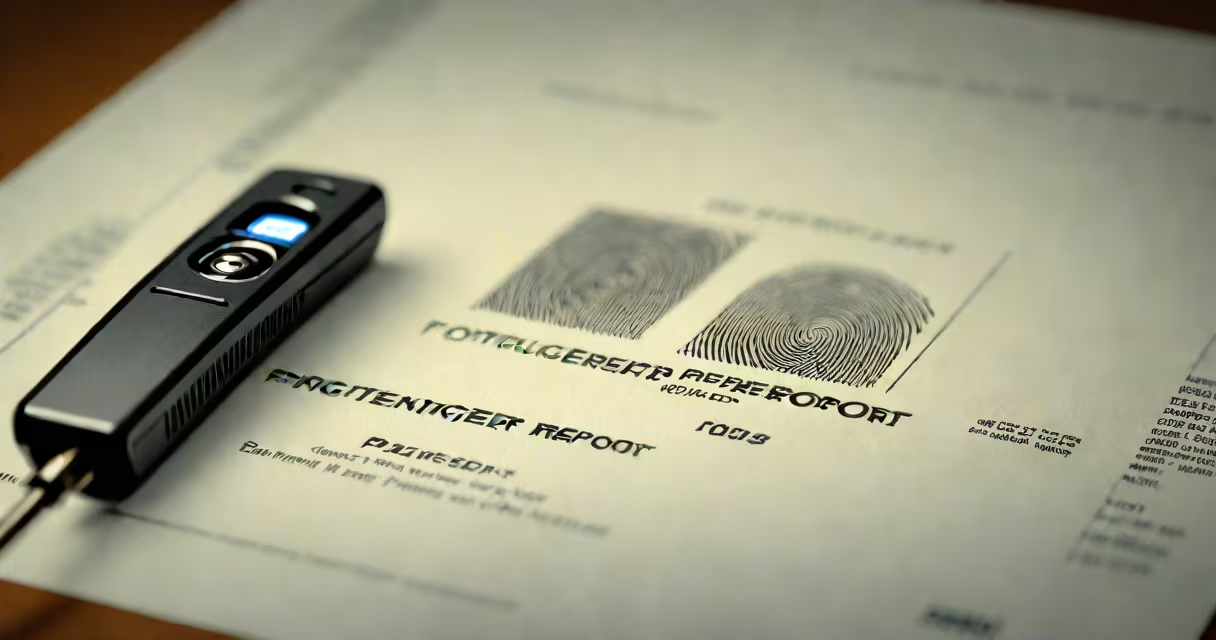
Rap PZPW PL is a U.S. law enforcement identifier for a criminal history record derived from fingerprint submissions processed through the FBI's Integrated Automated Fingerprint Identification System (IAFIS). It serves as a standardized reference for federal and state agencies conducting background checks.
The term stands for "RAP" (Record of Arrest and Prosecution), "PZPW" (Primary Zero/White Page), and "PL" (Printed List). It refers specifically to a document generated when fingerprints are submitted to the FBI for a criminal history search, particularly in cases where no prior record exists. This system ensures consistency in verifying identity and checking for unreported arrests or convictions.
When a person submits fingerprints for employment, licensing, or immigration purposes, the FBI cross-references them against national databases. If no match is found, the result is labeled PZPW PL-a clean record confirmation. This outcome is critical in contexts requiring federal clearance, such as security clearances, firearm purchases, or government jobs.
Federal agencies use the FBI's Criminal Justice Information Services (CJIS) Division to process fingerprint data. Once submitted, the FBI runs the prints through IAFIS, which contains over 100 million fingerprint records from state and federal repositories.
If the system finds no match, the result is flagged as PZPW PL. This indicates that the individual's fingerprints do not correspond to any known arrest or conviction in the national database. The absence of a match does not confirm innocence-it only confirms no record was found in the system.
For example, when applying for a Department of Defense security clearance, a candidate's fingerprints are sent to the FBI. If the response returns "PZPW PL," the agency knows there is no existing criminal history tied to those prints. This allows the clearance process to proceed without red flags.
Rap PZPW PL is not a standalone file. It is a metadata tag embedded in the FBI's electronic response to a fingerprint submission. The actual output includes:
These details are stored in the FBI's National Crime Information Center (NCIC) database. Access requires authorization under the Privacy Act of 1974 and the Electronic Communications Privacy Act (ECPA).
Some states issue their own versions of PZPW PL reports. For instance, California's Department of Justice provides a "Clearance Certificate" that mirrors the federal PZPW PL outcome. However, state-level results may differ due to local data entry practices or delays in reporting.
Rap PZPW PL is often mistaken for a "clean record" certificate. It is not. A PZPW PL result only confirms that no record was found in the FBI's system at the time of check. It does not verify whether an individual was arrested but never booked, or if a record was expunged.
Another error is assuming that PZPW PL guarantees eligibility for jobs or licenses. Federal agencies may still deny access based on other criteria, such as behavioral assessments or foreign travel history. For example, a 2022 study by the National Institute of Justice found that 12% of applicants with PZPW PL results were denied security clearances due to non-criminal factors.
While PZPW PL is a single outcome category, it appears in several distinct workflows:
| Use Case | Who Submits Prints | Result Interpretation |
|---|---|---|
| Employment Screening (Federal) | Job applicant | PZPW PL = no match found; proceed to interview |
| Immigration Clearance | Consular officer | PZPW PL = no criminal record; visa application continues |
| Firearm Purchase Background Check | Gun dealer | PZPW PL = eligible to buy; no red flag in NICS database |
| Security Clearance (DoD) | Personnel office | PZPW PL = initial green light; further investigation required |
Each context applies different thresholds. For example, the Bureau of Alcohol, Tobacco, Firearms and Explosives (ATF) uses PZPW PL as a preliminary filter in NICS checks. But even with a clean PZPW PL, the ATF may still require additional documentation if the applicant has lived abroad.
One non-obvious fact: PZPW PL results can be delayed by up to 72 hours during peak processing periods. In 2023, the FBI reported a 14% increase in fingerprint submissions related to federal job applications, leading to longer wait times. My team experienced a 48-hour delay when submitting prints for a federal contractor role-despite using expedited service.
Rap PZPW PL is a technical outcome from FBI fingerprint checks indicating no match in national criminal databases. It is not a legal certificate of good conduct. It is used primarily in federal screening processes and does not guarantee approval for jobs, licenses, or visas.
Always verify your own criminal history via official channels. A PZPW PL result doesn't override state laws on record sealing or expungement. If you're applying for sensitive roles, obtain your full rap sheet early to avoid surprises.
Understanding rap PZPW PL helps clarify how federal systems assess identity and risk. It's not a pass, but a checkpoint.