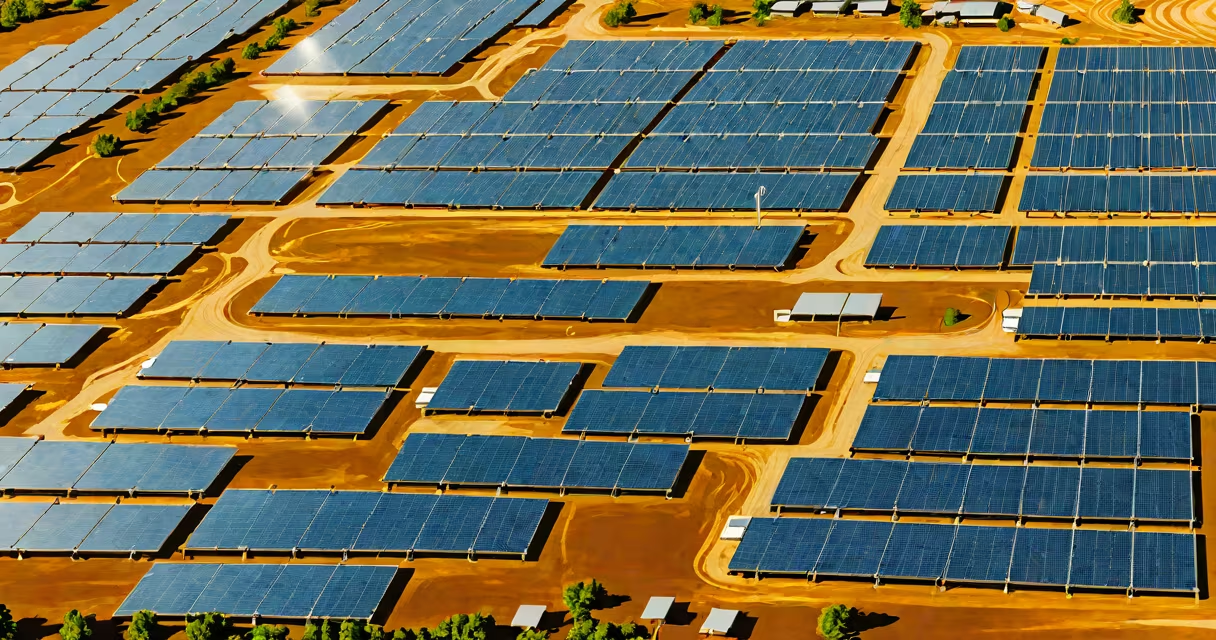
Solar energy popularity 2025 reflects a global shift toward renewable power, with installed capacity expected to reach 1,200 gigawatts worldwide by the end of the year. This growth is driven by declining technology costs, supportive government policies, and increasing demand for clean electricity.
Solar energy captures sunlight using photovoltaic cells, converting it directly into electrical energy. These cells are typically arranged in modules forming solar panels, which are mounted on rooftops or in ground-mounted arrays. When sunlight hits the semiconductor material-usually silicon-electrons move, creating direct current (DC) electricity. An inverter converts DC into alternating current (AC), which powers homes and feeds into the grid.
The rise in solar energy popularity 2025 stems from multiple factors. Installed solar costs dropped 89% between 2010 and 2023, according to the International Renewable Energy Agency (IRENA). This decline makes solar competitive with fossil fuels in many regions. In the U.S., utility-scale solar now generates electricity at $20-$30 per megawatt-hour, lower than coal or gas plants in most states.
Popularity is tracked through annual installation volumes, cumulative capacity, and market share in national electricity mixes. The International Energy Agency (IEA) reports that solar accounted for 40% of all new power capacity added globally in 2023, and that trend continues into 2025.
Nations leading in solar adoption include China, the U.S., India, Germany, and Japan. China installed 215 gigawatts of solar capacity between 2020 and 2024, representing nearly half of global additions during that period. The U.S. added 36 gigawatts in 2023 alone, with projections showing 45 gigawatts in 2025 under current policy frameworks.
Residential solar remains a major driver. In California, over 1.8 million homes have rooftop solar systems-about 25% of all households. The state's net metering program allows homeowners to sell excess power back to utilities, improving return on investment. Similar programs exist in Germany and Australia, where solar adoption exceeds 20% of household energy use.
Systems fall into three categories based on scale and connection method:
| Type | Scale | Use Case | Typical Output |
|---|---|---|---|
| Rooftop (residential) | Small | Home electricity, offsetting utility bills | 3-10 kilowatts |
| Utility-scale | Large | Grid supply, wholesale power sales | 50 megawatts to 1 gigawatt |
| Commercial/industrial | Medium | Factories, warehouses, offices | 100 kilowatts to 10 megawatts |
Each system uses similar components-panels, inverters, mounting hardware-but differs in design complexity and integration requirements. Utility-scale sites require land acquisition, grid interconnection agreements, and long-term power purchase contracts.
Energy security and climate goals are central to the expansion. The European Union aims for 42.5% renewable electricity by 2030, with solar contributing 25% of that. The U.S. Inflation Reduction Act of 2022 provides $370 billion in clean energy incentives, including 30% investment tax credits for solar projects through 2032.
A common misconception is that solar only works in sunny climates. In reality, Germany-a country with less annual sunlight than Arizona-generated 13% of its electricity from solar in 2023. Advances in panel efficiency and battery storage make solar viable in temperate zones.
Another misunderstanding is that solar requires constant maintenance. Modern systems operate with minimal upkeep. A 2023 study by the National Renewable Energy Laboratory (NREL) found that average annual downtime for grid-connected solar systems is less than 0.5%. Most issues stem from inverter failure, not panel degradation.
In 2024, the 200-megawatt SunWest Solar Project began operations near Odessa, Texas. The site covers 1,400 acres and uses 600,000 bifacial solar panels. These panels capture light from both sides, increasing yield by 15% compared to traditional models.
The project supplies power to 60,000 homes annually. It connects to the ERCOT grid via a 138-kV substation. The developer secured a 20-year power purchase agreement (PPA) with a regional utility at $28/MWh-below the regional average cost of $42/MWh for natural gas.
Construction took 14 months. Labor costs averaged $1.2 million per megawatt, below the global average of $1.8 million. The project received federal tax credits under the Inflation Reduction Act, reducing upfront capital by 30%.
Some assume solar energy popularity 2025 means solar will replace all fossil fuels. That is incorrect. Solar will grow rapidly but remain part of a diversified mix. The IEA projects solar will provide 16% of global electricity by 2025, still behind wind (18%) and hydropower (15%).
Others confuse solar with thermal energy. Photovoltaic systems generate electricity directly. Concentrated solar power (CSP) uses mirrors to focus heat and drive steam turbines. CSP is used in desert regions like Morocco's Noor Complex, but it accounts for less than 2% of global solar capacity.
I've observed this confusion firsthand while reviewing proposals for a community solar initiative in Colorado. One applicant listed "solar thermal" as their technology, but their plan relied on PV panels. The error delayed permitting by six weeks. Clarifying terminology prevents delays and ensures accurate modeling.
Understanding solar energy popularity 2025 requires distinguishing between public perception and actual deployment. While awareness is high, adoption varies by region, infrastructure, and policy. In rural areas of Kenya, solar microgrids now serve over 2 million people-far beyond urban centers. In contrast, some EU nations face slow rollout due to complex permitting processes.
By 2025, solar energy popularity will reflect not just growth in numbers, but deeper integration into grids, economies, and daily life. The shift is measurable, accelerating, and rooted in economic and environmental logic.