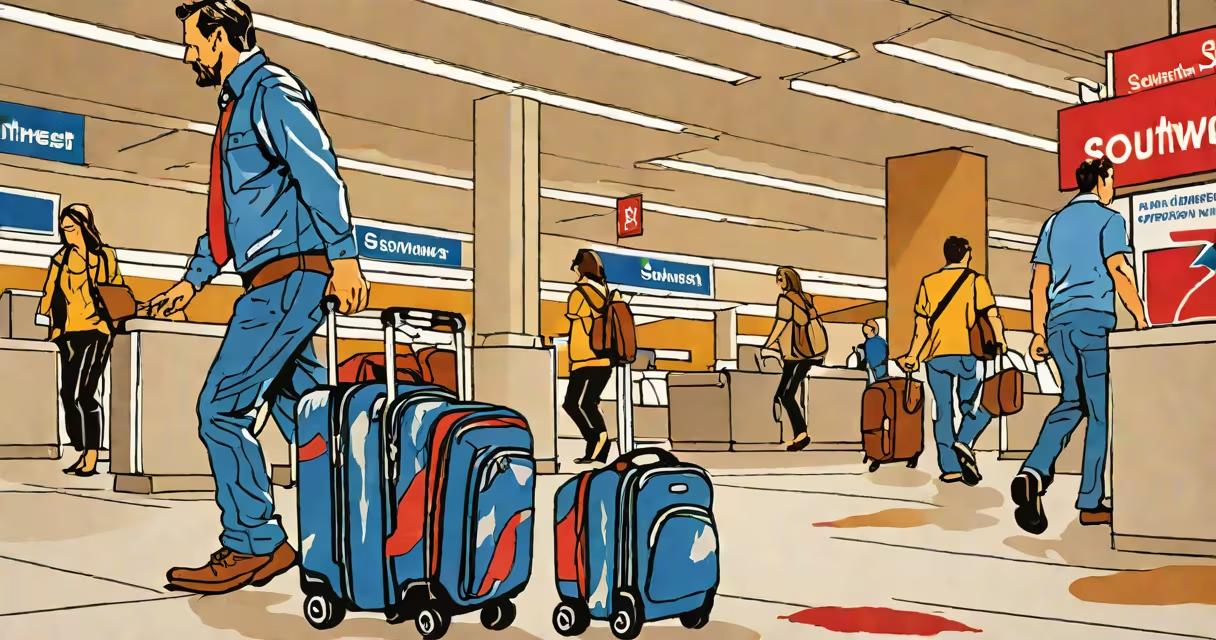
Southwest Airlines allows one standard-sized carry-on bag and one personal item free of charge per passenger. The carry-on must fit under the seat or in the overhead bin and measure no more than 24 x 16 x 10 inches (61 x 41 x 25 cm).
The airline's carry-on policy prioritizes space efficiency and boarding speed. Bags exceeding dimensions may be checked at the gate without fee, but passengers risk delays if they arrive late or during peak travel times. Southwest does not charge for carry-ons, but oversized bags must be checked and incur a $35 fee per bag if checked at the airport.
Carry-on luggage must be stowed safely during flight. Passengers are responsible for securing their bags in overhead bins or under seats. Overhead bins fill quickly, especially on popular routes like Dallas to Los Angeles. Arriving early improves access to storage space and reduces boarding time.
Southwest uses a "first-come, first-served" system for overhead bin space. There is no assigned seating for carry-ons. Passengers board in groups based on boarding group and priority status. Group 1 boards first, followed by Groups 2-4. Early boarding increases the chance of securing overhead bin space.
Bag dimensions are measured at the gate using a physical template. A bag that fits within the 24 x 16 x 10 inch limit passes inspection. Bags that exceed any dimension are rejected and must be checked. Southwest does not accept bags larger than 24 x 16 x 10 inches, even if they weigh less than 35 pounds.
Passengers who bring multiple bags may be asked to check one. The airline reserves the right to deny boarding to bags that do not meet size standards. This rule applies equally to all travelers, regardless of fare class or loyalty status.
Each passenger may bring one carry-on bag and one personal item. The personal item must fit under the seat in front of you. Common examples include a laptop bag, small backpack, or tote with a handle.
The carry-on bag must be able to fit in the overhead bin or under the seat. If the bag is too large for under-seat storage, it must go in the overhead bin. Southwest does not allow bags to be placed in the aisle or between seats.
For reference, a standard 20-inch rolling suitcase typically fits under the seat. A 24-inch suitcase may require overhead bin space. Always test your bag against the airline's size guidelines before arriving at the airport.
| Item Type | Maximum Dimensions | Storage Location | Fee if Checked |
|---|---|---|---|
| Carry-on bag | 24 x 16 x 10 inches (61 x 41 x 25 cm) | Overhead bin or under seat | $35 |
| Personal item | 18 x 14 x 8 inches (46 x 36 x 20 cm) | Under seat | None (included) |
| Excess bag | Any size over 24 x 16 x 10 inches | Checked baggage | $35 |
Many travelers assume that a 24-inch suitcase qualifies as a carry-on. Southwest defines carry-on size strictly by external dimensions. A 24-inch suitcase with wheels and handles may exceed 24 inches in height or width when measured at the widest point.
Another common error is assuming that weight is unrestricted. While Southwest does not charge for carry-ons based on weight, bags over 35 pounds are difficult to lift into overhead bins and may be denied entry. The airline recommends checking bags that exceed 35 pounds to avoid injury or delay.
A lesser-known rule: pets and service animals count toward the carry-on allowance. A dog carrier must fit under the seat or in the overhead bin. If the carrier exceeds size limits, the animal must be checked as cargo. This rule applies even if the pet is trained and calm.
I flew from Houston to Nashville during spring break. My carry-on was a 22-inch rolling suitcase with a detachable shoulder strap. The bag measured 22 x 15 x 9 inches-well under the 24 x 16 x 10 inch limit. I brought a small backpack as my personal item.
At the gate, I placed the suitcase under the seat. The agent confirmed it fit. I boarded with Group 1 and secured both bags without issue. No fees were applied. The flight was full, but I had space because I arrived early and used a compact bag.
On the return trip, I brought a 24-inch suitcase with a built-in handle. The bag measured 24 x 16 x 10 inches exactly. The agent refused it due to the handle extending beyond the 16-inch width. I checked it at the gate and paid $35. The bag arrived on time, but I lost boarding priority.
If your carry-on exceeds 24 x 16 x 10 inches, check it at the airport. Southwest charges $35 per bag for checked luggage. The fee is waived if you have a companion ticket or elite status. Members of the Rapid Rewards program receive discounts on checked bags.
Check bags early to avoid lines. Southwest's check-in counters close 30 minutes before departure. Late check-ins result in delayed flights or missed connections. If you're flying internationally, confirm that your bag meets both Southwest and destination country regulations.
Always measure your bag before leaving home. Use a ruler or tape measure to confirm all three dimensions. Include wheels, handles, and external pockets in the measurement.
Test your bag in a doorway or doorway-sized frame. If it won't pass through a standard door, it likely won't fit in the overhead bin. Practice packing with your bag closed and zipped to simulate real-world conditions.
For travelers seeking pre-approved luggage, carry on approved luggage includes models designed to meet airline specifications. These bags feature reinforced corners, soft-sided exteriors, and built-in wheels. They are often lighter and easier to maneuver than standard suitcases.
Southwest Airlines carry on luggage must comply with size and weight rules. Failure to meet requirements results in checked baggage fees and boarding delays. Plan ahead, measure your bag, and arrive early to ensure a smooth process.