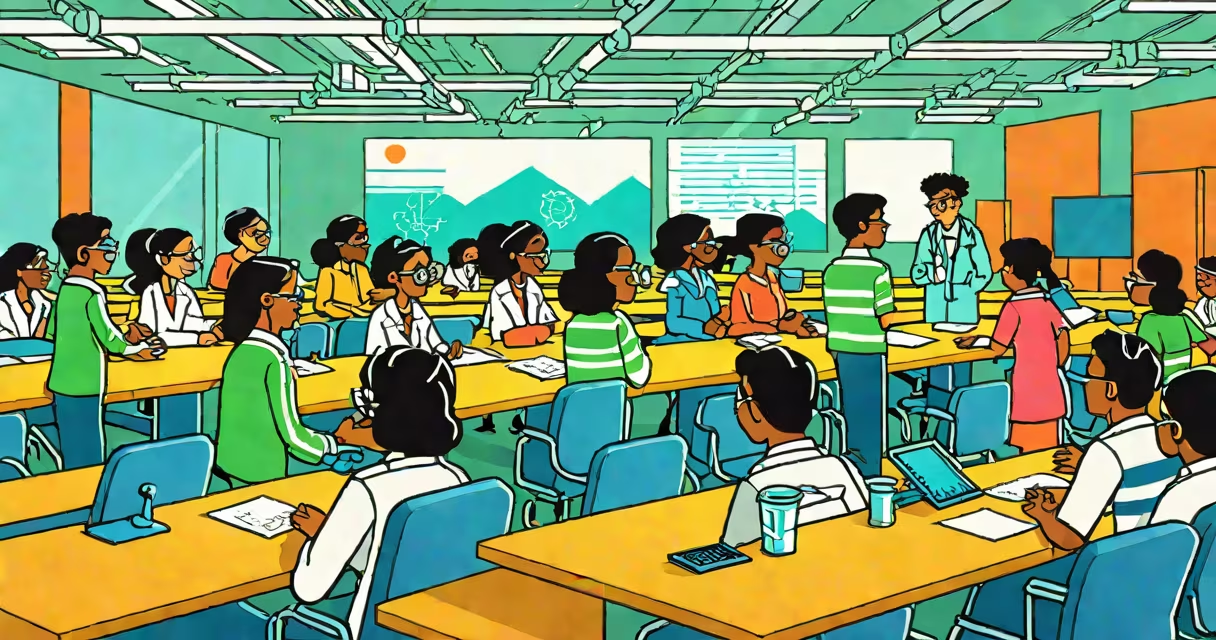
The Stripe Young Scientist 2026 is a global competition for students under 18 who submit original research in computer science, biology, or engineering. Finalists present their work to a panel of judges from academia and tech industry, with the top winner receiving $10,000 and a year-long mentorship program.
Launched in 2022 by Stripe's education initiative, the competition aims to identify early-stage innovators in STEM fields. Submissions are evaluated on scientific rigor, originality, and potential societal impact. The 2026 edition will accept entries from January 1 through May 31, with finalists announced in July.
Each applicant must submit a research proposal, a written report, and a video presentation not exceeding five minutes. Projects must be independently conducted and not previously published. The competition is open to students in grades 9-12 worldwide, with no entry fee.
Participants begin by registering online via the official Stripe Young Scientist portal. After submission, entries undergo a two-stage review process. First, a screening committee evaluates eligibility and basic compliance. Second, subject-matter experts assess each project using a rubric focused on hypothesis clarity, methodology soundness, data analysis, and conclusions.
Finalists are selected based on scores and invited to present live during a virtual summit in late July. Judges include faculty from MIT, Stanford, and researchers from institutions like the Max Planck Institute. Presentations are scored on communication, technical depth, and resilience to questioning.
A student from Nairobi, Kenya, won the 2024 prize for developing a low-cost water quality sensor using recycled smartphone components. The device detects E. coli levels in rural wells with 92% accuracy, outperforming commercial models priced ten times higher. This project was later piloted in six villages with support from UNICEF.
To qualify, applicants must be under 18 on the application deadline date. They must be enrolled in a secondary school or equivalent educational institution. Home-schooled students are eligible if they provide proof of enrollment or curriculum documentation.
Projects must be original and completed within the past 12 months. Collaborative work is permitted, but only one student may represent the team. All submissions require parental consent forms, which are verified during the screening phase.
| Category | Eligible Topics | Example Project |
|---|---|---|
| Computer Science | AI for health diagnostics, open-source software, robotics algorithms | Neural network trained to detect skin cancer from smartphone photos |
| Biology | Genetic editing applications, ecological modeling, microbiome studies | CRISPR-based method to reduce antibiotic resistance in E. coli |
| Engineering | Sustainable materials, energy efficiency, assistive devices | 3D-printed prosthetic hand using recycled plastic and servo motors |
Submissions must include raw data, methodology descriptions, and citations for all referenced material. Projects relying on human or animal subjects must include ethics board approval documents.
The Stripe Young Scientist 2026 is not a science fair. While both involve student presentations, the competition emphasizes independent research, not classroom demonstrations. A project submitted to a local science fair cannot be repurposed for this contest without significant revision.
Another misconception is that prior publication disqualifies a project. A paper published in a peer-reviewed journal is ineligible, but a blog post, conference abstract, or school presentation does not automatically disqualify work. However, if the research was presented publicly before the submission window, judges may consider it less novel.
Some assume the award is solely financial. The $10,000 prize is distributed as a grant to cover research expenses, travel, or further study. The mentorship component is equally valuable: winners are paired with professionals at companies like Google DeepMind, BioNTech, and SpaceX for one-on-one guidance.
In 2023, a 17-year-old from Santiago, Chile, developed a machine learning model that predicts forest fire risk using satellite imagery and historical weather data. Her algorithm achieved 87% accuracy in testing across 12 regions. She received the top prize and later joined a climate tech startup funded by Stripe's venture arm.
I once attended the 2024 virtual summit and watched a finalist from Oslo present a wind turbine design optimized for Arctic conditions. The prototype used adaptive blade pitch controlled by embedded sensors. During Q&A, a judge asked about material fatigue in subzero temperatures. The student responded with test results from a custom cold chamber she built in her garage - a detail that impressed the panel.
Winners are featured in Stripe's annual "Future of Innovation" report, which is shared with universities, research labs, and government science offices. Past participants have secured internships at CERN, the National Institutes of Health, and the European Space Agency.
The Stripe Young Scientist 2026 is not a race to the finish. It rewards sustained effort, critical thinking, and the courage to ask hard questions. With clear guidelines, transparent judging, and real-world outcomes, it stands as one of the most accessible platforms for young researchers to turn ideas into impact.