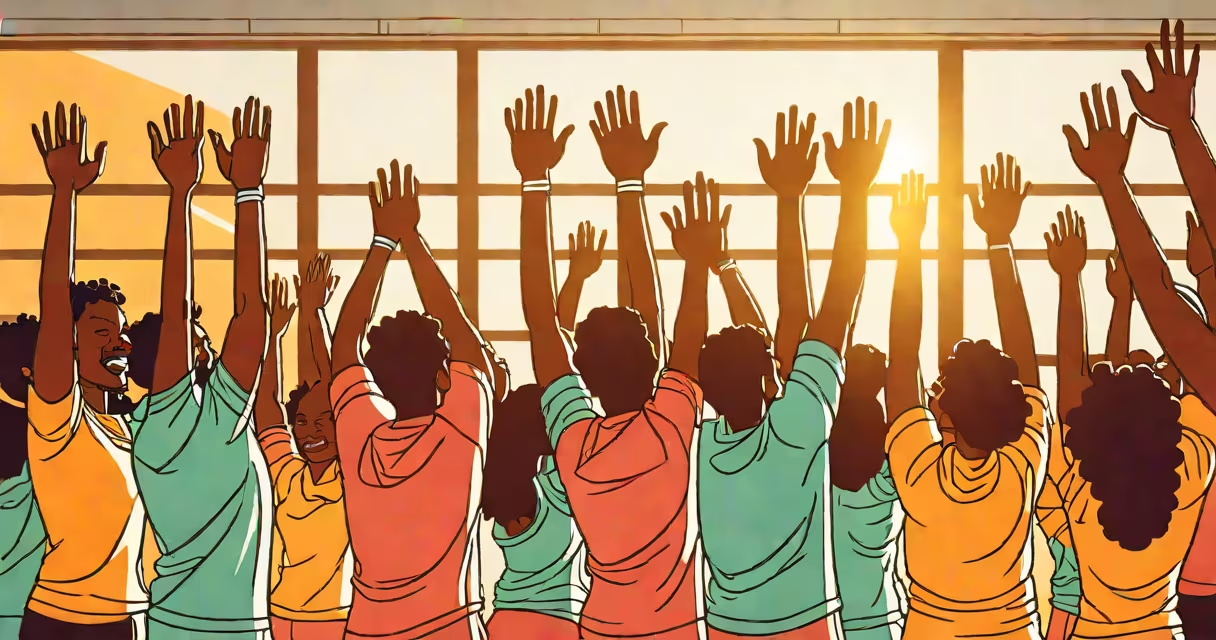
"We did it" quotes are concise, emotionally charged statements acknowledging collective achievement after overcoming obstacles. They mark a turning point where effort, persistence, and teamwork converge into a shared success. These phrases are not just declarations-they're cultural touchstones in sports, workplaces, and personal milestones.
They function as verbal markers of completion. When a team finishes a grueling project, wins a championship, or achieves a long-term goal, saying "We did it" validates the process. The phrase compresses months of struggle into a single moment of relief and pride. It's not just about the result-it's about the shared experience that led to it.
These quotes appear in press conferences, team huddles, award acceptance speeches, and social media tributes. Their brevity makes them memorable. A single sentence can encapsulate the weight of a season, a campaign, or a life-changing accomplishment. They're used to inspire others who haven't yet reached the finish line.
"We did it" operates as a psychological reset. After sustained pressure, stress, or uncertainty, the phrase signals closure. It shifts focus from effort to outcome. This transition is critical in high-stakes environments like sports, military operations, and startup launches.
Neuroscience shows that group affirmation activates the brain's reward centers. Saying "We did it" triggers dopamine release, reinforcing group cohesion. The phrase becomes a ritual-a shared act of recognition that binds individuals together. It's not just a statement; it's a communal ceremony.
In professional settings, leaders use "We did it" to close projects. After a product launch, a sales quarter, or a merger, the phrase reinforces team identity. It turns individual contributions into a unified narrative of success. Without it, achievements risk feeling isolated or uncelebrated.
While the core sentiment remains consistent, "We did it" quotes vary by context and tone. They appear in formal, informal, humorous, and deeply personal forms.
| Type | Use Case | Example |
|---|---|---|
| Team Triumph | Sports, competitions, group projects | "After 17 years, we finally made it. We did it." |
| Personal Achievement | Graduation, recovery, career milestones | "I've been in rehab for two years. Today, I'm free. We did it." |
| Leadership Acknowledgment | Post-project debriefs, company announcements | "The team stayed late every night. We did it." |
| Humorous/Over-the-Top | Parody, memes, light-hearted celebrations | "We survived the spreadsheet crisis. We did it!" |
Each variation serves a distinct purpose. Team triumph quotes emphasize unity. Personal ones show resilience. Leadership versions reinforce accountability. Humorous uses reduce tension and build rapport.
Many assume "We did it" is purely celebratory. But it's not just joy-it's acknowledgment of struggle. The phrase gains meaning only when contrasted with prior difficulty. Saying "We did it" after a loss lacks authenticity. It's not a substitute for reflection.
Another myth: these quotes are spontaneous. In reality, they're often rehearsed. NFL coaches prepare post-game lines. Startup founders script victory messages. The spontaneity is performative-designed to feel raw while being carefully crafted.
A lesser-known fact: "We did it" is rarely said by individuals alone. It's almost always plural. The pronoun "we" is essential. Using "I did it" shifts the focus to individual credit, which undermines the collective nature of the quote. This linguistic structure preserves group identity.
In April 2023, a wheelchair racer from the U.S. team won the Boston Marathon. After crossing the finish line, he turned to his teammates and said, "We did it." The moment was captured on video and shared widely.
The quote resonated because it wasn't just about winning. It referenced years of training, funding challenges, and medical setbacks. His teammates had supported him through rehabilitation. The phrase acknowledged that victory wasn't personal-it was a shared mission.
Within 48 hours, the quote appeared on social media, in news articles, and on merchandise. It became a symbol of perseverance. The National Federation of the Disabled cited it in a campaign for athlete funding. The quote's impact extended far beyond the race itself.
Using "We did it" in failure scenarios erodes trust. If a project fails, saying "We did it" feels dishonest. It invalidates the team's effort and creates dissonance. Authenticity matters more than rhetoric.
Also avoid using the quote in isolation. A standalone "We did it" without context feels hollow. It needs backstory-what was the challenge? How long did it take? Who contributed? Without context, the phrase loses emotional weight.
And never use it to dismiss ongoing issues. A company that says "We did it" after launching a flawed product risks alienating customers. Success must be measured against outcomes, not just sentiment.
"We did it quotes" are more than slogans. They're psychological anchors, cultural artifacts, and tools of validation. They work because they reflect shared experience, not just achievement. The phrase gains strength from the weight of what came before.
When used correctly, they inspire. When misused, they undermine. The difference lies in honesty, timing, and context. For teams, organizations, and individuals, the moment of saying "We did it" is not the end-it's the beginning of legacy.