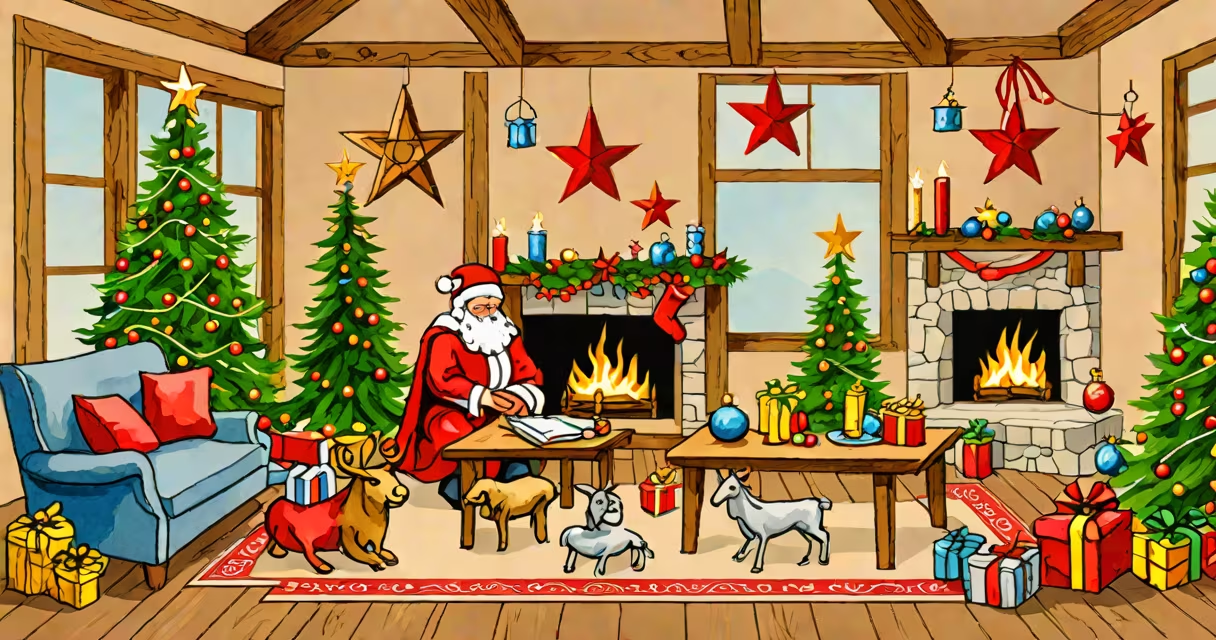
Christmas symbols are visual elements tied to the religious and cultural traditions surrounding December 25th, representing themes of hope, rebirth, and divine presence. They appear in homes, churches, and public spaces worldwide during the winter season.
The most recognizable Christmas symbols include the evergreen tree, the star above Bethlehem, the nativity scene, holly wreaths, and candles. These objects carry layered meanings rooted in Christian theology and pre-Christian winter customs. For example, the evergreen tree symbolizes eternal life due to its year-round greenery, while the star represents the Star of Bethlehem that guided the Magi to Jesus' birthplace.
These symbols are not arbitrary. The Catholic Church and early Christian communities adopted existing winter solstice rituals-like evergreen decoration and firelight-to align pagan celebrations with the birth of Christ. This syncretism helped spread Christianity across Europe. Today, over 70% of Americans report displaying at least one Christmas symbol in their home, according to Pew Research Center (2022).
Each major Christmas symbol traces back to specific historical or theological roots. The Christmas tree, for instance, originated in 16th-century Germany, where devout families brought decorated trees into their homes. The practice spread through trade and royal influence-Queen Victoria and Prince Albert popularized it in Britain in the 1840s.
The nativity scene, or crèche, was first created by Saint Francis of Assisi in 1223 in Greccio, Italy. He set up a live tableau of Mary, Joseph, and the infant Jesus using animals and real people. This act transformed worship from abstract doctrine into sensory experience. Today, over 1 million nativity scenes are sold annually in the U.S., according to the National Retail Federation.
Holly and mistletoe are often grouped together, but they differ in origin. Holly's sharp leaves represent Christ's crown of thorns, while its red berries symbolize his blood. Mistletoe, however, comes from Norse mythology, where it was sacred to Odin and associated with fertility. Its use in Christmas traditions began in 18th-century England, where it became a kissing ritual.
| Symbol | Meaning | Origin |
|---|---|---|
| Evergreen Tree | Eternal life, renewal | German Protestant tradition, 16th century |
| Star of Bethlehem | Divine guidance, Christ's birth | Biblical account (Matthew 2:2) |
| Nativity Scene | Incarnation, humility | Francis of Assisi, 1223 |
| Holly Wreath | Cycle of life, Christ's crown | Early Christian symbolism |
| Mistletoe | Fertility, reconciliation | Norse mythology, adopted in 18th-century Britain |
Many people assume Santa Claus is a core Christmas symbol. While he appears widely in commercial culture, he is not part of the original religious symbolism. Santa evolved from St. Nicholas, a 4th-century bishop known for gift-giving, but his modern form-red suit, reindeer, North Pole workshop-is a 19th-century American invention influenced by Coca-Cola advertising.
Another frequent error is equating all winter decorations with Christmas. Snowflakes, sleighs, and snowmen are seasonal motifs but not inherently religious. They reflect broader winter celebrations. For example, the snowman was invented in France in the 1800s and later became a global winter icon, unrelated to Christmas theology.
A lesser-known fact: the color red in Christmas decor is not symbolic of blood alone. Red also represents joy and warmth during the cold season. In medieval Europe, red was associated with vitality and protection against evil spirits. This dual meaning explains why red appears in both religious and secular Christmas displays.
Modern Christmas symbols are deployed across media, retail, and personal expression. A single household may display a tree, lights, a nativity scene, and candy canes-all conveying different layers of meaning. The tree signals festivity and family gathering; the lights suggest hope amid winter darkness; the candy cane's red-and-white stripes recall both the cross and purity.
For example, a family in Portland, Oregon, uses a 7-foot Fraser fir with 1,200 LED lights, 30 handmade ornaments, and a porcelain nativity set purchased in Bethlehem. The tree's placement near a window ensures visibility from the street-a public declaration of faith and celebration. This setup reflects both tradition and personal narrative.
Commercial brands heavily use these symbols. In 2023, Walmart reported that 68% of its holiday sales came from products featuring classic Christmas symbols. The company's "Christmas in the City" campaign used animated versions of the star, tree, and wreath in digital ads, reaching over 45 million viewers.
Not all symbols are equally meaningful across cultures. In Mexico, the piñata is central to Las Posadas, a nine-day celebration leading to Christmas Eve. It represents the breaking of sin and the arrival of salvation. Yet this symbol is absent in Northern European traditions, where the focus remains on the manger and the star.
Religious institutions also interpret symbols differently. The Eastern Orthodox Church uses a different date for Christmas (January 7) and emphasizes the Epiphany, where the star and Magi take center stage. In contrast, Western Christianity centers on the Nativity and the tree. These differences show that Christmas symbols are not monolithic-they adapt to local belief systems.
One common mistake is assuming that all symbols are Christian. The yule log, for instance, originates from Germanic winter feasts. It was burned to honor the sun god during the solstice. Though now associated with Christmas, it predates Christianity by centuries. Recognizing this helps avoid misrepresenting cultural heritage.
Understanding what are the symbols for Christmas reveals more than festive décor-it uncovers centuries of cultural blending, theological intent, and human longing for light in dark times. These symbols endure because they speak to universal hopes: peace, renewal, and connection.