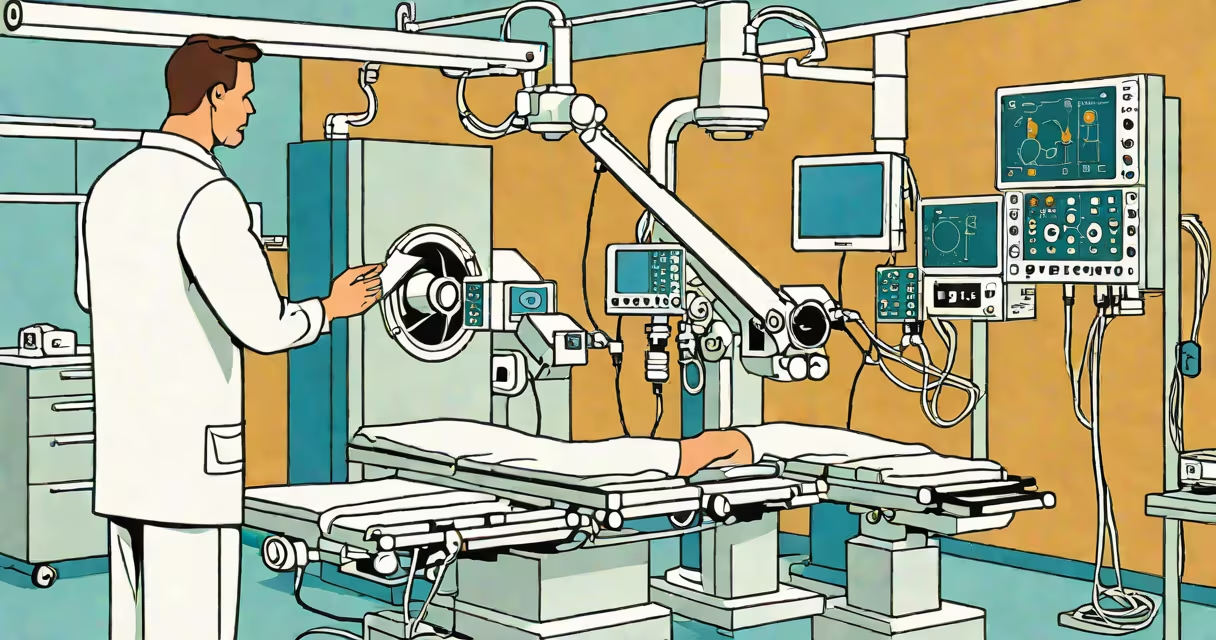
A biomedical technician installs, maintains, calibrates, and repairs medical equipment such as MRI machines, ventilators, and patient monitors. They ensure devices function safely and accurately, supporting clinical staff and protecting patient outcomes.
These professionals work primarily in hospitals, outpatient clinics, and medical device manufacturers. Their role bridges clinical needs and technical reliability. A malfunctioning defibrillator during surgery or an inaccurate blood pressure monitor can compromise treatment. Biomedical technicians prevent such failures through routine checks and rapid troubleshooting.
According to the U.S. Bureau of Labor Statistics, biomedical equipment technicians (BMETs) held about 46,000 jobs in 2022, with employment projected to grow 6% from 2022 to 2032-faster than average for all occupations. This growth reflects rising demand for advanced medical technology and aging infrastructure in healthcare facilities.
Biomedical technicians perform preventive maintenance on medical devices. For example, they test the electrical safety of infusion pumps monthly using calibrated tools. They document each inspection in a digital system, flagging units that fail voltage leakage tests.
When a device fails, they diagnose issues using schematics, multimeters, and manufacturer manuals. A technician might replace a faulty sensor in a pulse oximeter after identifying a signal drift in calibration logs. Repairs often involve swapping circuit boards, updating firmware, or adjusting mechanical components.
They also install new equipment. During a hospital's upgrade to a new ultrasound system, a biomedical technician configures the network settings, aligns the transducer, and verifies image resolution against standards set by the American Society for Testing and Materials (ASTM).
Most biomedical technicians hold an associate degree in biomedical equipment technology or a related field. Programs include courses in electronics, anatomy, and medical terminology. Some employers prefer candidates with certification from the Association for the Advancement of Medical Instrumentation (AAMI).
The Certified Biomedical Equipment Technician (CBET) credential requires passing a written exam covering electrical safety, biopotential measurements, and device-specific procedures. Technicians must renew certification every five years through continuing education.
Technical skills include reading circuit diagrams, using oscilloscopes, and applying Ohm's Law. Soft skills matter too: clear communication with nurses and doctors during emergencies, and patience when explaining repair timelines to busy clinicians.
Biomedical technicians are not physicians or surgeons. They do not administer treatments or interpret diagnostic results. Their focus is on equipment performance, not patient care decisions.
Another misconception is that all biomedical technicians work in hospitals. While 60% of BMETs are employed in healthcare settings, others work in labs, research institutions, or companies that manufacture medical devices. A technician at a medical device startup may spend more time designing test protocols than repairing existing systems.
Some confuse biomedical technicians with biomedical engineers. Engineers design new devices and develop software algorithms. Technicians maintain and troubleshoot existing systems. The two roles overlap in problem-solving but differ in scope and education level.
| Role | Education Level | Primary Focus | Typical Work Setting |
|---|---|---|---|
| Biomedical Technician | Associate degree or certificate | Maintenance, repair, calibration | Hospitals, clinics, labs |
| Biomedical Engineer | Bachelor's or higher in biomedical engineering | Design, development, research | Manufacturers, universities, startups |
In 2021, a hospital in Chicago experienced a sudden failure of six ICU ventilators during a surge in respiratory illness cases. The biomedical team responded within 90 minutes. One technician identified a corrupted firmware update on a model GE Healthcare Carestation 3000. He rolled back to the last stable version using a secure USB drive and verified pressure waveforms via a test lung simulator.
After recalibration, the unit passed safety thresholds. The entire process took under two hours. Without the technician's intervention, patients relying on mechanical ventilation would have faced life-threatening delays. This incident underscores how critical real-time troubleshooting is in high-stakes environments.
I once observed a technician at a regional medical center manually adjust the gain setting on a cardiac monitor after a power fluctuation caused erratic readings. The nurse had reported false alarms. The fix required only a few minutes-but prevented unnecessary code blue responses and reduced stress on clinical teams.
Medical devices account for nearly 70% of hospital equipment costs. Proper maintenance reduces downtime and extends device lifespan. A 2020 study published in *Journal of Clinical Engineering* found that hospitals with regular BMET inspections saw a 35% drop in device-related adverse events over three years.
Technicians also contribute to regulatory compliance. The FDA mandates that medical devices meet specific safety and performance standards. Biomedical technicians verify adherence through documented testing and reporting.