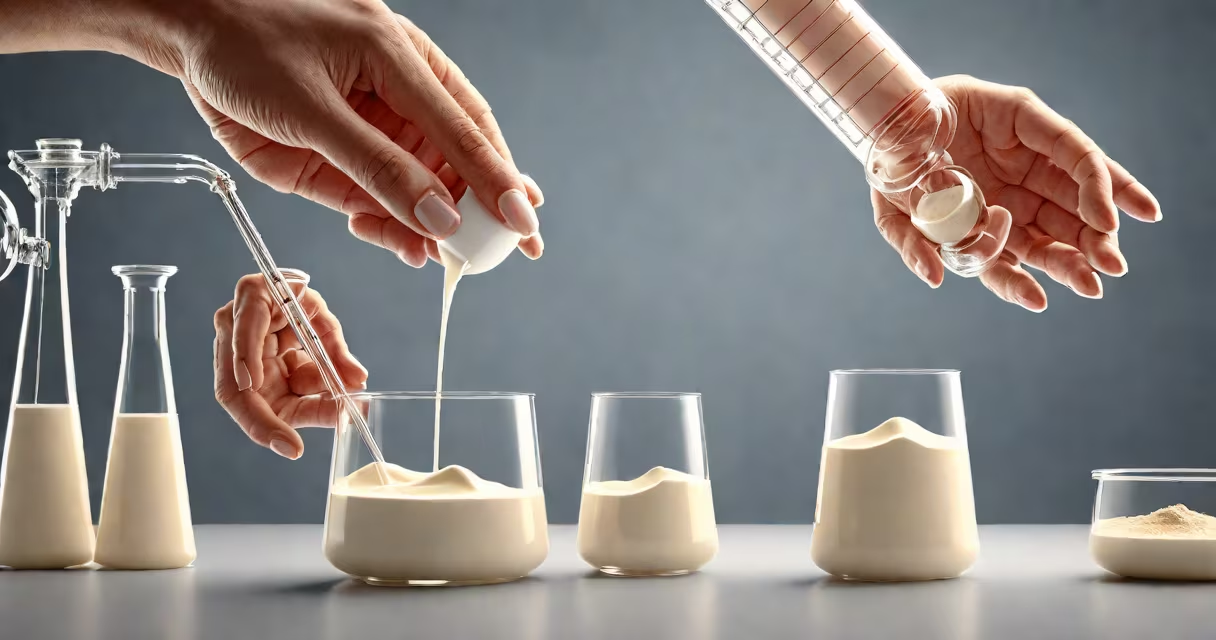
A cosmetic chemist formulates and tests skin, hair, and body care products using chemistry principles to ensure safety, stability, and effectiveness. They blend active ingredients, emollients, preservatives, and surfactants into products that meet regulatory standards and consumer expectations.
Cosmetic chemists work in labs, often within pharmaceutical companies, beauty brands, or contract research organizations. Their core task is creating formulations-mixes of ingredients designed to deliver specific benefits like hydration, anti-aging, or cleansing-while remaining stable over time and safe for human use.
According to the Society of Cosmetic Chemists (SCC), a typical formulation includes water, oils, emulsifiers, thickeners, pH adjusters, and active agents such as retinol or hyaluronic acid. These components must interact without degrading or causing irritation. The chemist adjusts ratios, tests shelf life, and validates results through sensory evaluation and stability testing.
Formulation begins with defining a product's purpose-e.g., a moisturizer for dry skin. The chemist selects base ingredients based on known properties: glycerin attracts moisture, squalane mimics skin lipids, and ceramides reinforce the skin barrier. These are combined in precise proportions to create a stable emulsion-a mixture of oil and water that doesn't separate.
For example, a facial moisturizer might include:
This mix is heated, blended, cooled slowly, then tested for texture, spreadability, and microbial resistance. Stability tests run over 6 months at different temperatures to simulate real-world storage.
Chemists use tools like rheometers to measure viscosity and centrifuges to test emulsion separation. They also conduct patch tests on human volunteers to assess irritation potential. The U.S. Food and Drug Administration (FDA) requires that all cosmetic products be safe under labeled conditions of use, and chemists are responsible for ensuring compliance.
Each ingredient in a cosmetic formulation serves a specific function. Understanding these roles reveals how chemists balance performance and safety.
| Ingredient Type | Function | Common Examples | Regulatory Note |
|---|---|---|---|
| Emollient | Lubricates skin, reduces flaking | Squalane, caprylic/capric triglyceride | Generally recognized as safe (GRAS) by FDA |
| Surfactant | Removes oil and dirt | Sodium lauryl sulfate, decyl glucoside | Must be low-irritation for facial cleansers |
| Preservative | Prevents bacterial and fungal growth | Phenoxyethanol, benzyl alcohol | Restricted in some countries; banned in EU above 1% |
| Active Ingredient | Delivers intended benefit | Retinol, niacinamide, vitamin C | Stability varies; may degrade in light or heat |
One non-obvious fact: many ingredients are not used in pure form. For example, phenoxyethanol is typically sold as a 10% solution in water. A chemist must calculate dilution to achieve the correct concentration in the final product. Misjudging this leads to ineffective preservation or skin irritation.
Another common mistake is assuming "natural" equals "safe." Plant extracts like rosemary oil have antioxidant properties but can cause photosensitivity or allergic reactions. The SCC warns that natural doesn't imply non-toxic-formulators must evaluate each ingredient's risk profile.
Beauty brands, dermatology clinics, and contract laboratories hire cosmetic chemists to develop products that solve skin concerns. L'Oréal, Estée Lauder, and Unilever employ teams of chemists to innovate new textures, delivery systems, and efficacy profiles.
For instance, L'Oréal's Advanced Research team developed a microencapsulation technique to deliver retinol without irritation. The active ingredient is trapped in lipid spheres that release slowly over time, reducing redness while maintaining anti-wrinkle effects. This innovation required years of lab testing and clinical trials.
Even small indie brands rely on chemists. I once worked with a startup developing a vegan face serum. The founder wanted a "clean" formula with no synthetic preservatives. After six failed batches due to mold growth, we switched to a combination of sodium benzoate and potassium sorbate-both approved by the European Commission for use in cosmetics-and achieved a 12-month shelf life.
These examples show that formulation isn't just art-it's applied science. A single unstable ingredient can ruin a product batch, lead to recalls, or harm users.
People often confuse cosmetic chemists with fragrance developers or marketing teams. A fragrance chemist focuses solely on scent compounds, while a cosmetic chemist manages the entire formula. The two roles sometimes overlap, but they require distinct training.
Another misconception: cosmetic chemists don't "invent" new chemicals. Most ingredients are off-the-shelf materials. Instead, they master how to combine existing molecules to achieve desired outcomes. As the SCC states, "The skill lies not in discovery, but in application."
Some assume all cosmetic products are rigorously tested. In reality, most are tested only for immediate safety-patch tests, pH checks, and basic stability. Long-term safety data is rare unless the product contains high-risk actives like hydroquinone or isotretinoin. Regulatory bodies like the FDA do not approve cosmetics before sale, unlike drugs.
Finally, the term "dermatologist" is frequently misused. Dermatologists treat skin diseases. Cosmetic chemists design products that support healthy skin-but they do not diagnose or prescribe.
Most cosmetic chemists hold a bachelor's degree in chemistry, biochemistry, or chemical engineering. Advanced roles often require a master's or PhD, especially in research-driven companies.
Core skills include understanding molecular interactions, reading Material Safety Data Sheets (MSDS), and using software like ChemDraw for structure visualization. Experience with lab equipment-pipettes, balances, pH meters-is essential. Many chemists also learn sensory analysis techniques to judge product feel and performance.
Professional certification through the SCC or the American Chemical Society adds credibility. The SCC offers a Certified Cosmetic Scientist (CCS) credential requiring passing an exam and demonstrating 10 years of industry experience.
Let's walk through a real formulation: a broad-spectrum sunscreen with SPF 30.
The final product must pass ISO 23604 standards for SPF measurement. Only after meeting all criteria does it move to production.
Every step-from choosing ingredients to validating results-requires scientific judgment. A cosmetic chemist doesn't just mix things. They predict how molecules behave under stress, temperature shifts, and prolonged exposure.
Understanding what a cosmetic chemist does clarifies why beauty products aren't just bottles of scented water. They are complex systems engineered for function, safety, and user experience. With growing demand for transparency and sustainability, the role continues to evolve-driven by science, not hype.