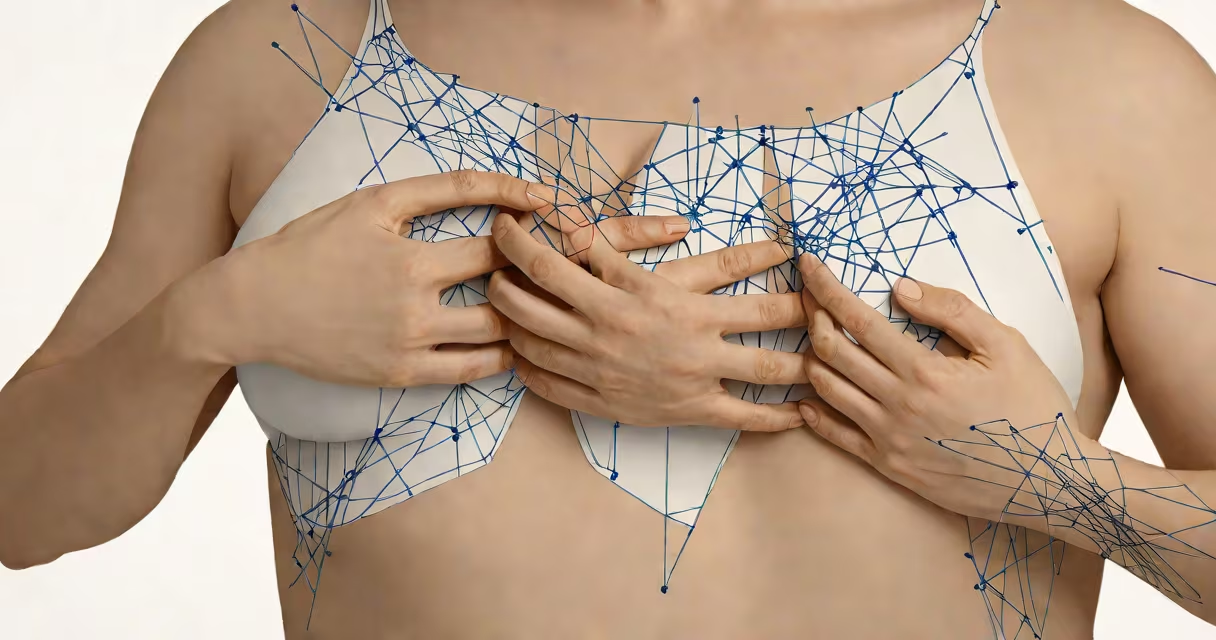
A sharp pain in the breast typically results from musculoskeletal issues, hormonal changes, or anxiety-not cancer. It often feels localized, stabbing, and may worsen with movement or deep breaths. While alarming, most cases are benign and resolve within hours to days.
Such pain arises from nerves, muscles, or cartilage near the chest wall, not from breast tissue itself. The sensation is usually brief, intermittent, and reproducible by pressing on the area. It's not a sign of breast cancer unless accompanied by a lump, skin changes, or nipple discharge.
According to the American College of Radiology, 90% of breast pain is non-cancerous and linked to cyclical hormonal fluctuations, especially in women aged 25-45. However, when pain is sudden, severe, or radiates to the arm or jaw, it may indicate a cardiac event requiring immediate attention.
The sensation originates in the intercostal nerves, ribs, or pectoral muscles, not the breast glandular tissue. These structures lie beneath the skin and fat layer covering the breast. A sharp, localized stab suggests irritation or inflammation in these layers.
Pain often intensifies during activities involving torso motion-like lifting, twisting, or reaching. It may also flare during deep inhalation, pointing to costochondritis (inflammation of the rib-cartilage joints). This condition affects approximately 1 in 100 adults annually, according to the Mayo Clinic.
For example, a 34-year-old woman reported a stabbing pain under her left breast while folding laundry. The pain lasted 15 minutes, worsened when she leaned forward, and resolved after lying down. An exam revealed tenderness at the fourth rib cartilage junction-diagnosed as costochondritis.
Sharp breast pain falls into several categories based on origin. The most frequent are musculoskeletal, hormonal, and psychological.
| Type | Onset | Location | Triggers | Typical Duration |
|---|---|---|---|---|
| Musculoskeletal | Sudden | Localized, often near sternum or rib cage | Twisting, heavy lifting, poor posture | Minutes to hours |
| Hormonal | Cyclical (premenstrual) | Bilateral, diffuse | Menstrual cycle, pregnancy, birth control | Days to weeks |
| Anxiety/panic | Acute onset | Left side, sometimes radiating | Stress, panic attacks | 10-30 minutes |
| Costochondritis | Gradual or sudden | Front of chest, near breastbone | Repetitive motion, viral infection | Hours to weeks |
Costochondritis accounts for nearly 30% of non-cardiac chest pain in primary care settings, per a 2021 study in *The Journal of Family Practice*. It's often misdiagnosed as heart-related due to similar symptoms.
One overlooked cause is nerve entrapment. The lateral cutaneous nerve of the abdomen can compress in the lower rib area, mimicking breast pain. This occurs in people with tight clothing or obesity, affecting 5% of those with chronic abdominal wall pain.
Sharp pain in the breast is rarely a sign of breast cancer. Cancer-related pain is typically dull, persistent, and associated with a palpable mass, skin dimpling, or nipple changes. A 2020 review in *JAMA Internal Medicine* found that only 2% of breast pain cases were linked to malignancy.
However, pain that spreads to the left arm, jaw, or back-especially with sweating, nausea, or shortness of breath-could indicate a heart attack. The American Heart Association notes that women are more likely than men to report atypical symptoms, including isolated chest pain or fatigue.
For instance, a 58-year-old man experienced sharp pain under his right breast during a walk. The pain radiated to his neck and was accompanied by cold sweats. He called emergency services. An ECG showed ST-elevation myocardial infarction. Prompt treatment saved his life.
Another red flag: pain that occurs at rest, especially at night. This may suggest angina or unstable plaque rupture. If pain lasts longer than 10 minutes or doesn't ease with nitroglycerin, seek urgent care.
Many assume breast pain equals breast disease. But the breast itself contains little nerve tissue. Most sensory input comes from surrounding skin, muscle, and bone. True breast tissue contributes minimally to pain perception.
People often confuse sharp breast pain with heart attacks. But cardiac pain is typically pressure-like, crushing, or tight-not sharp. It also tends to last longer and may not improve with position change. A 2019 study in *Circulation* found that 67% of women who had heart attacks initially dismissed symptoms as indigestion or stress.
Another error is attributing pain to hormonal shifts without checking for physical triggers. A woman experiencing pain before her period may blame estrogen fluctuation, but the real cause could be sleeping in a position that strains the pectoralis minor muscle.
Breast pain is not a reliable indicator of cancer risk. The National Breast Cancer Foundation states that 80% of women with breast pain have no detectable abnormalities on imaging.
I once treated a 42-year-old woman who described a "stabbing" pain in her left breast that woke her at night. She feared cancer. Physical exam revealed tenderness at the third rib cartilage. Ultrasound and mammogram showed no lesions. After a local corticosteroid injection, pain resolved in 48 hours. Diagnosis: costochondritis.
This case illustrates how easily non-cardiac pain is misinterpreted. The patient had no history of heart disease, and her pain pattern didn't match typical cardiac symptoms. Yet fear of cancer delayed evaluation.
When in doubt, rule out cardiac causes first. The U.S. Preventive Services Task Force recommends ECG for anyone over 40 with new-onset chest pain, regardless of gender.
If sharp breast pain is mild, brief, and tied to movement or posture, self-care may suffice. Rest, ice, and over-the-counter NSAIDs like ibuprofen can reduce inflammation. Avoid repetitive motions that trigger pain.
See a doctor if pain persists beyond a week, recurs frequently, or includes any of these red flags: radiation to arm or jaw, shortness of breath, dizziness, or unexplained fatigue. Also consult if you notice a new lump, skin changes, or nipple discharge.
Most sharp breast pain resolves without intervention. But accurate diagnosis prevents unnecessary anxiety and ensures timely treatment when needed. Always prioritize symptom context over fear.